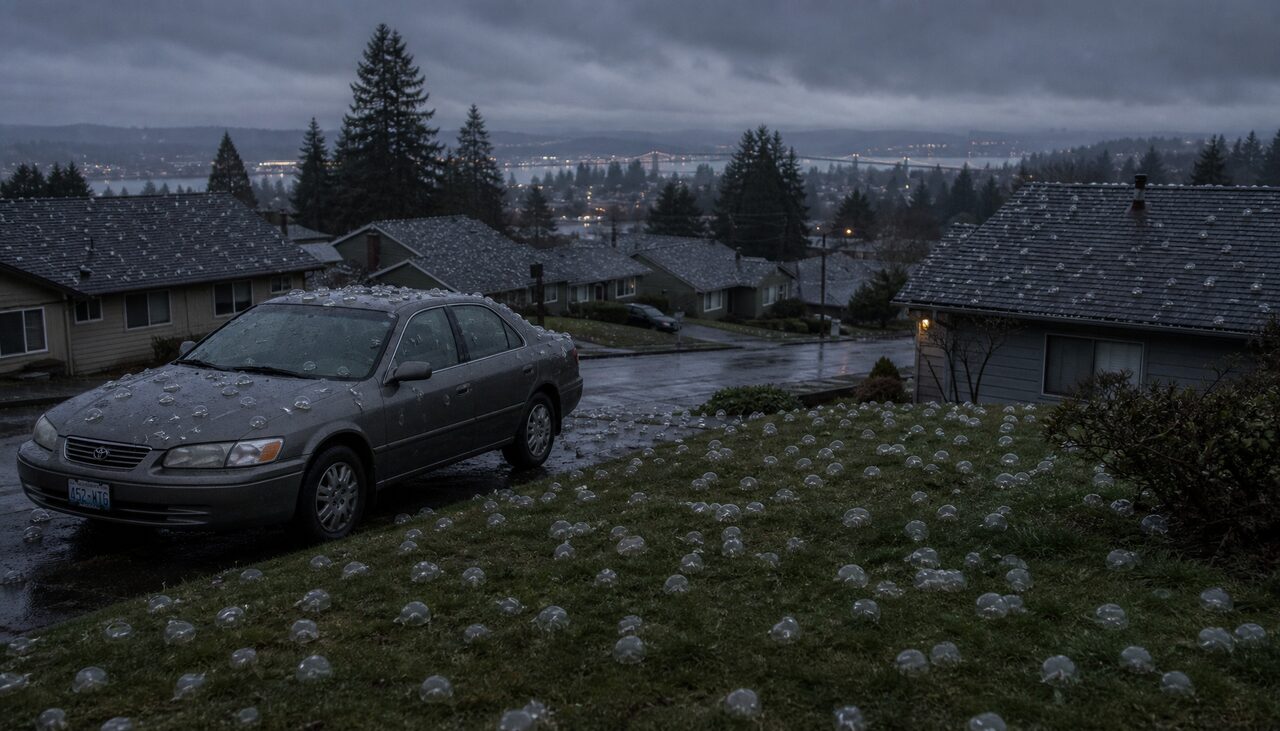
At about three in the morning on August 7, 1994, the town of Oakville, Washington, got rained on. Not with rain. With small, translucent blobs of jelly, each one about the size of a grain of rice, which fell out of the clouds and settled over the lawns, the rooftops, the parked cars, and roughly twenty square miles of a town that had asked for none of it.
A police officer named David Lacey was out on patrol when it started. His visibility dropped, so he did the obvious thing and switched on his wipers. This spread the jelly into an even, opaque film and brought him to a complete stop. It's the first recorded detail in the case, and it sets the pattern for everything that comes after. Something strange happened, and the response made it slightly worse.
The blobs got reported, dutifully, to the people you're supposed to report things to. The county. The state. None of whom kept a form for "the sky left a deposit." So the case opened the way it would eventually close — with an official confirming that yes, something had happened, and no, he couldn't tell you what.
Twenty Square Miles
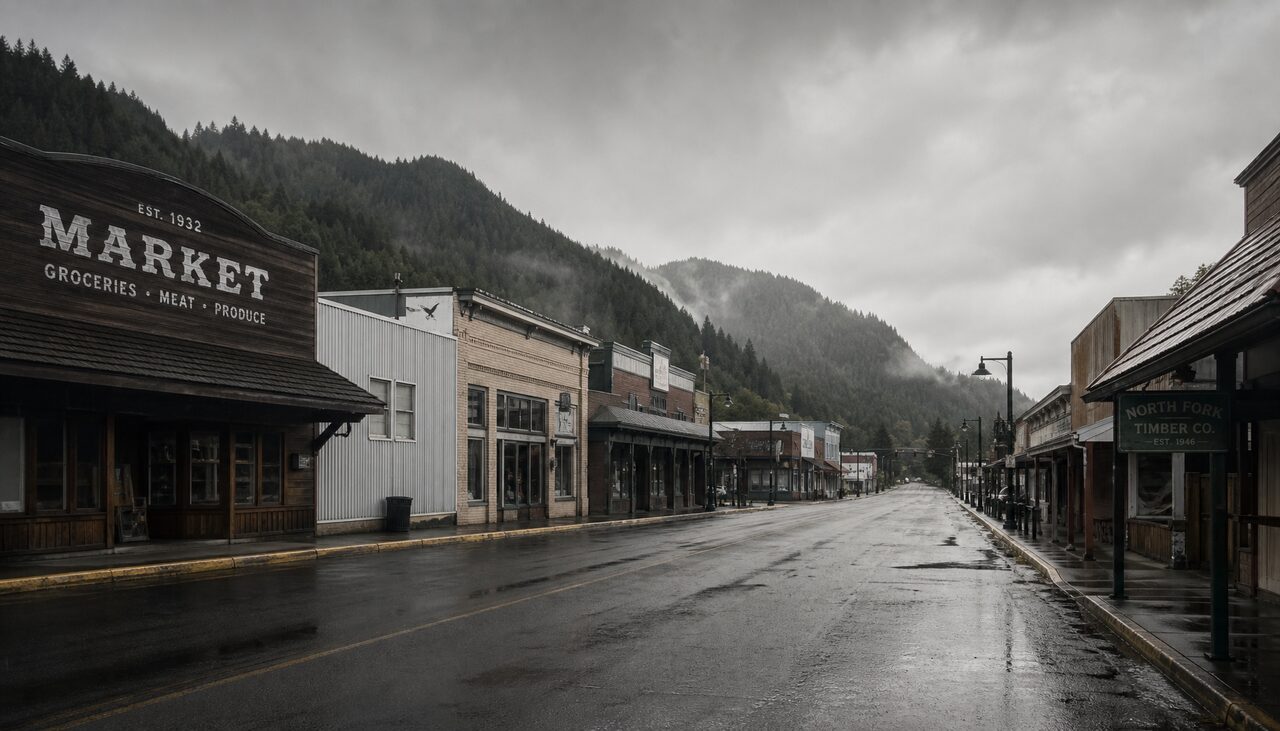
Oakville sits in Grays Harbor County, down in the lowlands by the Chehalis River, hemmed in by timber. In 1994 it had about 665 people. Within a few weeks, a good number of them would be handling unidentified jelly with their bare hands, because that's what people do when something lands in the yard. They go and pick it up.
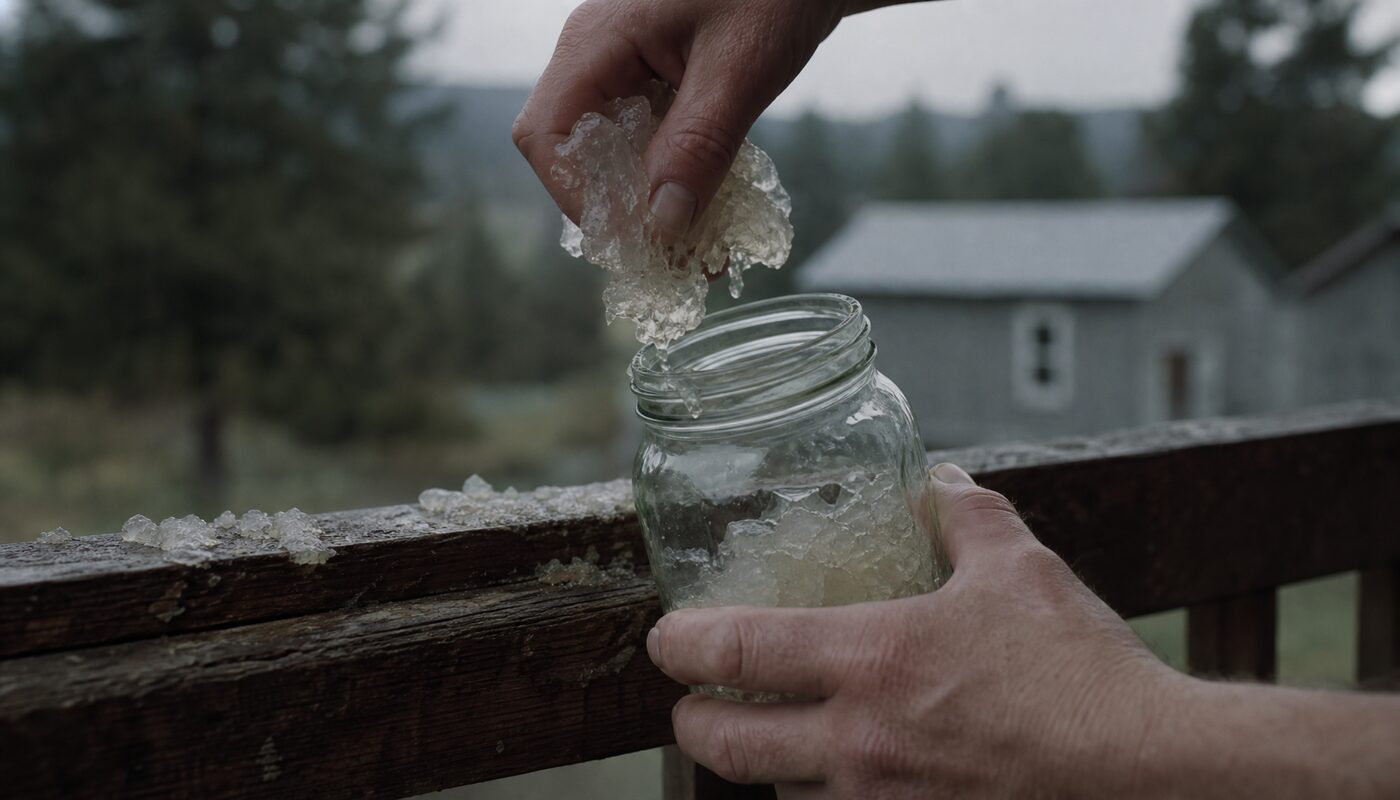
The blobs were cool, faintly gummy, and gave a little under a fingertip. People described them as gelatin, as half-melted hail, as something in between. They scooped them into mason jars and ice-cream buckets, which is what you reach for when the other option is leaving a film of mystery jelly on the porch.

By daylight the scale of it was clear. The blobs weren't a patch on one lawn. They were spread across rooftops, gardens, fields, and roads throughout the town, an estimated twenty square miles of ground. Whatever delivered them wasn't aiming. It was just emptying out over Oakville.
And it kept happening. The substance fell six separate times over about three weeks. One fall is a freak of the weather. Six falls is a schedule. Whatever was making the blobs wasn't a single accident overhead. It came back, on a town of six hundred people, again and again.
Then the people who'd touched it started getting sick. The symptoms came on together and looked like a hard flu — dizziness, nausea, fatigue, a vertigo that for some of them lasted weeks. A few household pets that got into the substance reportedly didn't recover at all. A local doctor watched the same cluster come through the door in a matter of days, in people who had nothing in common except an address. He couldn't say what caused it. He could only say that a lot of Oakville had it at once, and that all of them had been outside, touching the same thing.
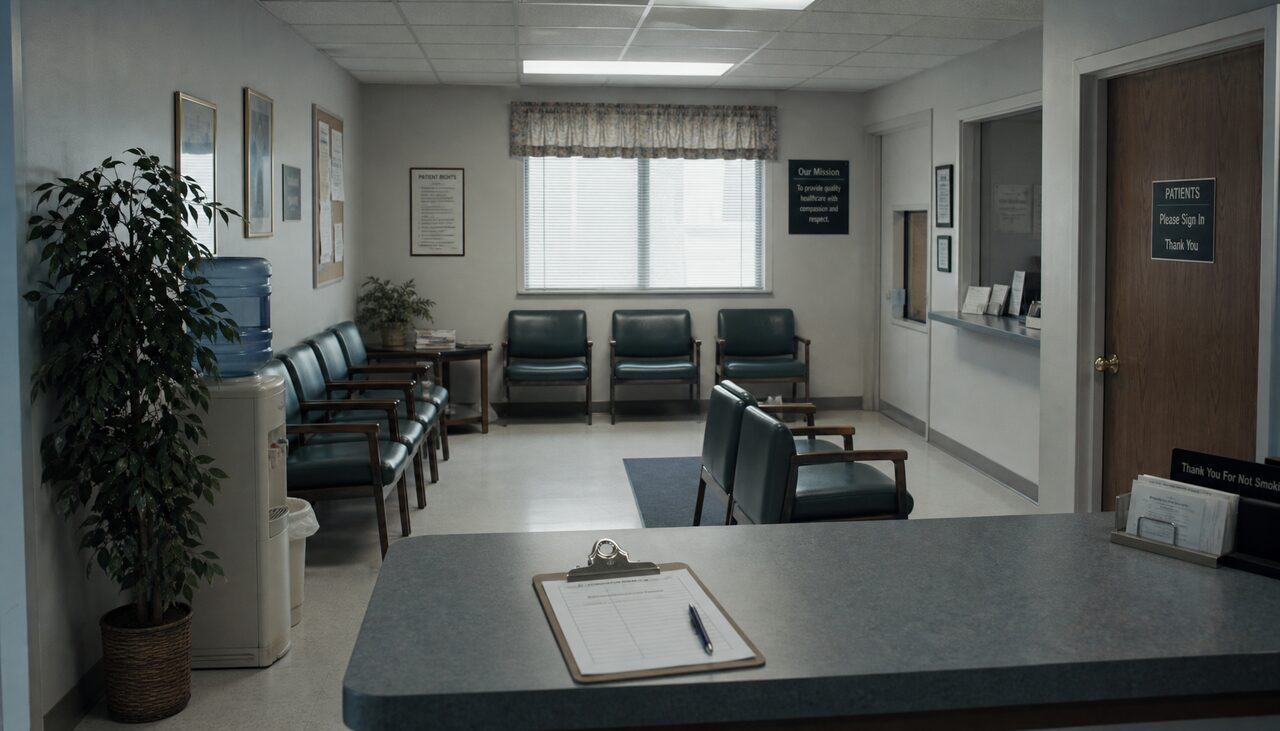
Samples Collected
That question fell, more or less by chance, to a woman named Sunny Barclift. Her mother, Dotty Hearn, had cleared blobs off her property and grown so dizzy she couldn't stand, and she was admitted to the hospital with what was described as a severe inner-ear disturbance. So Barclift did the one careful thing nobody else had thought to do. She saved a sample, collected on the way in, and got it to a lab. This is the high-water mark for evidence handling in the entire case. Hold onto it.
The sample reached Mike McDowell, a microbiologist at a hospital lab over in Aberdeen. He put a little of the jelly under his microscope, expecting, one assumes, nothing in particular. What he found, reportedly, were cells. Human white blood cells. White blood cells are the part of you that turns up when something's wrong. They're not a standard feature of falling weather.
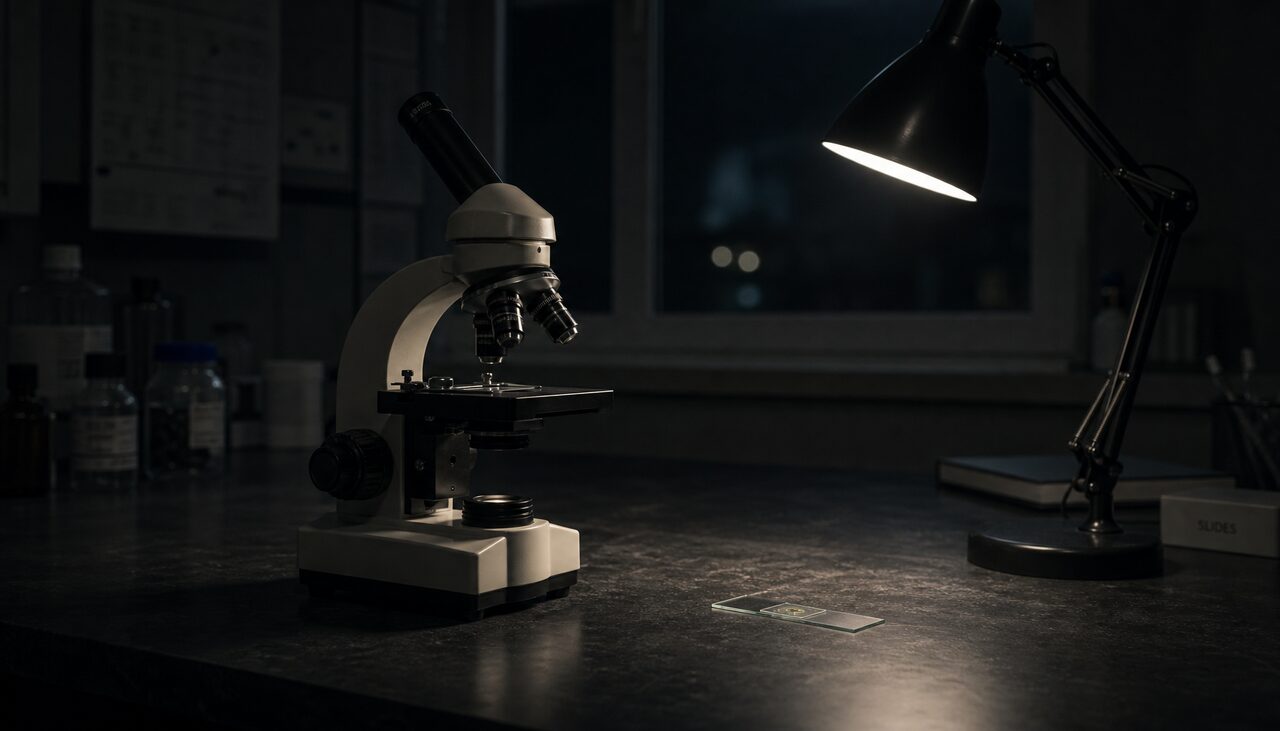
McDowell assumed he'd contaminated the slide. It's the right assumption — it's what a careful person concludes first. So he cleaned everything up and ran it again. Same result. Human white blood cells, in a substance that had dropped out of a cloud over a logging town. Twice. He wasn't a man with a theory to sell; he was a hospital lab tech looking at a slide on an ordinary afternoon. When the person whose whole job is identifying cells tells you he found human white blood cells, the reasonable move is to believe him. Which leaves the harder half of the sentence. How did they get up into the sky?
The Bacterium
A second sample went to a private lab, Amtest, over in Olympia, where a microbiologist named Tim Davis grew out whatever was alive in it. He came back with two bacteria. The first, Pseudomonas fluorescens, lives in soil and water and troubles nobody. The second was a bug called Enterobacter cloacae, which, as a rule, lives in the human gut. Its preferred address is the inside of a person. It had turned up in the sky.

The labs could at least say what it wasn't. It wasn't industrial waste, as far as anyone could tell. It wasn't a common mold, or a known fungus. It wasn't sewage, despite the gut bacteria. Every easy answer got crossed off, one at a time, until the list of explanations and the supply of samples ran out at about the same moment.
The Rot of the Stars
Goo falling from the sky is not a new complaint. People have been finding it on the ground for at least seven hundred years, usually after a meteor, and they bothered to give it a name. The medieval Welsh called it pwdre ser. It translates, roughly, to "the rot of the stars," which is a much better name than "the Oakville blobs," and I'm a little sorry the town didn't get to use it.

The records are scattered but consistent. Gelatinous material, reported on the ground after a light in the sky, shows up across centuries and continents. It even comes with a folk rule attached: go out looking for the fallen star, and by the time you reach the spot, the jelly's already melting away. Which is either poetic or the single most consistent feature of the whole phenomenon. The evidence dissolves before anyone can keep it.
The most famous American case came earlier, in 1950, in Philadelphia, where two police officers reported a six-foot disk of glistening purple jelly sitting in a field. They tried to pick it up, and it dissolved in their hands, leaving almost nothing behind. It vanished so completely that the only durable product of the whole incident was a 1958 horror film called The Blob. Which is, to date, the single most useful thing anyone has ever gotten out of sky jelly. A movie.
The modern, respectable theory is jellyfish. The Navy had been running bombing exercises out over the Pacific that month, and the idea is that a blast tore through a swarm of them, threw the remains up into the weather, and let the wind carry the mist back over the coast. It's a tidy theory. It explains the texture, and it explains the falling. It has two problems. Oakville sits about fifty miles inland, which is a long way to ferry a cloud of pulverized jellyfish without one person mentioning the smell. And jellyfish don't have white blood cells. They don't have blood at all. It's one of the better-known facts about jellyfish, and it does the theory no favors.
Nobody Sprayed Anything
The town asked the next obvious question. Had somebody sprayed something? The Air Force said it wasn't them. The Federal Aviation Administration had no record of unusual flights. Neither one offered an alternative. They just declined to be the answer and stepped back from the window.

There was one more thing feeding the suspicion. Around the time of the falls, residents reported military helicopters and aircraft over the area, low and frequent, more than the usual traffic. On its own that proves nothing — it's coastline and timber near active military ranges, and the aircraft belong there. But "unusual jelly" and "unusual helicopters" turning up the same week is the sort of coincidence a town of six hundred tends to notice.
The suspicion wasn't crazy, exactly. The United States really did spend the Cold War testing things on its own people without mentioning it. In 1950, the Navy sprayed bacteria over San Francisco just to watch how it would drift. So when a small town asks whether the government might have dusted them with something biological, the honest answer isn't "no." It's "they've done stranger, and apologized later." But there's no evidence they did it here. There's no evidence of much of anything here. That's the whole problem.
Every Sample
Without the samples, the case can't be solved. It can only be argued. The believers point to the white blood cells, the gut bacteria, and six tidy falls on a schedule. The skeptics point out that all of it now rests on a few memories and one lost slide. Both sides are right, which is the most irritating possible outcome. The evidence was real. It's also gone.
The Washington State Department of Health ran its own analysis. Its specialists examined the substance, consulted with other labs, and arrived at a conclusion of admirable honesty. They didn't know what it was. They couldn't match it to anything. And then, like everyone else, they lost it.
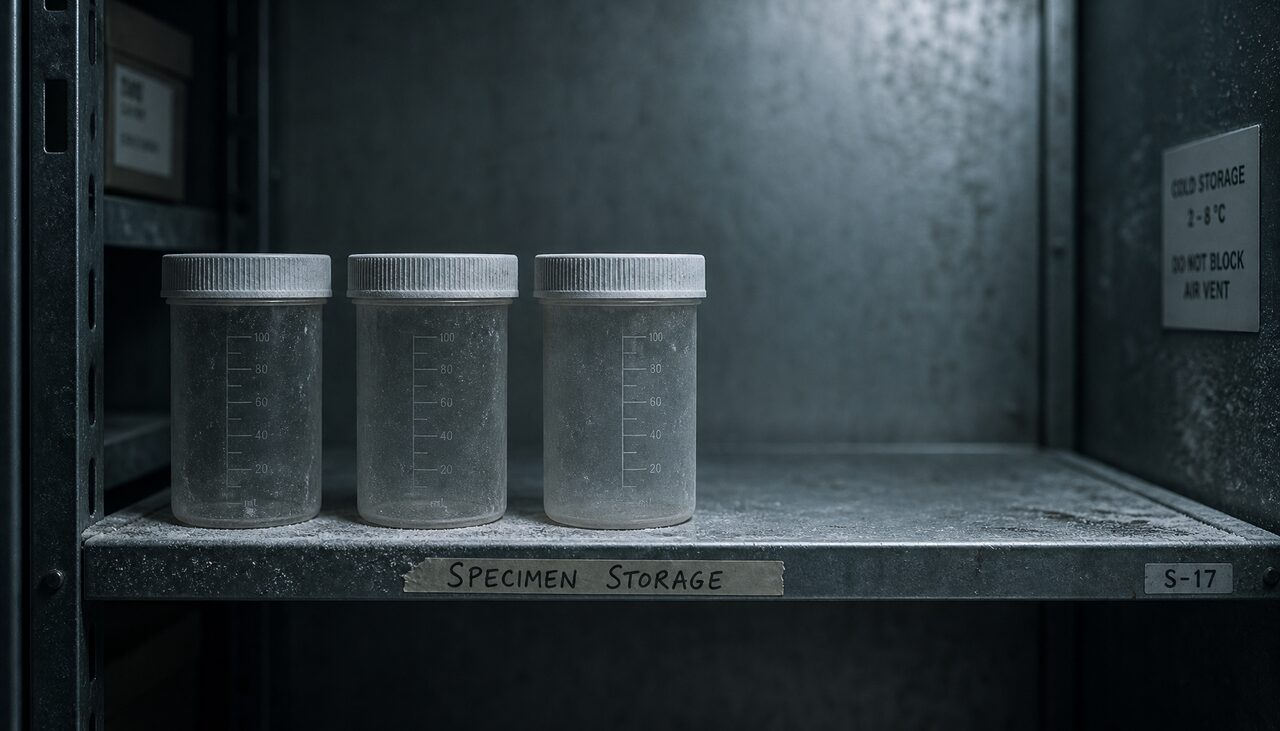
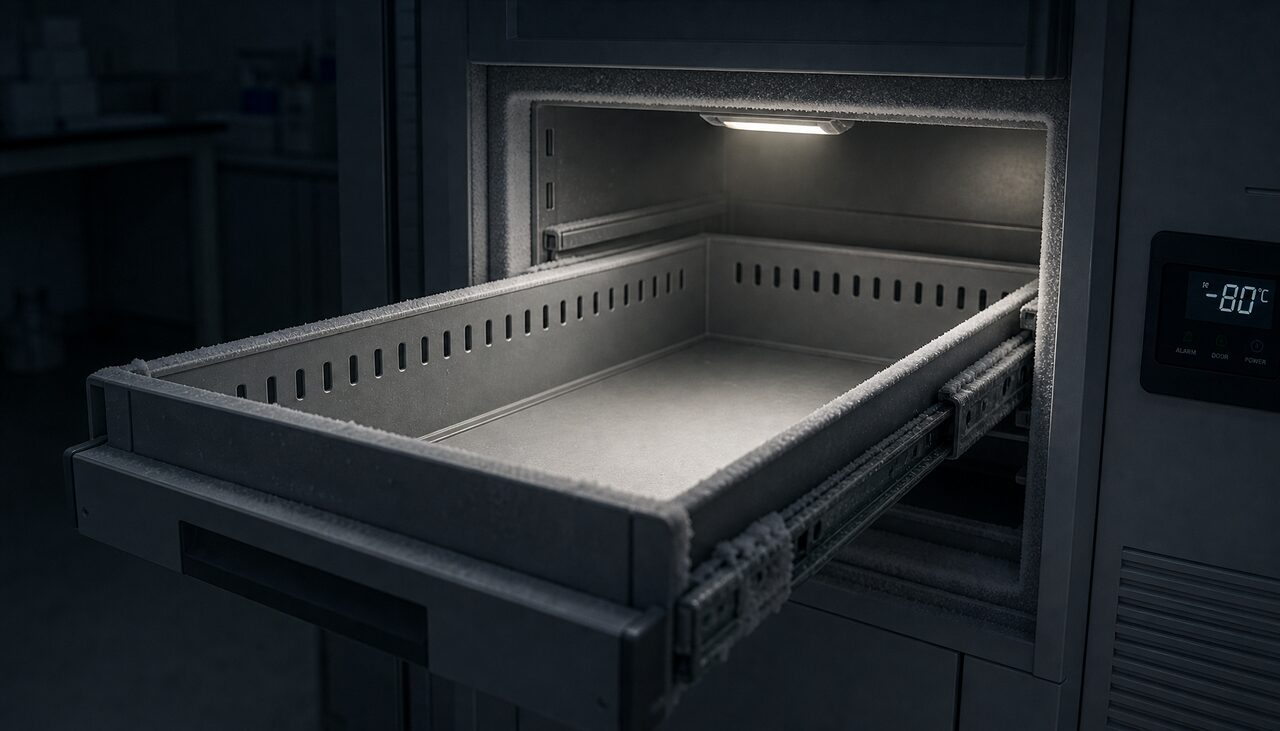
Three separate facilities examined the Oakville substance. Three separate facilities no longer have it. The hospital sample, the one that started all of this, was reportedly thrown out. The Department of Health sample is no longer on file. And the rest of the material, by most accounts, went out with the regular trash. No preserved specimen sits in a freezer anywhere, waiting on a better microscope. The most heavily analyzed mystery substance in the history of Grays Harbor County was discarded by three different institutions, independently, each one apparently assuming another lab still had it. None of them did.
The case got its fame in 1997, when Unsolved Mysteries ran a segment on it. Which means that for most people, the definitive record of the Oakville blobs is a television re-enactment of an event whose actual evidence had already gone to the dump. That isn't nothing. It just isn't a sample in a jar.
Still Just Hundreds
Oakville's still there. Still a few hundred people, still quiet, still ringed with timber. The blobs never came back. The samples are gone — all of them, from all three buildings. What's left is a police report about windshield wipers, a lab tech who ran the test twice, a bacterium that lives inside people, and a seven-hundred-year-old Welsh phrase for exactly this.
Something fell on the town. Everyone agrees on that much. It's the only part of the case nobody managed to throw away.
Sources & Case References
- Mental Floss — "The Mystery of the Oakville Blobs"
- HISTORY — The Proof Is Out There, Season 3, Episode 7
- Unsolved Mysteries (1997), Oakville segment