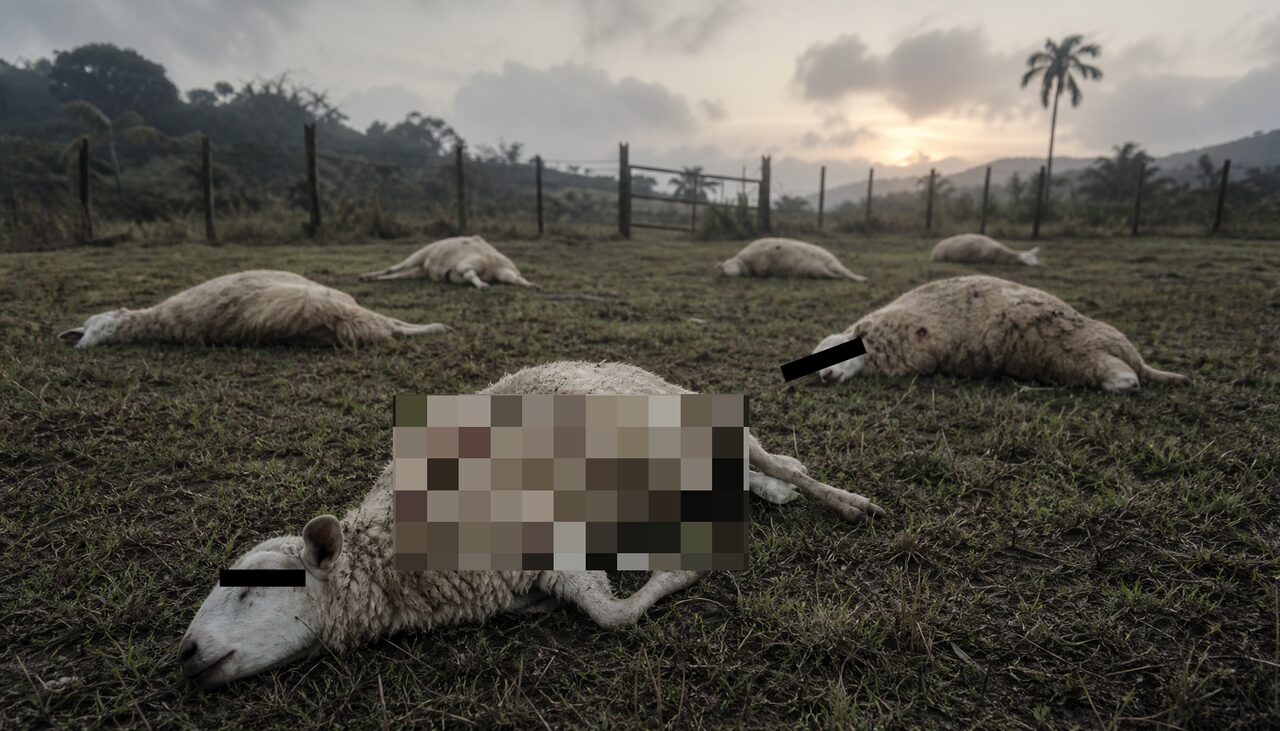
In March of 1995, a farmer in Puerto Rico found eight of his sheep dead. Each had three small puncture wounds, in a neat line, near the chest. And each, the reports said, had been drained of its blood. Not eaten. Drained. A predator that kills for blood but leaves the meat is a new kind of problem.
More animals followed — goats, rabbits, birds, across the island. Same punctures. Same story. Something was moving through the countryside at night, killing livestock and taking only the blood. The island gave it a name that described exactly what it was accused of doing: the chupacabra. The goat-sucker.
The rumors arrived with it. A secret government laboratory in the rainforest. An escaped experiment. A monster the authorities would not admit to. The standard furniture of a panic. None of it was ever found. The lab is always just over the next ridge.
The blood was the whole of it. A wolf eats. A big cat eats. This thing, the story went, opened a vein and walked away from the meal. That single detail is what separated a livestock predator from a monster. Within months the creature was everywhere — a vampire animal, unknown to science, loose in the Caribbean, then in Mexico, then in the American Southwest.
It is one of the very few genuinely new monsters of the modern age. Most cryptids are centuries old, with murky parentage and no fixed address. This one has a birth date. With a little work, you can almost name the week. It did not crawl out of folklore, or the swamp, or the dark. It walked out of a movie theater.
The Thing in Canóvanas
The creature got its face in August 1995, in the town of Canóvanas, on the northeast coast of the island. A woman named Madelyne Tolentino looked out a window and saw something standing in the road. She got a good, long look, and she described it in detail to anyone who would write it down.
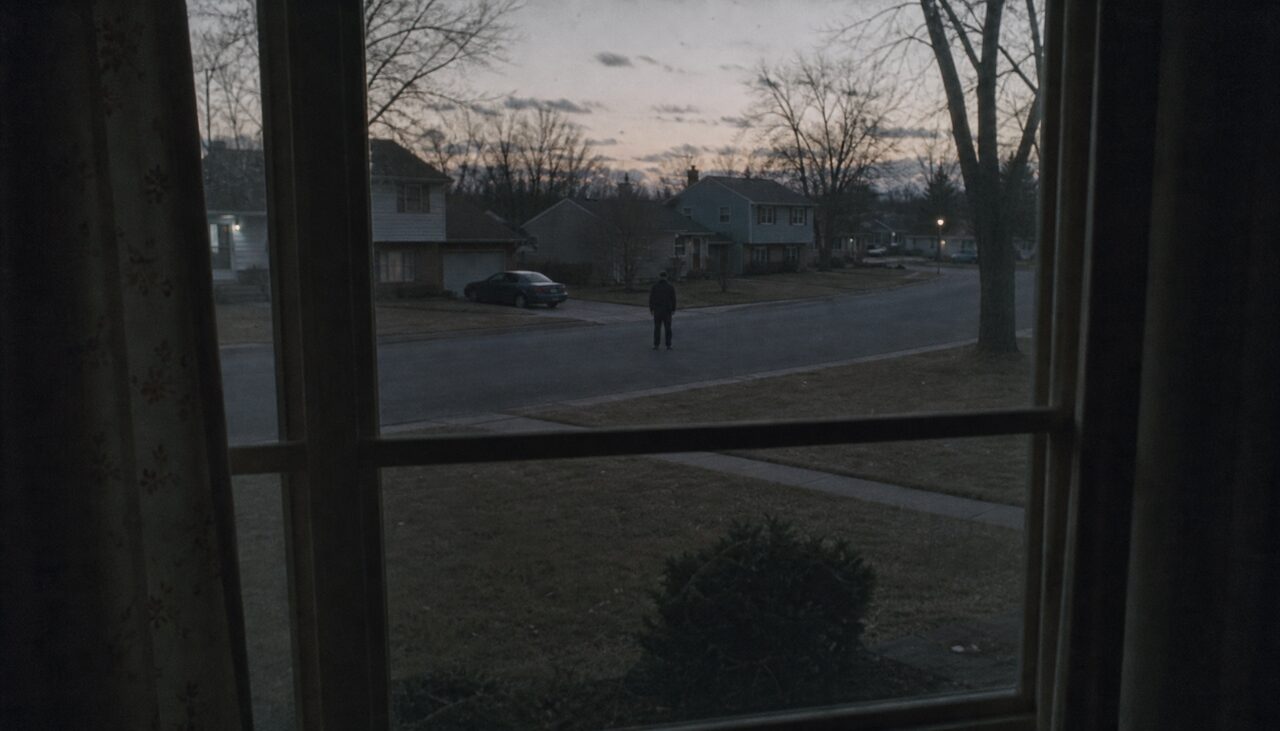
It was about four feet tall, she said, and stood upright, on two legs, like a person. Thin. Grayish. Large, dark, almond eyes that wrapped around the sides of its head. And down its back, a row of sharp spines. It didn't look like any animal she knew. It looked, she said, like something not from here.
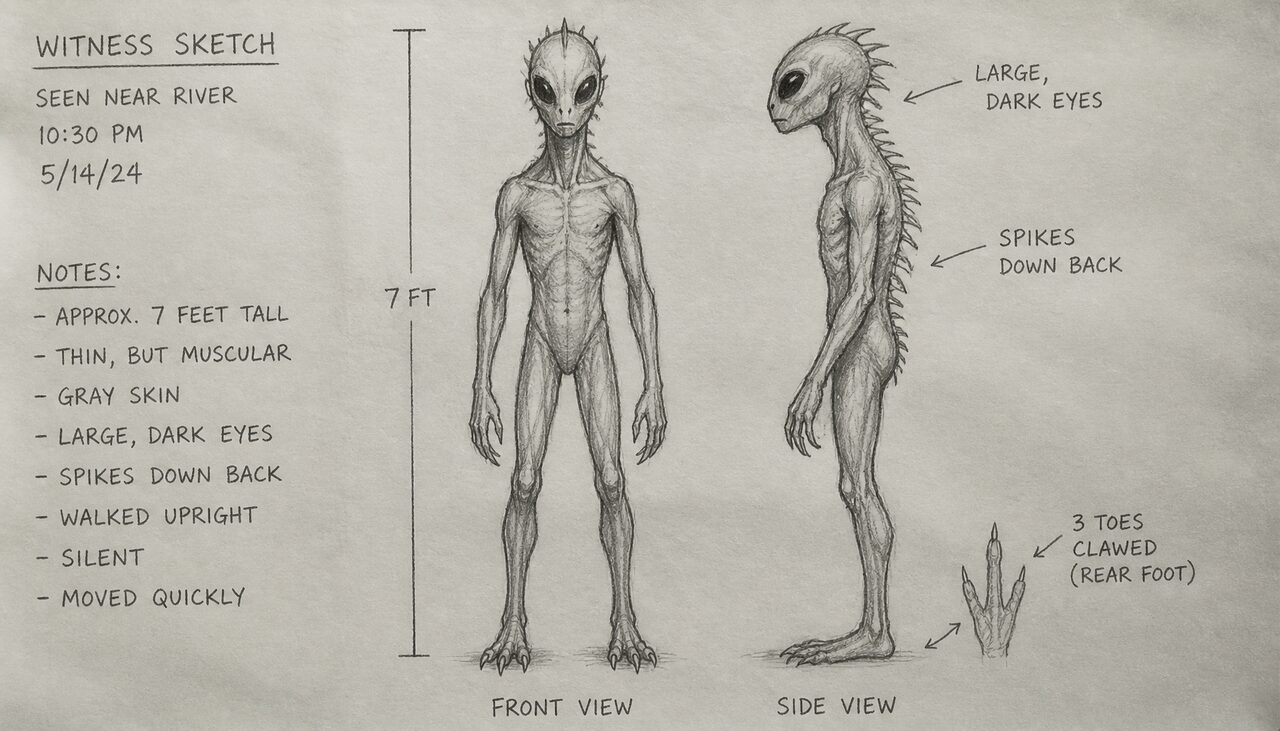
Her account became the template. Every later witness, every drawing, every news report built on Tolentino's creature in the road — the spines, the eyes, the upright walk. She did not just see the chupacabra. She designed it, and the island accepted the design.
The town took it seriously. The mayor of Canóvanas led armed night patrols into the hills, week after week, hunting the thing with a caged goat tied out as bait. They never caught it. They did get on television, which, for the chupacabra, was the more important capture.
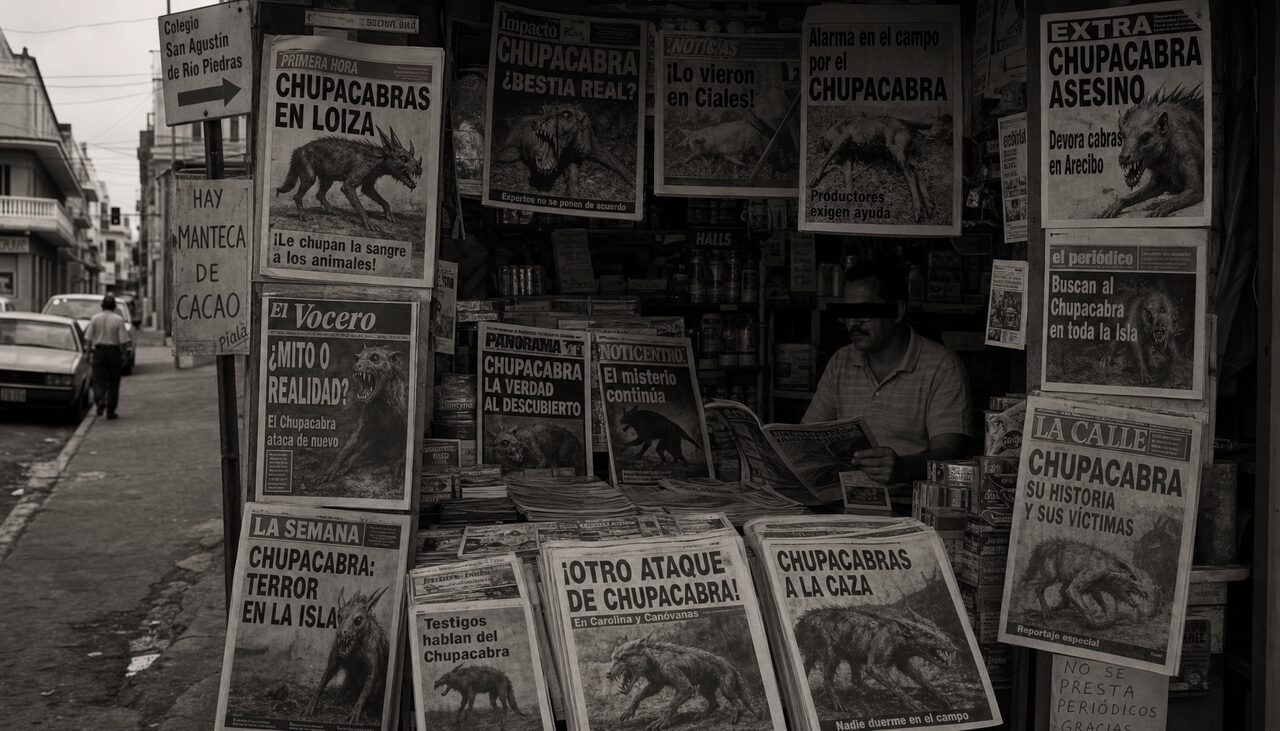
Puerto Rico in 1995 was ready for it. Hard economic years, a run of unexplained animal deaths, and a lively, competitive press. A monster gives a name to a season of dread, which is part of what monsters are for. The chupacabra did not have to be real to be useful. And the description Tolentino gave is where the whole thing comes apart — not because it was vague, but because it was specific. Too specific. It matched something that already existed.
Sil
A few years later, a researcher named Benjamin Radford spent five years taking the chupacabra apart. He started where these things start: with the first witness. He interviewed Tolentino, carefully, about exactly what she had seen.
Then he watched a movie. A science-fiction horror film called Species, about an alien that becomes a lean, gray, upright creature with dark wraparound eyes and a row of spines down its back. The character's name is Sil. The resemblance was not approximate. It was a portrait.
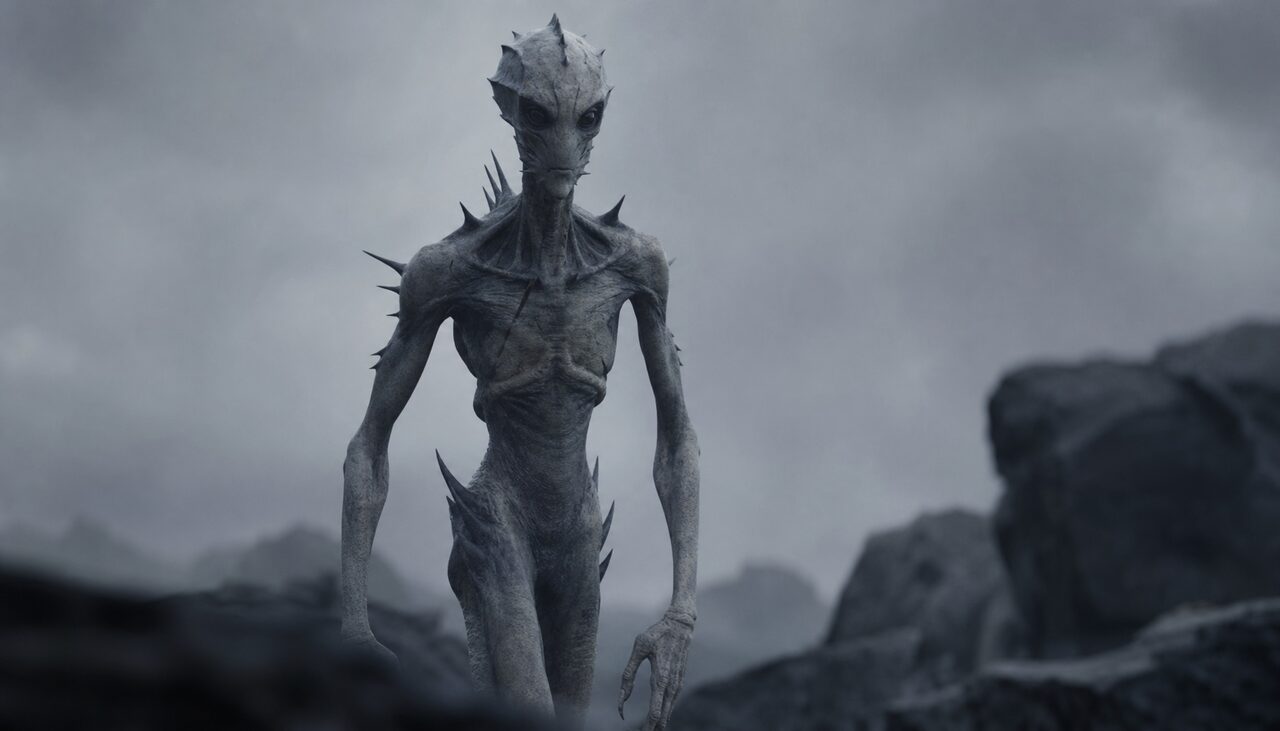
Then he checked the dates. Species opened in theaters in Puerto Rico in July 1995. Tolentino saw her creature in August — one month later. And in her own account, she had seen the film. Radford did not stop at the resemblance. He tracked how her description changed over the years and found that it grew more alien over time, not less.
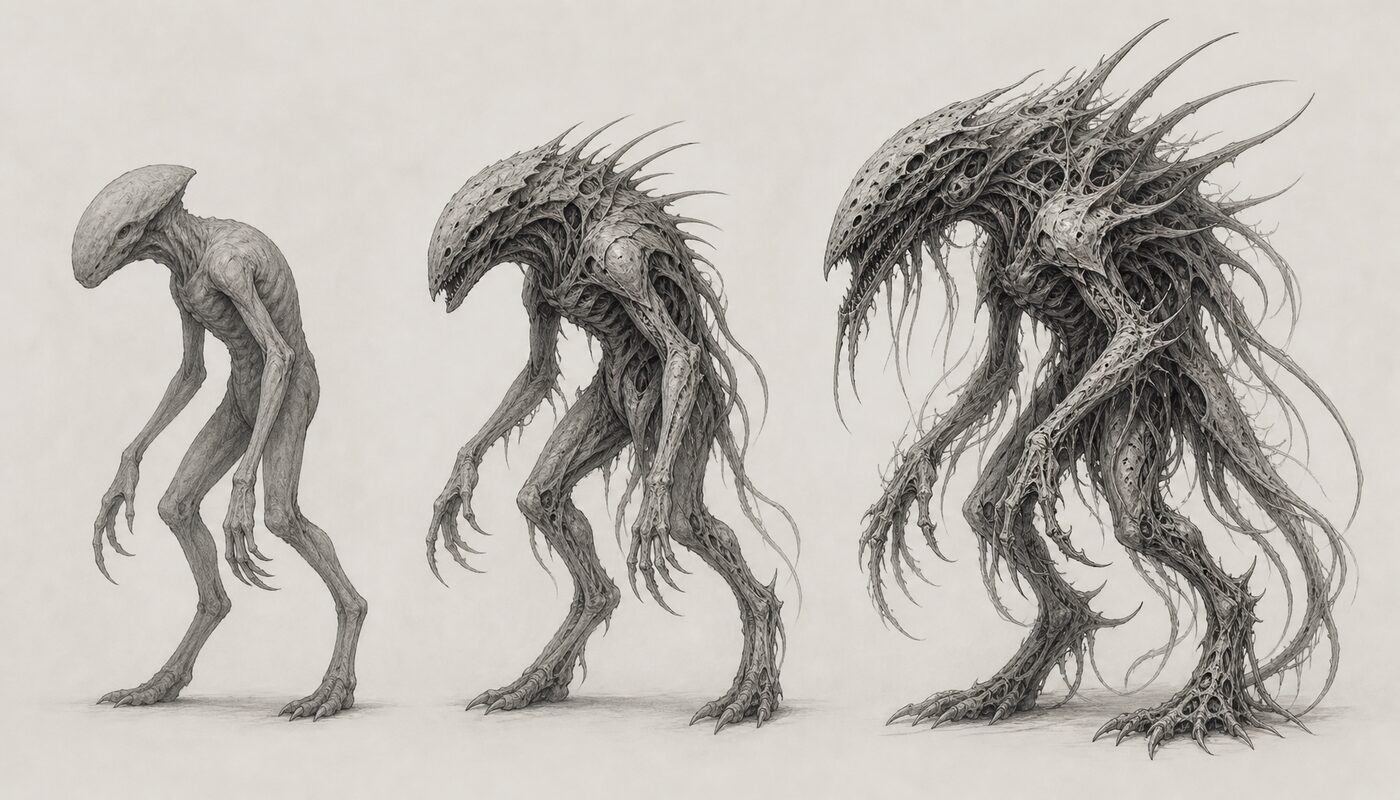
Memory doesn't sharpen. It edits. Her creature drifted toward the film the further she got from the night.
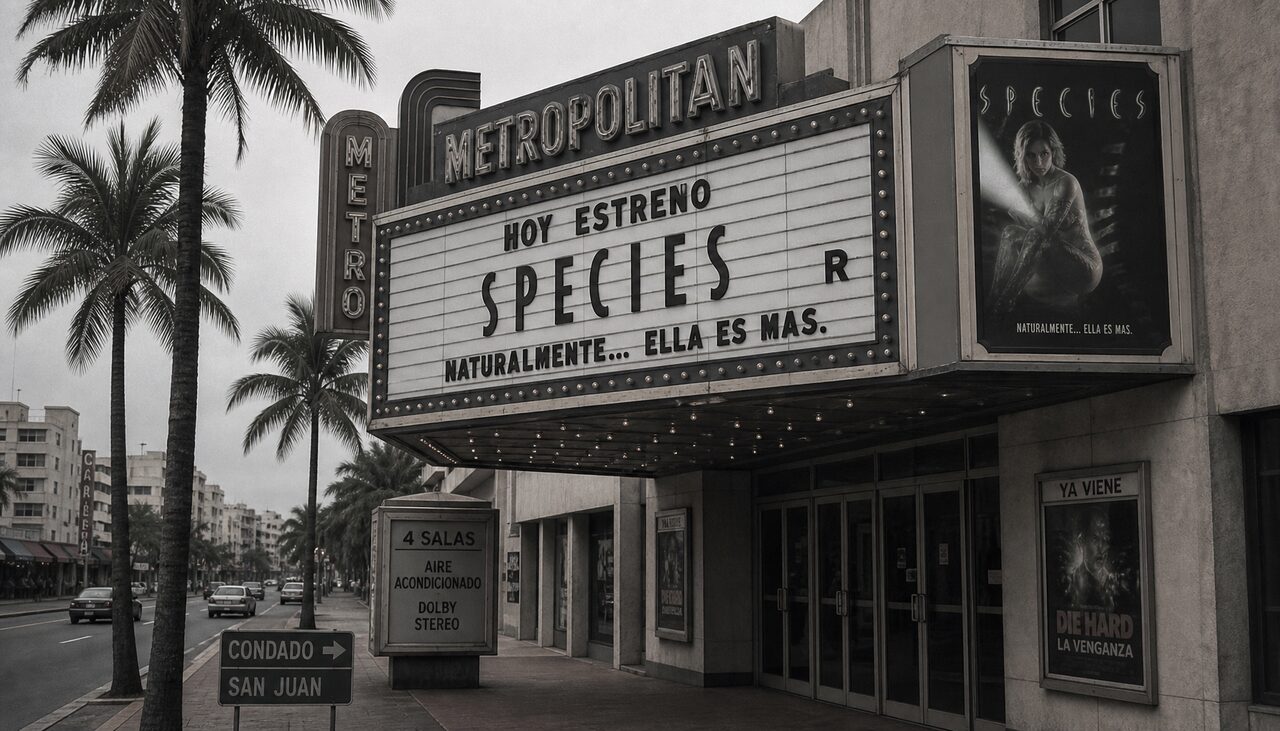
The point is not that she was lying. By every indication she genuinely saw something in the road that frightened her — a stray animal, a shape, a trick of the porch light. And her mind, reaching for what it resembled, handed her the most vivid monster she had recently been shown: the alien from the film she had just watched.
There is an extra turn here, for the connoisseur. The creature in Species was designed by H.R. Giger, the Swiss surrealist who designed the monster in Alien. So the chupacabra's true ancestor is not a Caribbean beast at all. It is a horror-film maquette descended from a painter's nightmare. The goat-sucker has an art pedigree.
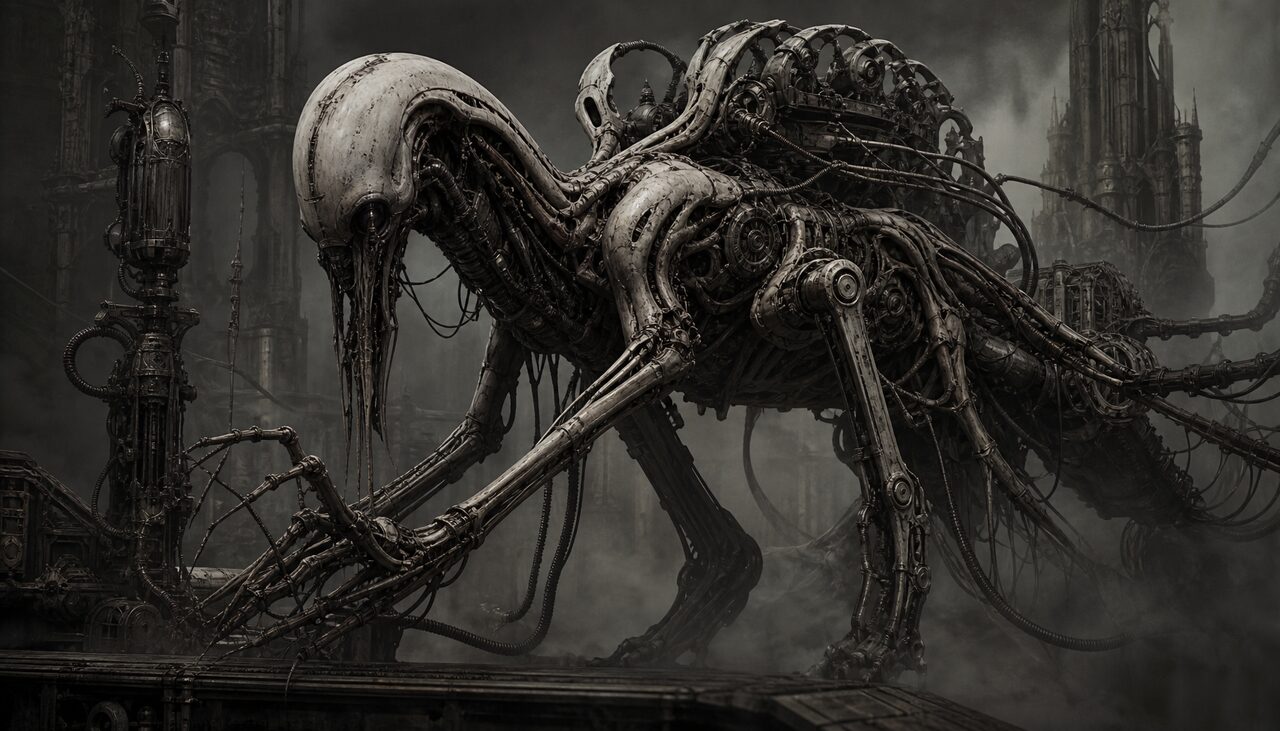
That is the origin of the creature's face — a real fear, a real dead-animal mystery, and a movie monster, fused in one frightened witness and then copied faithfully by everyone who came after. The goat-sucker's true creator is a Hollywood creature designer.
The Blood That Wasn't Gone
The animals, though, were really dying. So set the monster aside and look at the bodies. The central claim was always the blood: punctured, and drained completely dry. It's the detail that makes a vampire instead of a stray dog.
Eventually someone did the unglamorous thing and performed necropsies — veterinary examinations of the dead livestock. The animals weren't drained of blood. They had normal amounts of it. The defining feature of the chupacabra, the bloodlessness, was simply not there.
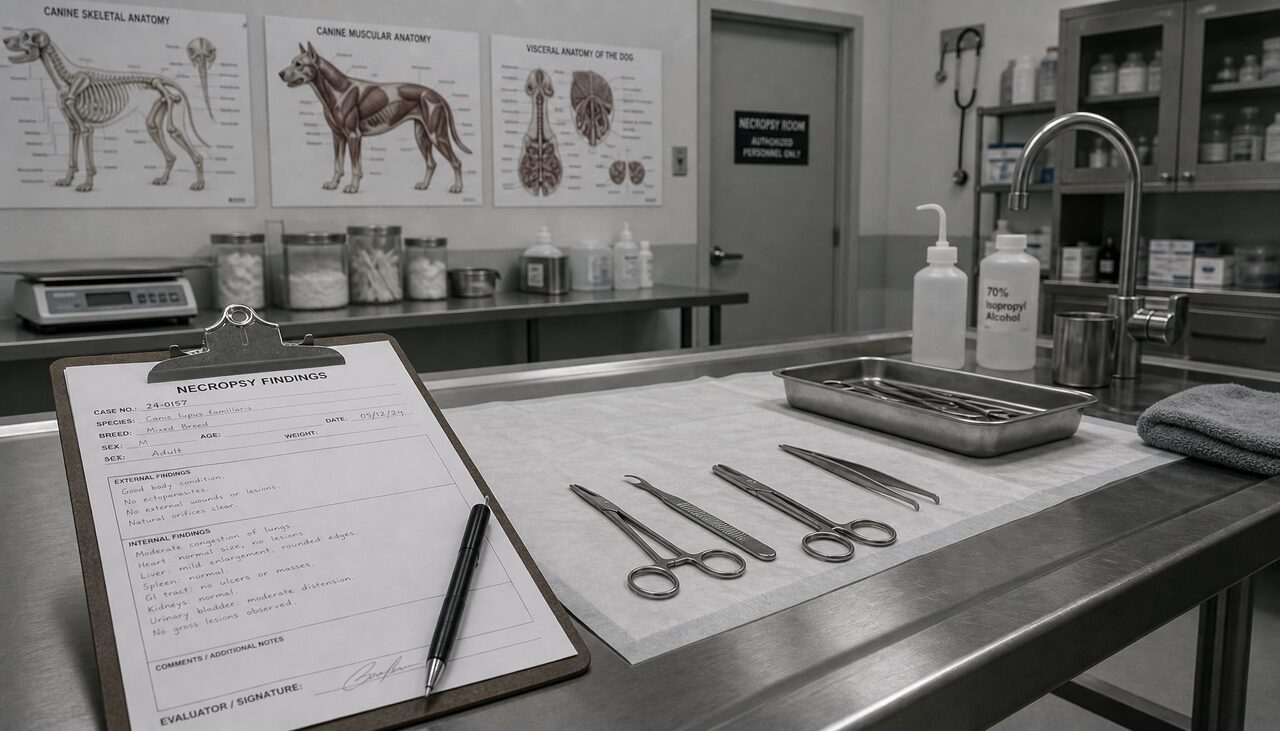
The misunderstanding is simple, and grim. A predator bites, leaves puncture wounds, and often doesn't eat much of a kill it has been startled away from. The blood pools inside the carcass or soaks into the ground, out of sight. A farmer finds a punctured animal, uneaten, and reaches for the worst word — drained — when the blood had gone nowhere at all.
No land animal lives by drinking blood at that scale and leaving the body. Blood is a poor meal; the nutrition at volume isn't there. The vampire that started it all was, at bottom, an accounting error about where the blood went. Nature does have a blood-drinker — the vampire bat — but it weighs about as much as a few coins and laps tiny amounts from a wound on animals far larger than itself. It drains nothing, and would be insulted by the comparison.
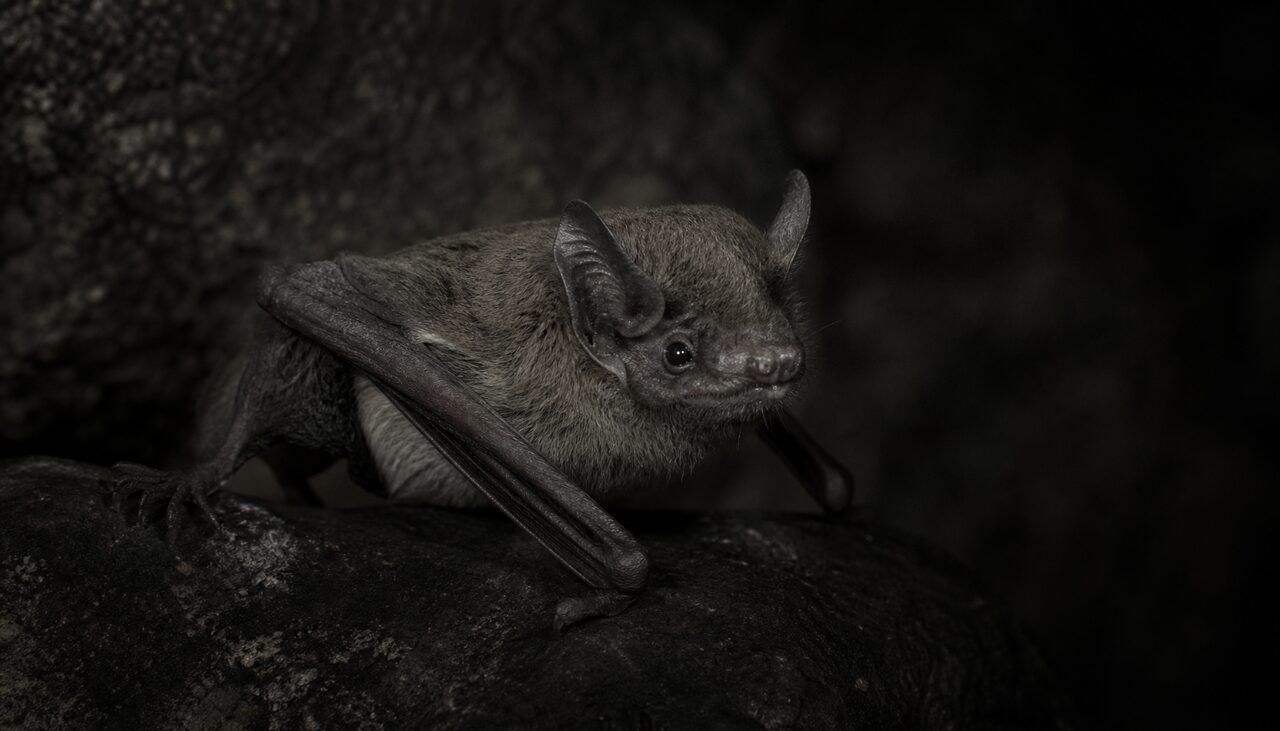
The blood claim also had a second life. When you tell people an animal was drained, they remember drained, no matter what the report says later. The autopsy is page nine. The vampire was the headline. A correction never catches the creature it's chasing.
It Changed Species
Here the legend does something that should have ended it. It changed species — literally.
In Puerto Rico, the chupacabra was the spiny, upright, big-eyed alien. Then the stories spread to Mexico and Texas, and the creature transformed. It dropped onto four legs. It lost the spines, the upright walk, the wraparound eyes. It became a hairless, snarling, dog-shaped thing — a different animal entirely, under the same name.
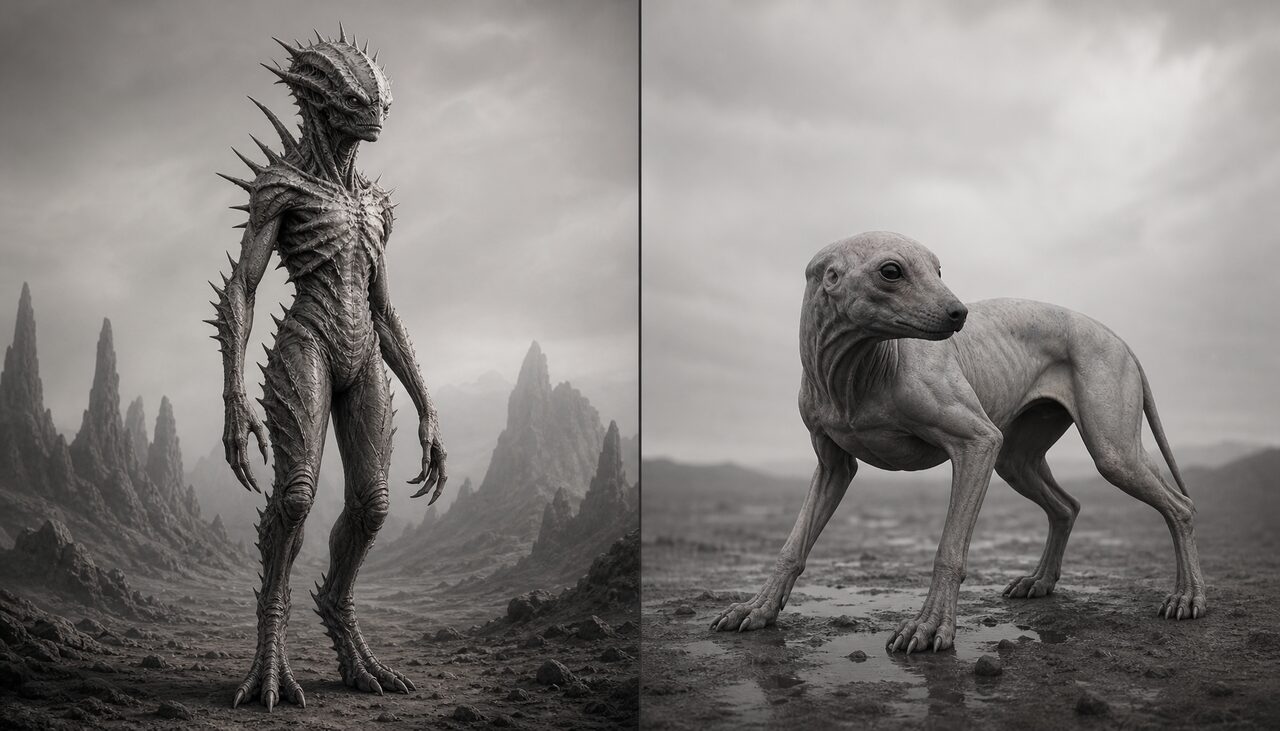
A real biological species does not redesign itself when it crosses a border. A story does. Each region described the monster it could picture, and pictured the one in front of it. Mexican ranchers reported the same hairless, fanged thing and blamed it for the same punctured goats. The name had crossed the water. The creature underneath it had not, because there was no creature underneath it. There was a word, and a great many sick coyotes.
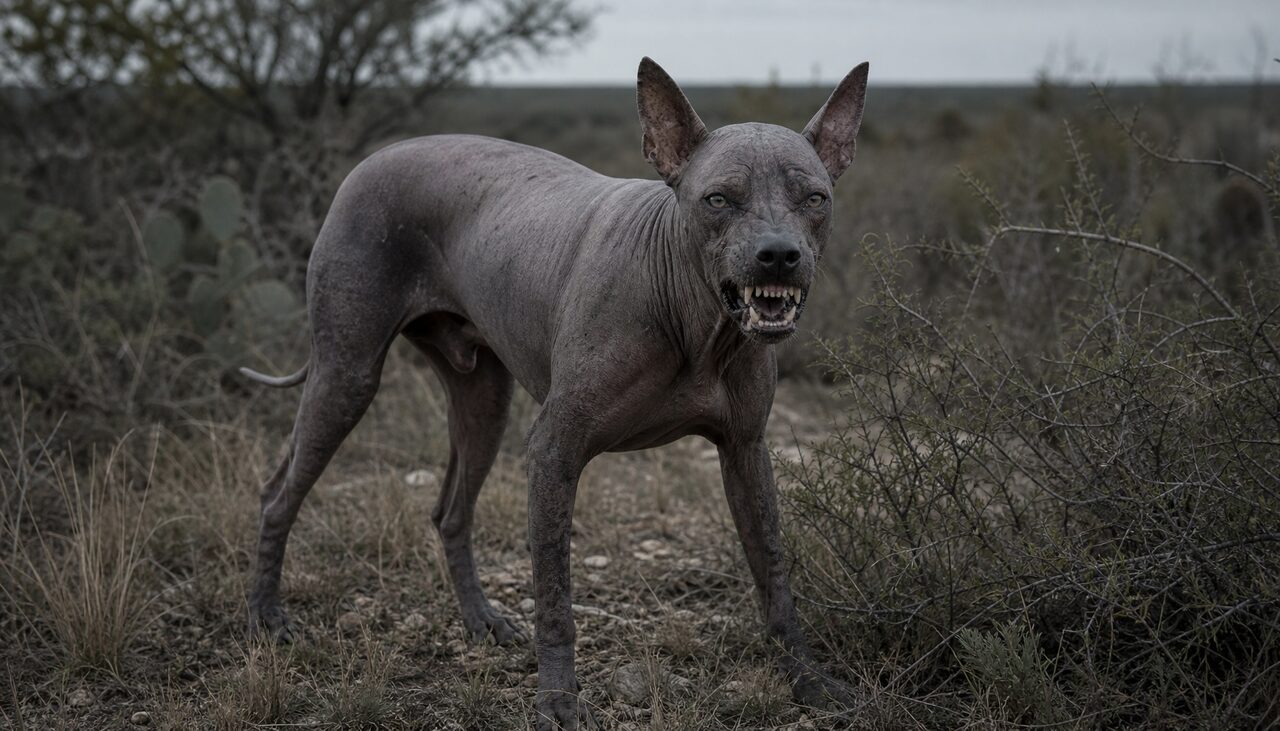
In Puerto Rico, the picture came from a movie. In Texas, it came from something people kept actually finding — hairless, gray, fanged, wrong — dead by the roadside or shot in a field, again and again. Real bodies, this time. Which you can actually test. And people did. They sent the Texas carcasses to laboratories and ran the DNA. The most feared cryptid in the Americas went into a freezer and came back with a name on its file.
Mange
The Texas chupacabra was a coyote. Every tested carcass came back as a coyote, or a dog, or a cross of the two. Ordinary canines, with one extraordinary condition.
Mange. A severe infestation of mites that burrow into the skin, stripping the animal of all its fur and leaving the skin to thicken, harden, and shrink. A mangy coyote does not look like a coyote. Hairless, gray, wrinkled, gaunt, the lips drawn back from the teeth, it looks like something that shouldn't exist.
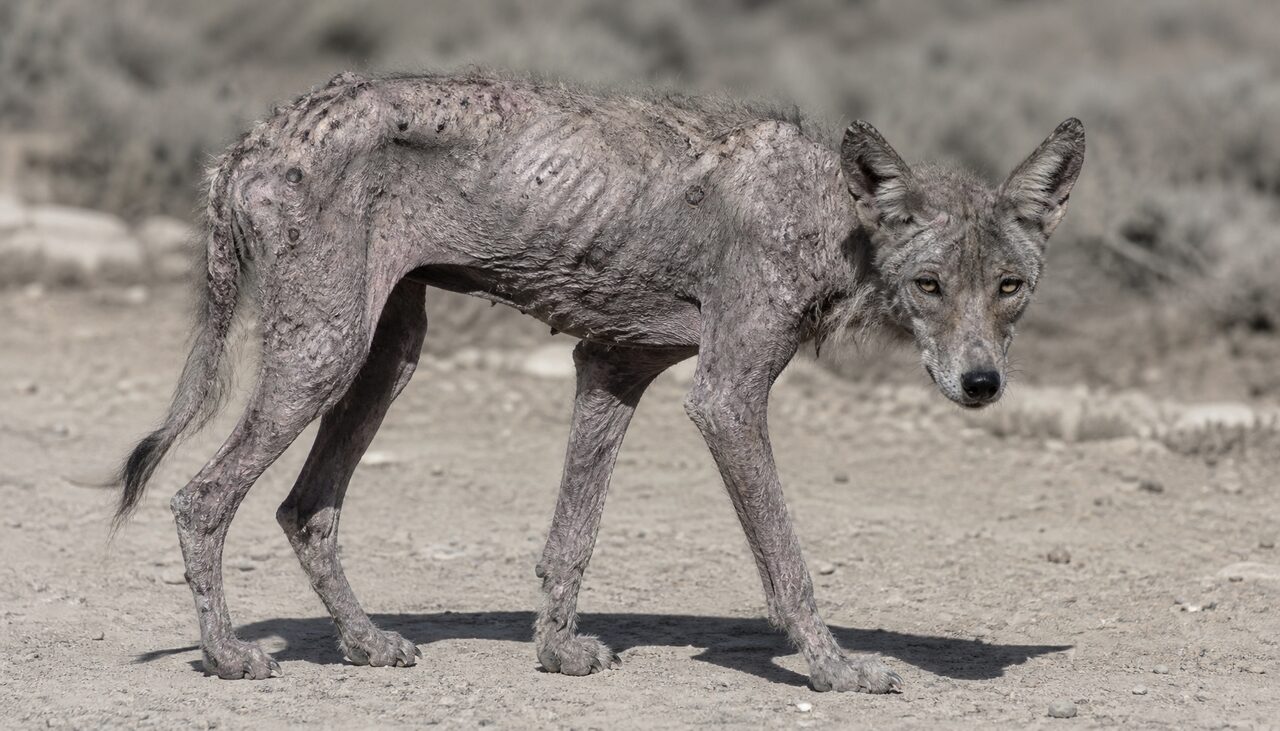
It is genuinely horrifying to look at, which is the entire reason the photographs travel. The mange even explains the killings. An animal that sick is in pain, half-blind, too weak to chase a rabbit, so it goes after the slowest prey it can reach: penned, fenced livestock. It bites badly, with a damaged jaw, leaving puncture wounds, and is too weak and wary to stay and eat. Punctured animals, uneaten — the exact crime scene that started the panic.
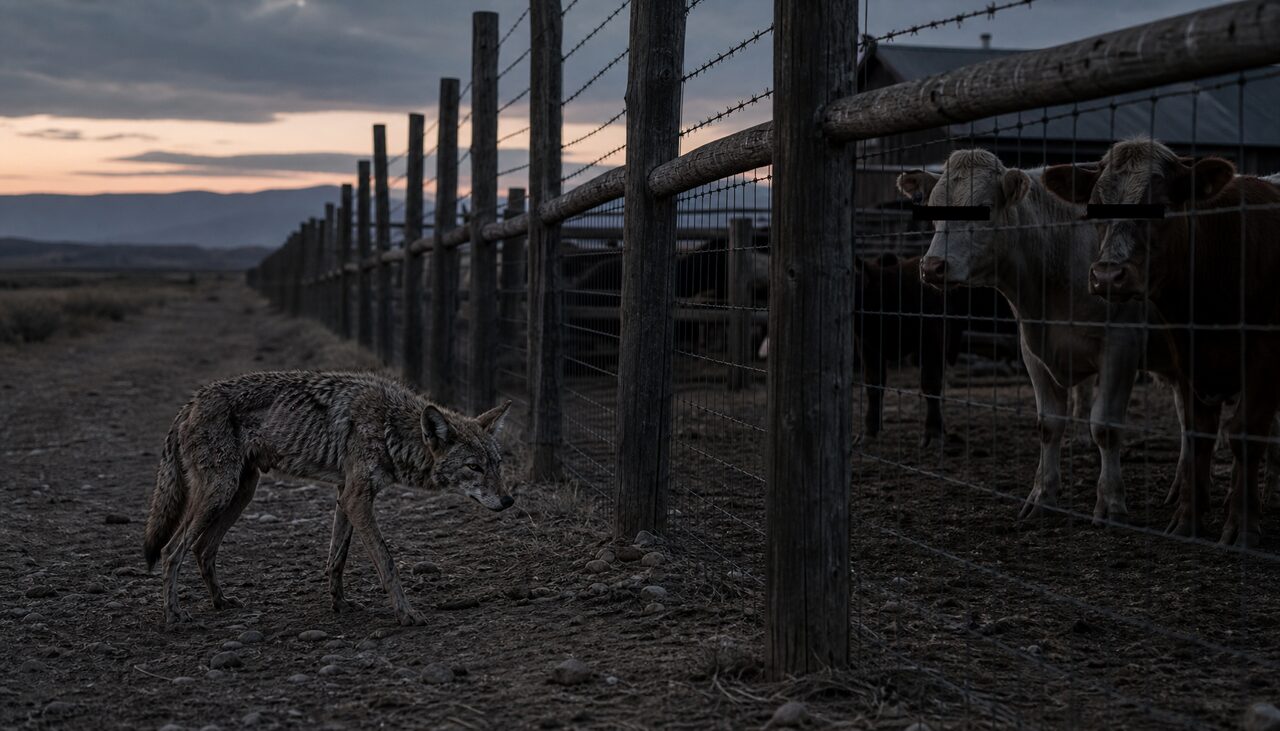
And when the poultry the Texas creature had killed were examined, they hadn't been drained either. They had been killed and partly eaten, the way chickens are killed by a coyote. The monster's victims kept failing to be bloodless. Every time someone checked, the vampire turned back into a dog.
Mange spreads where animals are stressed and crowded — in dry years, in disturbed land, along the edges where coyotes meet people. So waves of monstrous-looking canines turn up in clusters, in bad seasons, near farms, which is exactly when and where the chupacabra is always reported. The monster has a range map. It is the same as the mite's.
Goat-Sucker
None of which has slowed it down. The chupacabra is a star — a mascot, a beer, a costume, a cartoon, a name on a bottle of hot sauce. In thirty years it went from a dead sheep to a brand. It is, easily, one of the most successful monsters of the modern era. It is also not real.
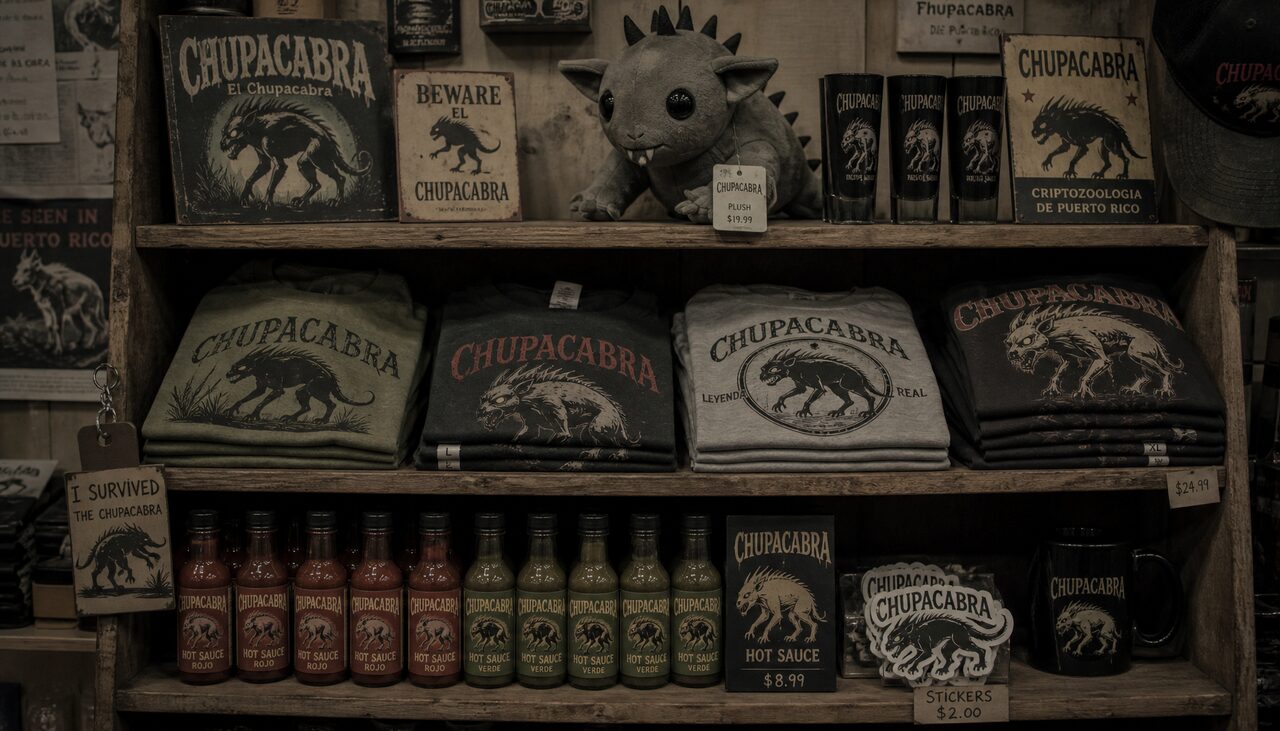
It is worth saying why it caught on. It arrived in the 1990s, with the internet, ready to carry a single photograph around the world overnight. A horrifying picture of a real mangy coyote, plus a vampire name, plus a movie everyone had half-seen. It is the first monster built for the modern speed of a rumor.
One Texas rancher even kept the head. After years of dead chickens, she recovered a strange blue-gray hairless carcass and had its DNA tested. Coyote, with a side of dog. She had it mounted, put it on display, and still calls it a chupacabra. The label survived the lab result. Preconceptions usually do.
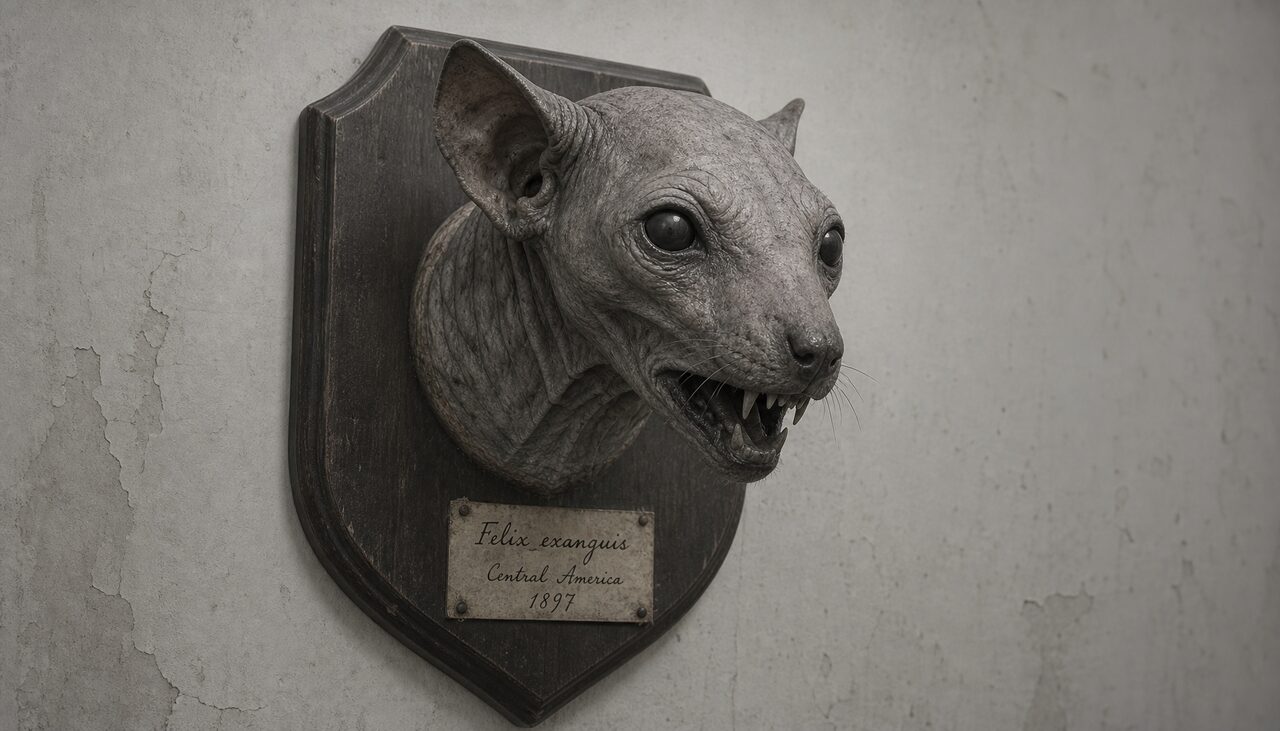
And it kept the name it was given on the very first day. Chupacabra. Goat-sucker. A creature named for draining the blood of goats — whose goats, on the table, under the knife, still had all of their blood.
That, in the end, is the chupacabra's real trick. Not vanishing. Not draining blood. Surviving every single test by being too much fun to put down. The evidence closed the case thirty years ago. Nobody told the merchandise.
It didn't come from the swamp, or the stars, or the old dark. It came from a sick coyote, a frightened neighbor, and a film that opened in July. The most modern monster in the world is a misdiagnosis with very good marketing. The goats were killed by something ordinary. The vampire was the only part that had to be invented. So someone did exactly that.
Sources & Case References
- Benjamin Radford, Tracking the Chupacabra (University of New Mexico Press, 2011)
- National Geographic — "Chupacabra Science: How Evolution Made a Mythical Monster"
- Smithsonian Magazine — "The Natural History of the Chupacabra"
- Encyclopædia Britannica — "Chupacabra"
- Skeptical Inquirer (Center for Inquiry) — Benjamin Radford on the chupacabra