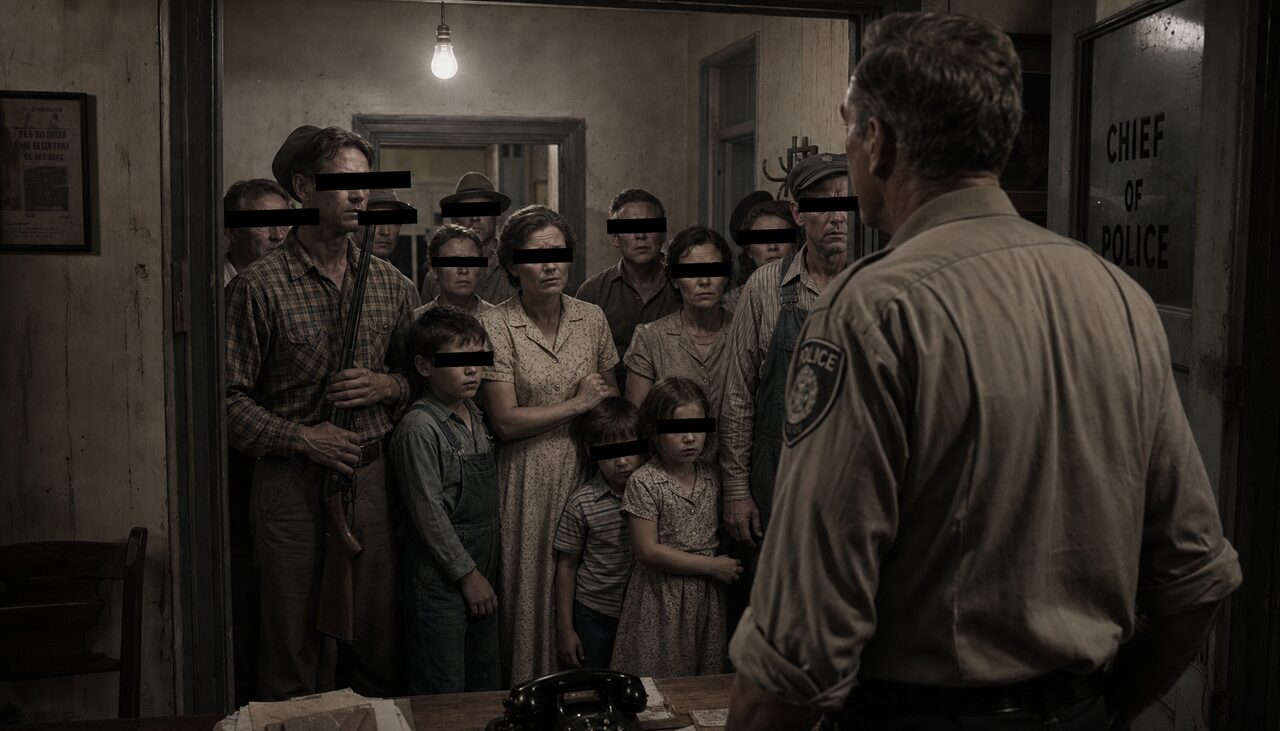
At around eleven p.m. on August 21, 1955, eight adults and three children walked into the Hopkinsville, Kentucky police station. They were visibly shaken. Several were armed. They had just spent four hours, they told the officers, in a firefight with small, silver, glowing creatures that had their farmhouse surrounded.
They had shot at the things repeatedly, with shotguns and a .22 rifle. The creatures would not stay down. When hit, witnesses said, they made a metallic pinging sound and floated back upright, like inflatable toys in a swimming pool. The family wanted help. They wanted the police to come out and deal with whatever was in the yard. The ammunition was running low, and the creatures were not losing interest.
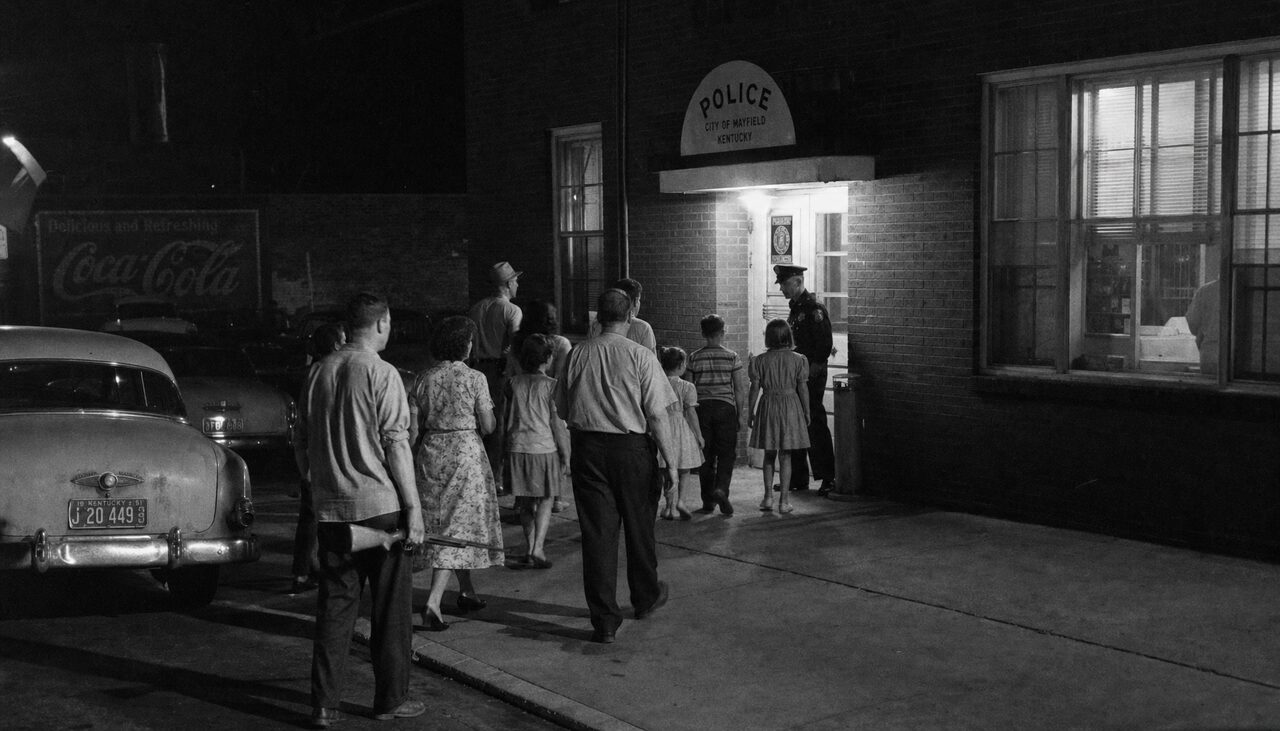
Four city police officers, five state troopers, three deputy sheriffs, and four military police from nearby Fort Campbell — 16 officers from four agencies drove to the farmhouse. They found shell casings everywhere. They found holes in the walls and the screens. They found a family that had clearly been shooting at something for hours. They did not find any creatures.
Tobacco, No Liquor
Kelly is an unincorporated community in Christian County, about seven miles north of Hopkinsville. In 1955 it was farmland. Tobacco, mostly. The kind of place where the population is hard to pin down because nobody has bothered to count.
The farmhouse belonged to Glennie Lankford, a widow. She lived there with her children from two marriages and their families. Her son Elmer, known as Lucky, lived there with his wife Vera. Another son, J.C., lived there with his wife Alene. Billy Ray Taylor, a 21-year-old from Pennsylvania, was visiting with his wife June. Eleven people in total — eight adults and three children.
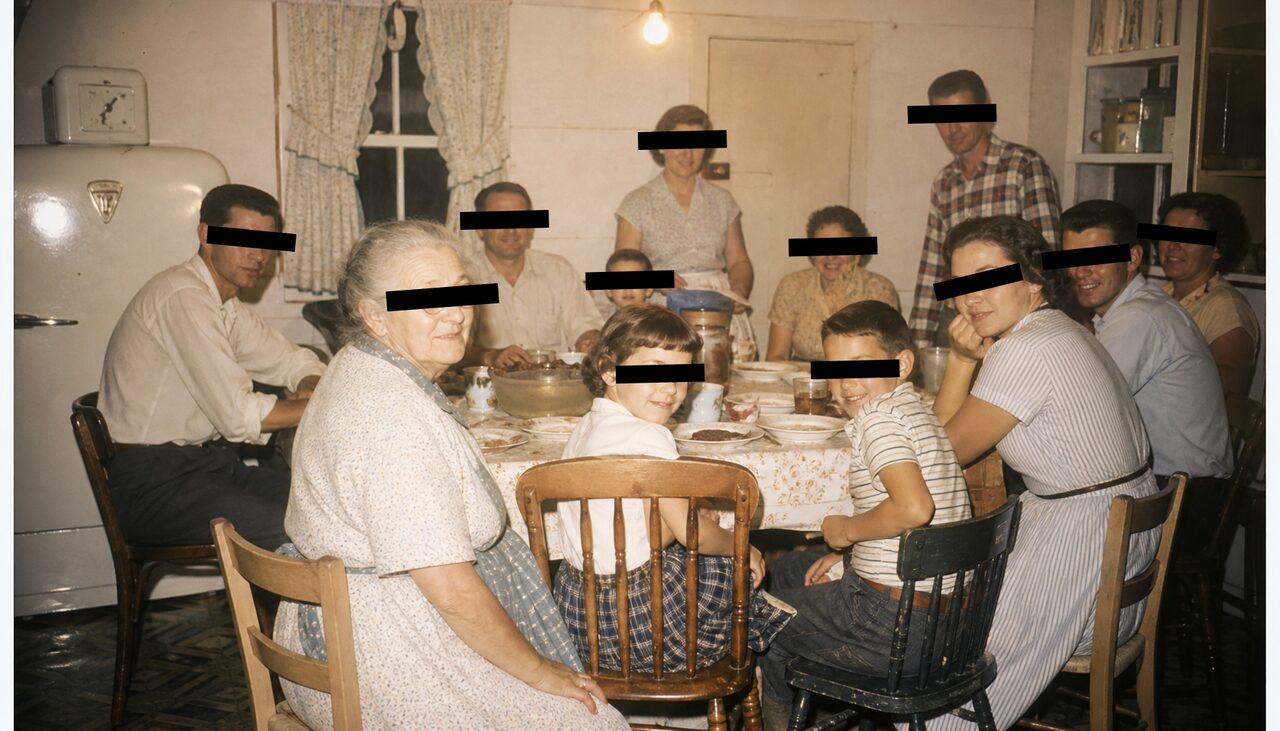
Keep the guest in mind. Of the eleven, Billy Ray was the only one who did not live there, and the one who would notice something was wrong before anyone else did. Not the cause of what followed. Just the first to look up.
By every account anyone bothered to collect, the family was unremarkable. They were not drinkers — Glennie Lankford told investigators she did not allow liquor in the house. No history of mental illness. Tobacco farmers who went to church and minded their business. Which makes the thing they reported that night harder, not easier, to explain away.
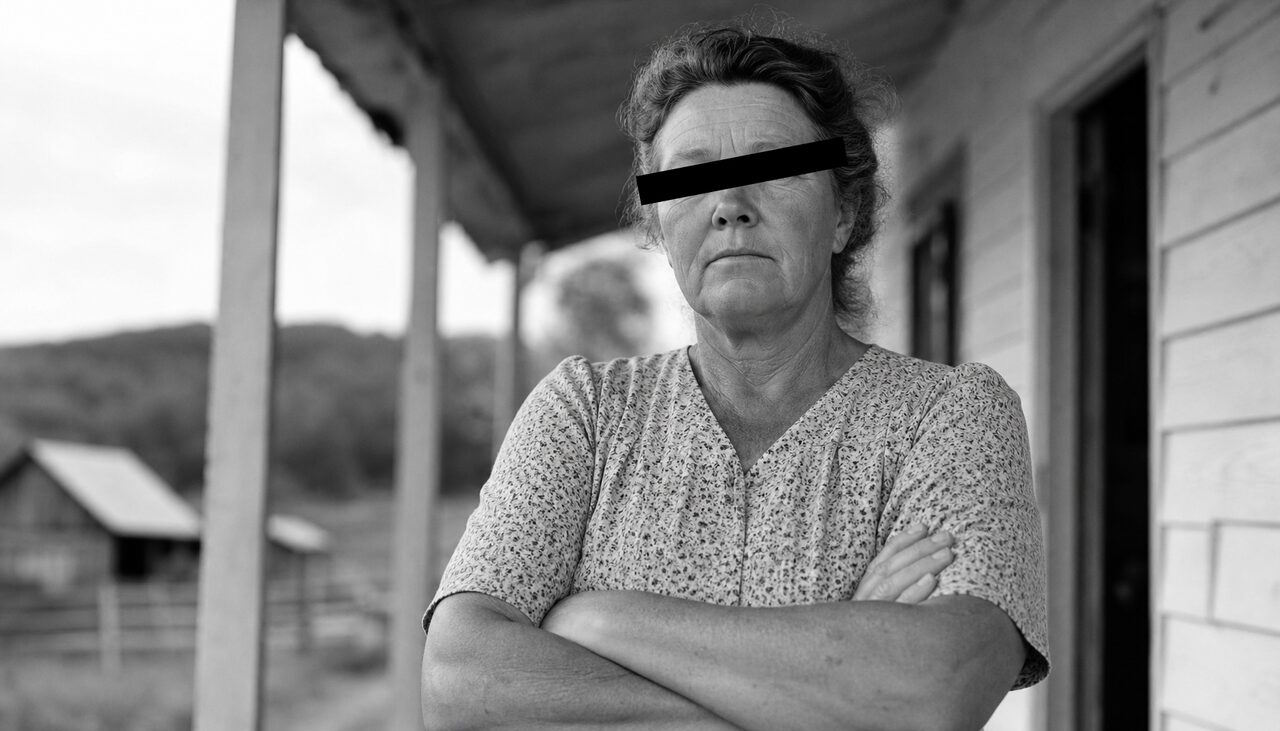
August 21 was hot, and the family had gathered at the farm. No television. No telephone. By modern standards they were isolated. By the standards of what was coming, badly outnumbered. Everything we know rests on two things: what they said happened, and what investigators found afterward. The nearest military post, Fort Campbell, sat 15 miles south, on the Kentucky-Tennessee line. Make of that what you will.
Four Hours of Shooting
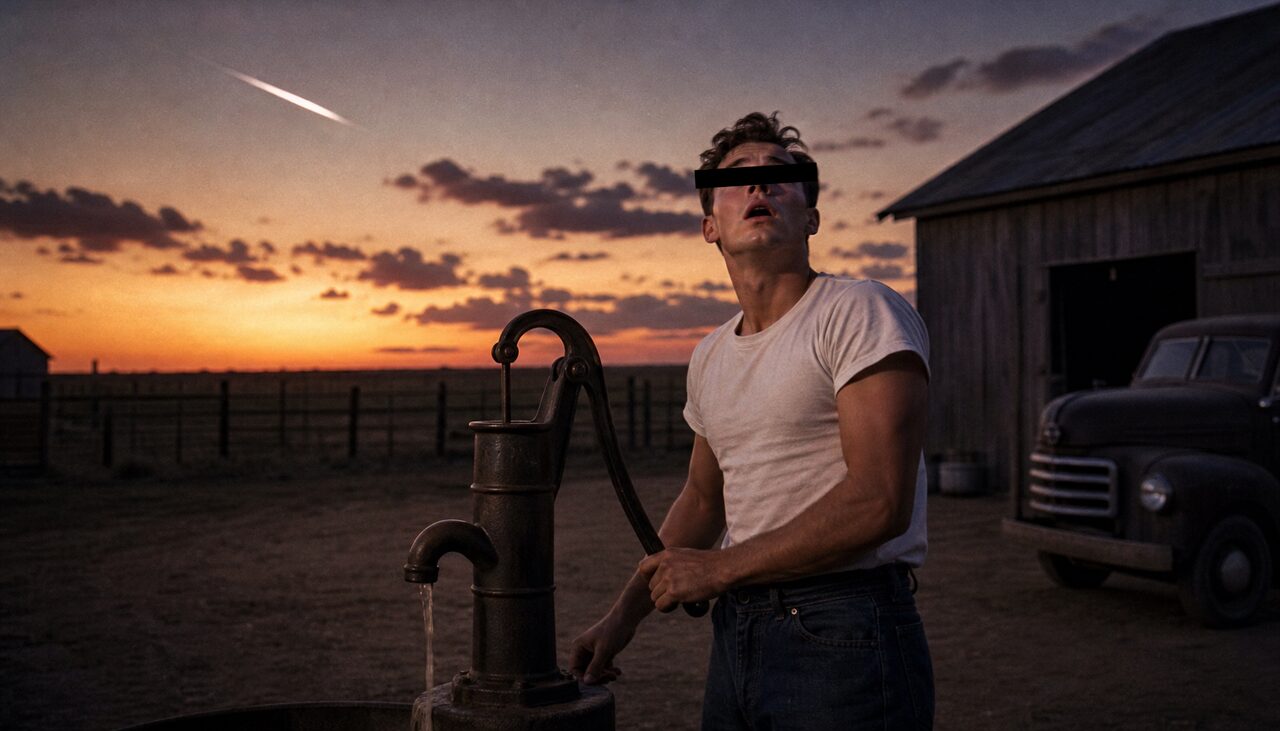
It started around seven p.m. Billy Ray went out to the well to draw water and came back in a hurry. He had seen a bright light streak across the sky, he said, and drop behind the tree line west of the house. Nobody took it too seriously. Billy Ray was a guest, and the countryside was full of shooting stars. Nobody went outside to check, which in hindsight may be the only correct decision anyone made all night.
About an hour later the dog started barking. Then it crawled under the house and stayed there for the rest of the night. The dog was the first to respond to the night's events and, by most measures, the most rational participant in them.
Billy Ray and Lucky grabbed their guns — a twelve-gauge and the .22 — and went to the back door. In the yard, maybe 20 feet off, stood a figure. What they described, in the days after, ran like this. Three to four feet tall. Oversized head. Pointed ears. Long arms ending in claws. Glowing yellow eyes. A silvery shine over the whole body, not like clothing, but as if the surface itself were giving off light.
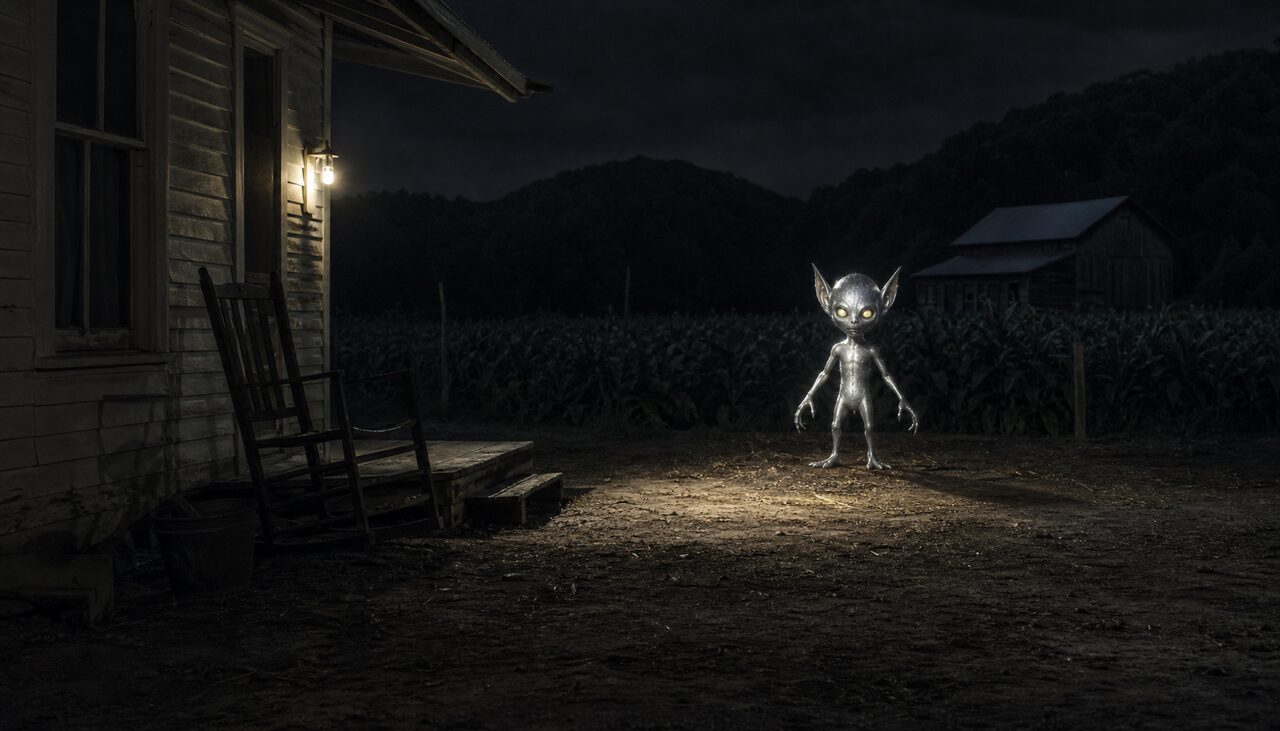
It was walking toward the house. Not running. Walking, with its arms raised. Billy Ray shot it with the .22 at close range. The creature, according to multiple witnesses, did a backward somersault and then righted itself. It did not fall. It did not bleed. It moved back into the darkness.
Moments later a similar creature — or the same one — appeared at the window. Lucky fired through the screen, and it flipped backward off the sill. They ran outside, and it was gone. Another one sat on the roof. Billy Ray fired, and the witnesses were firm on what happened next: it floated. It drifted off the roof, settled in the yard, and walked away.
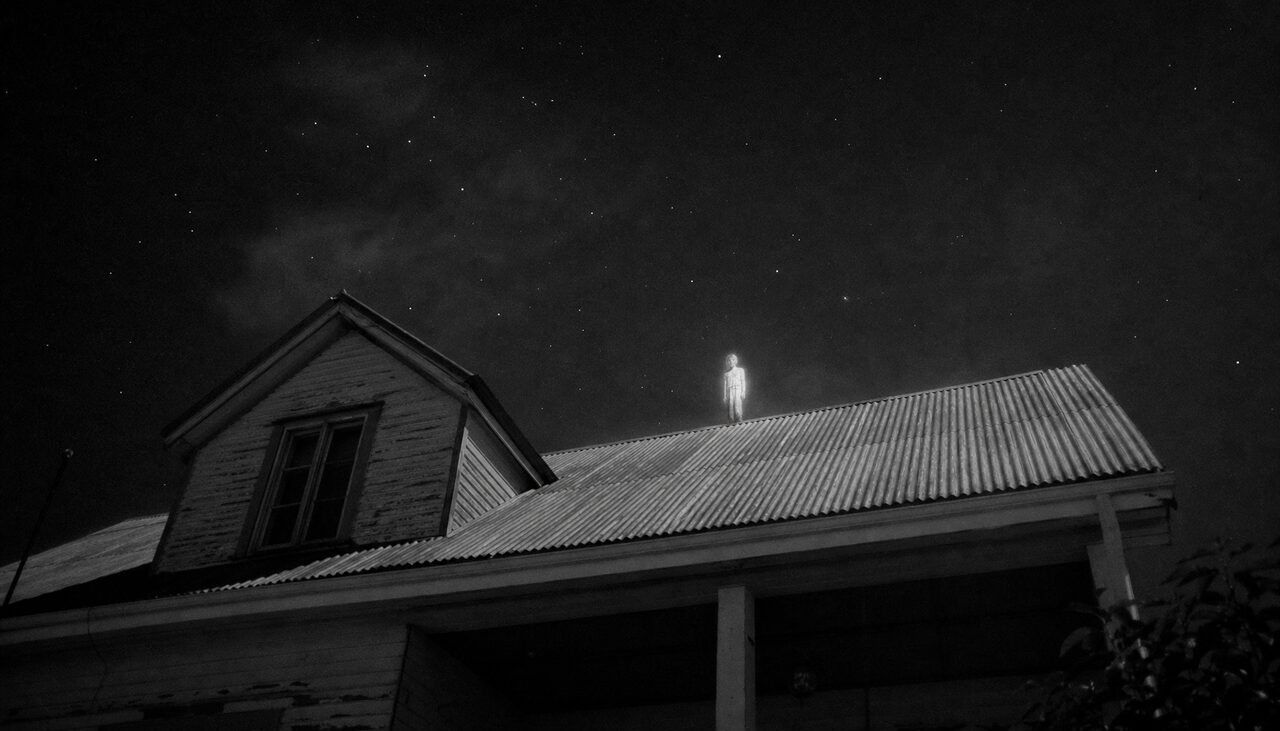
This went on for about four hours. The creatures appeared at windows. They appeared on the roof. They appeared in the trees. At one point Billy Ray stepped onto the porch, and one of them reached down from the overhang and grabbed his hair. The others hauled him back inside. Shoot one, witnesses said, and it made the same metallic ping and tumbled away. Then it came back, or another one just like it. Either way, it did not improve the evening.
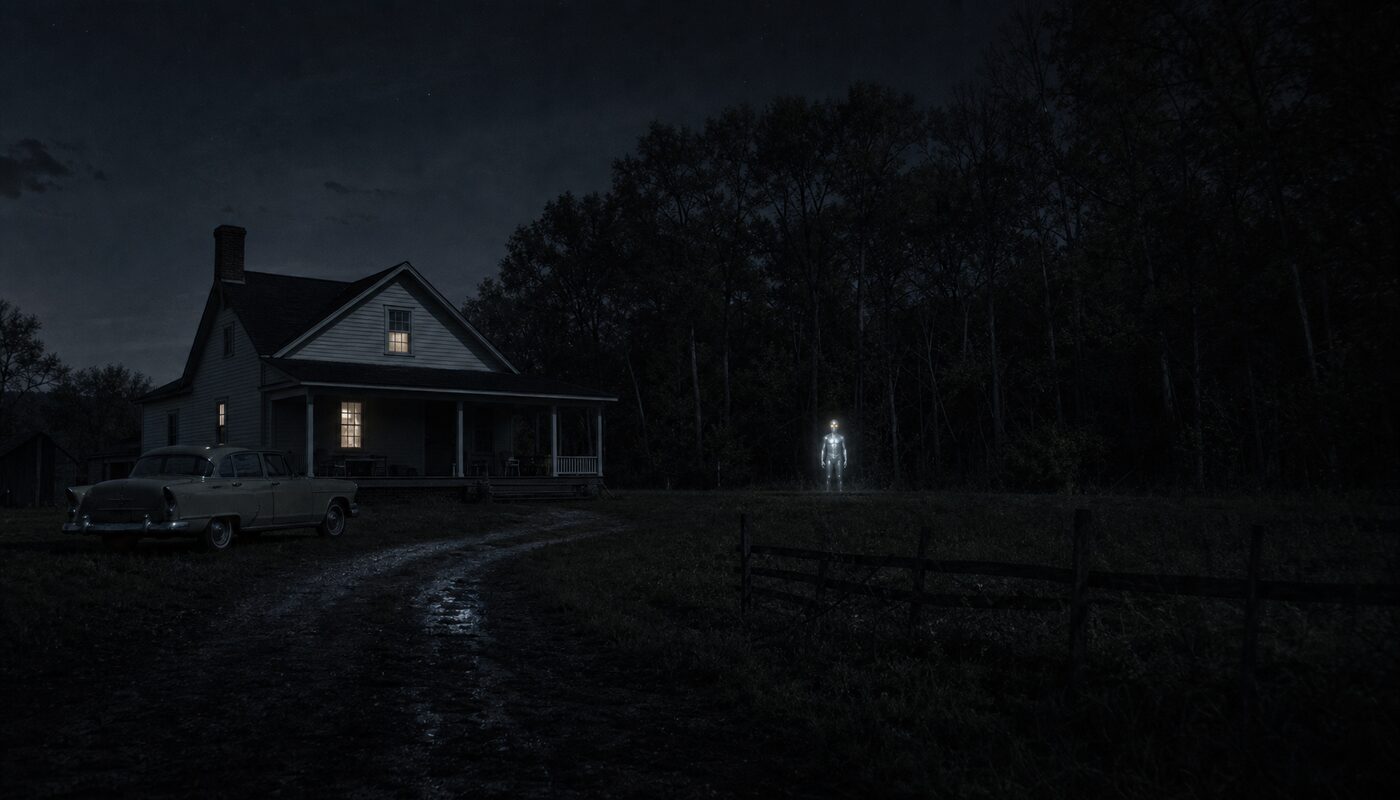
By eleven p.m. the family had had enough. They piled into two cars and drove the seven miles to Hopkinsville at speed, reaching the station in what the desk sergeant later called genuine terror.
The man who met them was Police Chief Russell Greenwell, who had handled a rowdy Saturday night or two in his time. Eleven people, armed, breathless, stone-cold sober, all telling the same impossible story without tripping over each other's details. That last part is what moved him. A liar embellishes; a frightened person just repeats the thing that frightened them. He looked at a room full of the second kind, and he sent everybody.
The officers searched the house, the yard, the outbuildings, the fields. They found plenty of signs that someone had been firing guns. Shell casings in the yard. Bullet holes in the windows and screens. Real damage, consistent with hours of gunfire. They found no creatures. No blood. No tracks. Nothing to suggest there had been anything to shoot at.
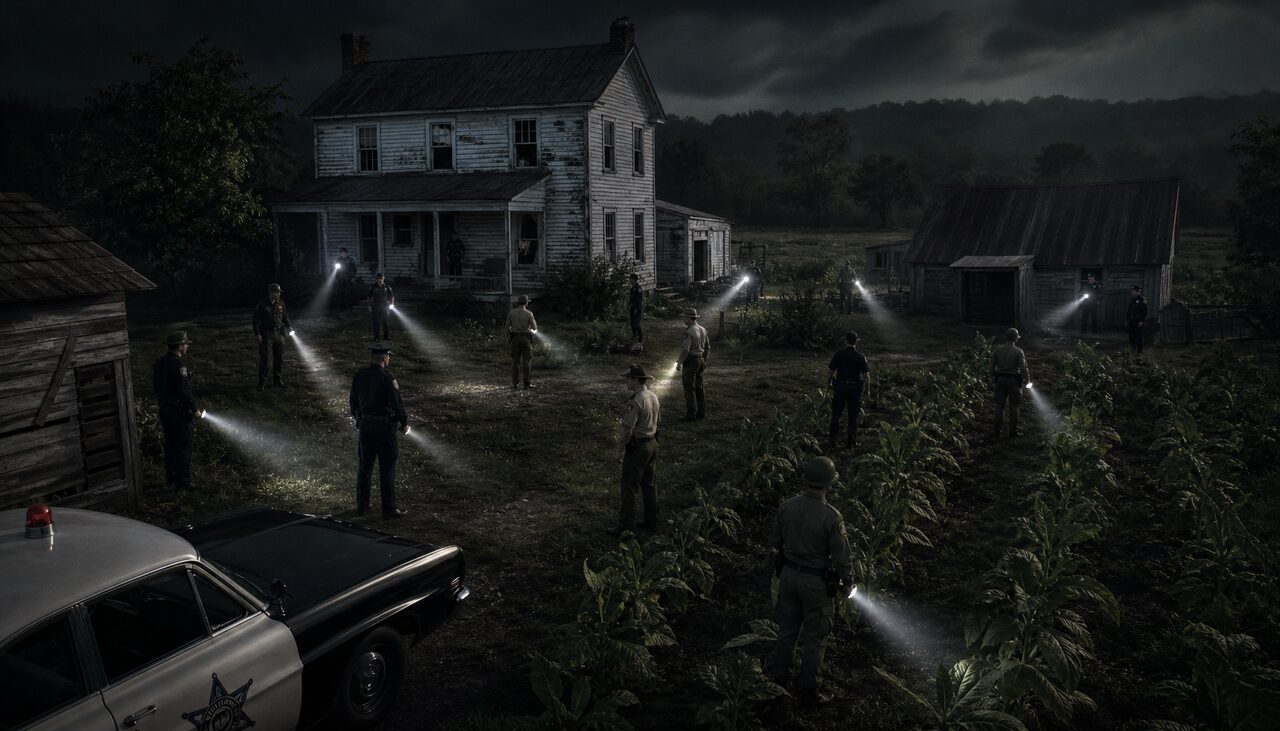
The officers left. The creatures came back. The timing was not lost on anyone. The siege ran until five a.m. A second search, after sunrise, came back just as empty.
Monkeys, Owls, Meteors
The Air Force enters the story through Project Blue Book, though how far it actually got is disputed. By most accounts the file is thin, and there is little sign anyone made the drive out to the farm. The case got filed — as a hoax or as unexplained, depending on which page you read — and that was the end of it. Whatever the file says, it does not explain how eleven people, including children, kept up a hoax that meant firing real guns inside their own home for half the night. It does not explain the dog. And it does not explain why a family that got mostly ridicule for their trouble reportedly never took a word of it back.
The year matters here. 1955 was eight years after Roswell, dead in the middle of America's flying-saucer fever. Half the country was watching the sky, and the papers were happy to print whatever it thought it saw. That cut both ways. It put the family's story on the national wire within days, and it guaranteed nobody in any position of authority would handle it with a straight face.
The explanations arrived almost as fast as the reporters. The light Billy Ray saw was, by the calendar, plausibly a meteor — there was a shower active that August. The rest was nerves, said the psychologists: excitement, suggestion, a dark farmhouse, eleven people winding each other tighter by the hour. And then there was the Air Force's own contribution. One officer suggested the family had spent the night shooting at a monkey, escaped from a circus, silver in the tellings that really commit. No circus, anywhere, ever reported one missing.
The explanation that has outlasted all the others is the quiet one. Most associated with folklorist Joe Nickell, who laid it out in 2006: the family spent the night shooting at great horned owls. The owl earns its place. They stand close to two feet tall, with a wingspan past four. Ear tufts. Eyes that throw back light in a yellowish glow. They are nocturnal, they fly in silence, and they turn genuinely aggressive defending a nest. Hit one with birdshot and it might tumble, right itself, and fly off, harder to kill than you would guess. Wings spread, dropping off a roof in the dark, an owl could pass for something that floats. And the metallic ping? Buckshot on a tin roof.
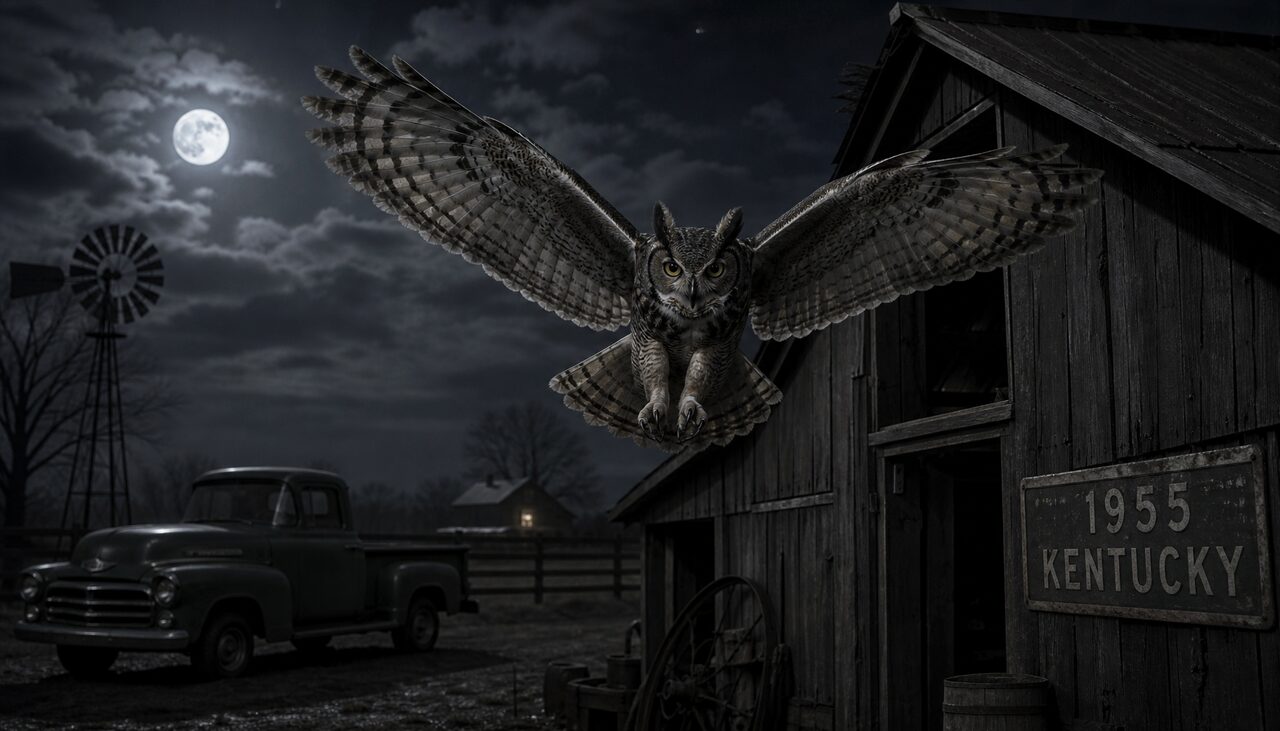
It is a good theory. It explains the size, the eyes, the resilience, the hour. It does not explain everything. Lucky had spent his whole life in rural Kentucky and knew an owl when he saw one. The witnesses described things that walked upright, on two legs, arms at their sides — which owls do not do. They described a silver glow no field guide accounts for. And they described all of it up close, through a screen, feet away, for hours. Mistaking an owl for a goblin once, in the dark, is easy. Doing it all night is a more demanding proposition.
In fairness to the owls, one more concession. The wildest flourishes — the floating, the hair-grab, the details that strain hardest — trace mostly to Billy Ray, the excitable guest. His testimony looked, in Nickell's word, embroidered. Which is fair. But it cuts both ways. Strike his account entirely, and you are still left with ten people who saw something in the yard and ran.
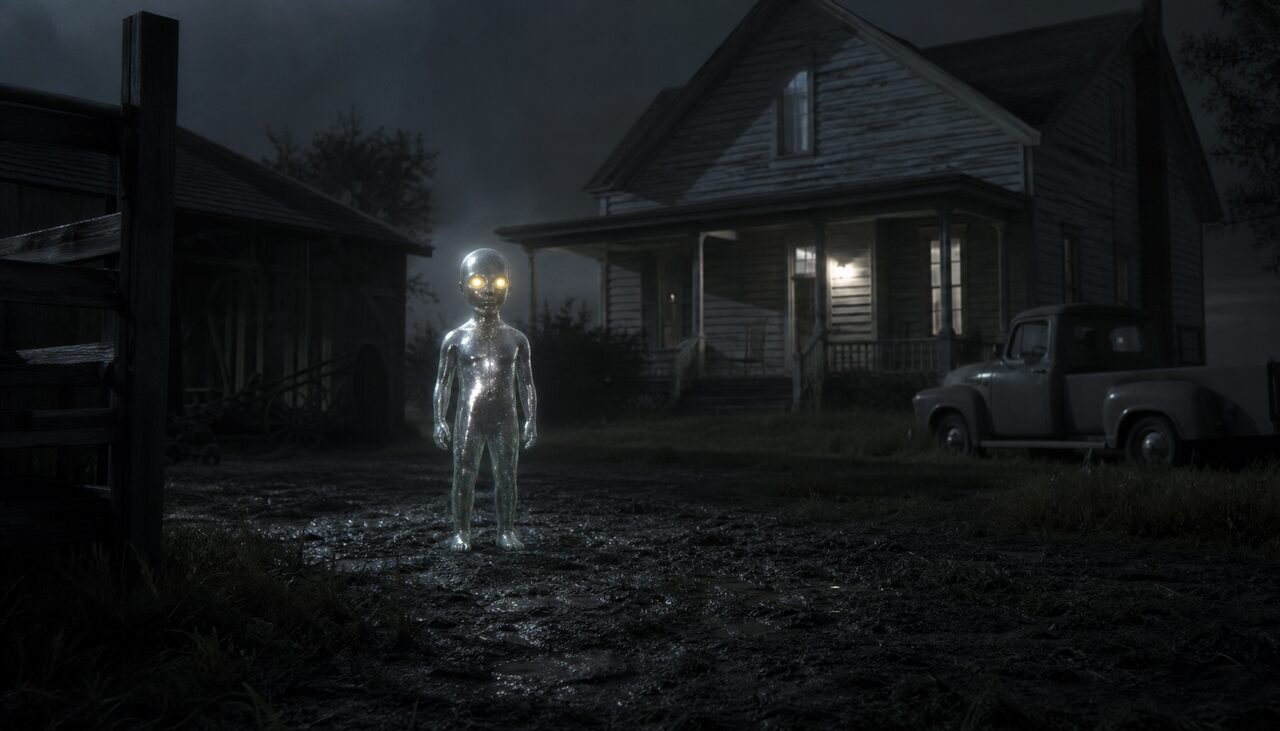
So that is where it sits. No physical evidence, no obvious motive, a cursory investigation, and a best guess that does not quite close. Eleven people fired guns into their own yard all night, fled their home, and told the police a story they knew would draw laughter, and never adjusted a word of it. The explanation is owls. The question is whether you have ever met an owl that could do all that.
There's a Gift Shop
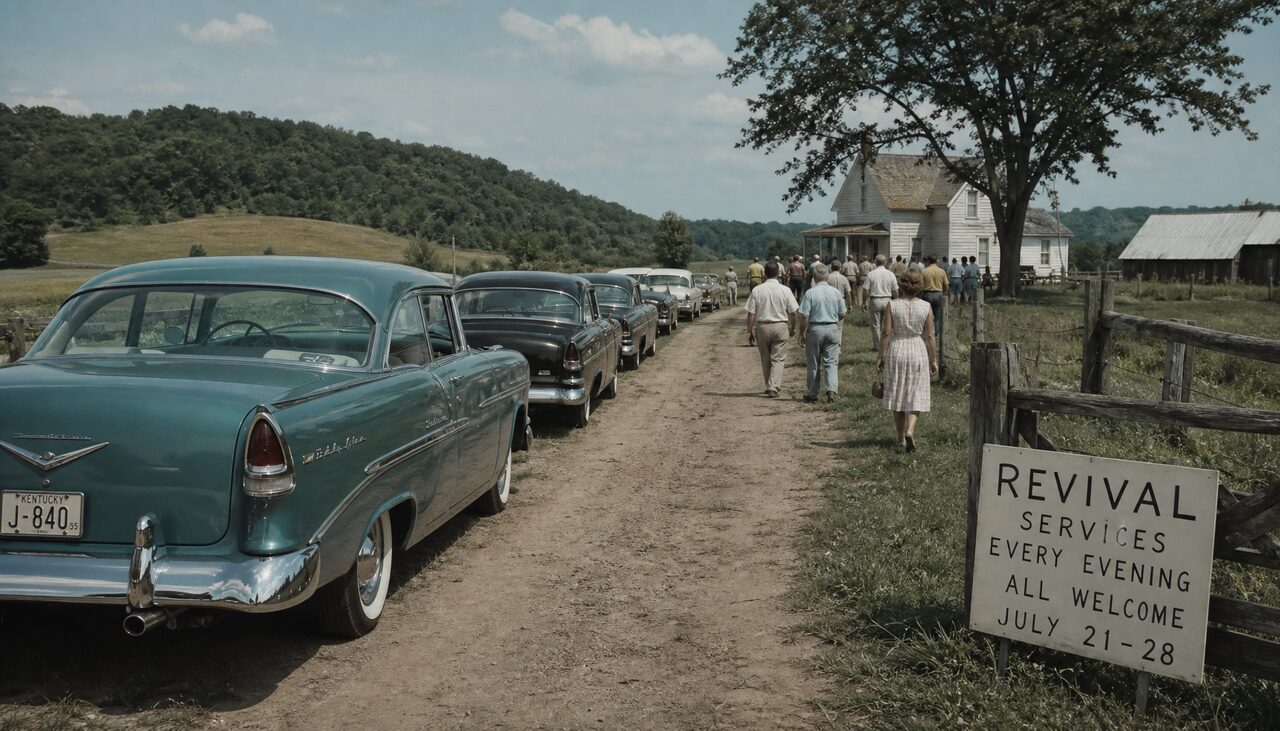
The next day brought a second siege: the curious. The Kentucky New Era ran the story, and cars came up the lane to see the farm where the little men had been. The family, having survived the night, did the American thing. Fifty cents to walk the grounds. A dollar to hear the story. Ten dollars to take a photograph. The crowds thinned fast. A parking situation, it turns out, is harder to sustain than a goblin invasion.
The case left one more thing behind: a phrase. Hopkinsville helped fix "little green men" in the American language, the shorthand for every visitor that came after. There is just the one problem. The creatures were described as silver. Somewhere between the farmhouse and the phrase, the record got sanded down to a color nobody at the scene reported. That is usually how it goes. The story keeps the part that rhymes.
The Sutton farmhouse is no longer standing. For years the town has thrown an annual festival in the creatures' honor — most recently GoblinCon, promoted in 2025 around the 70th anniversary of the encounter. There is a gift shop. There are T-shirts. On the merchandise, the creatures are friendly. The family would probably find this confusing. No creature — living, dead, or owlish — was ever recovered from the property.