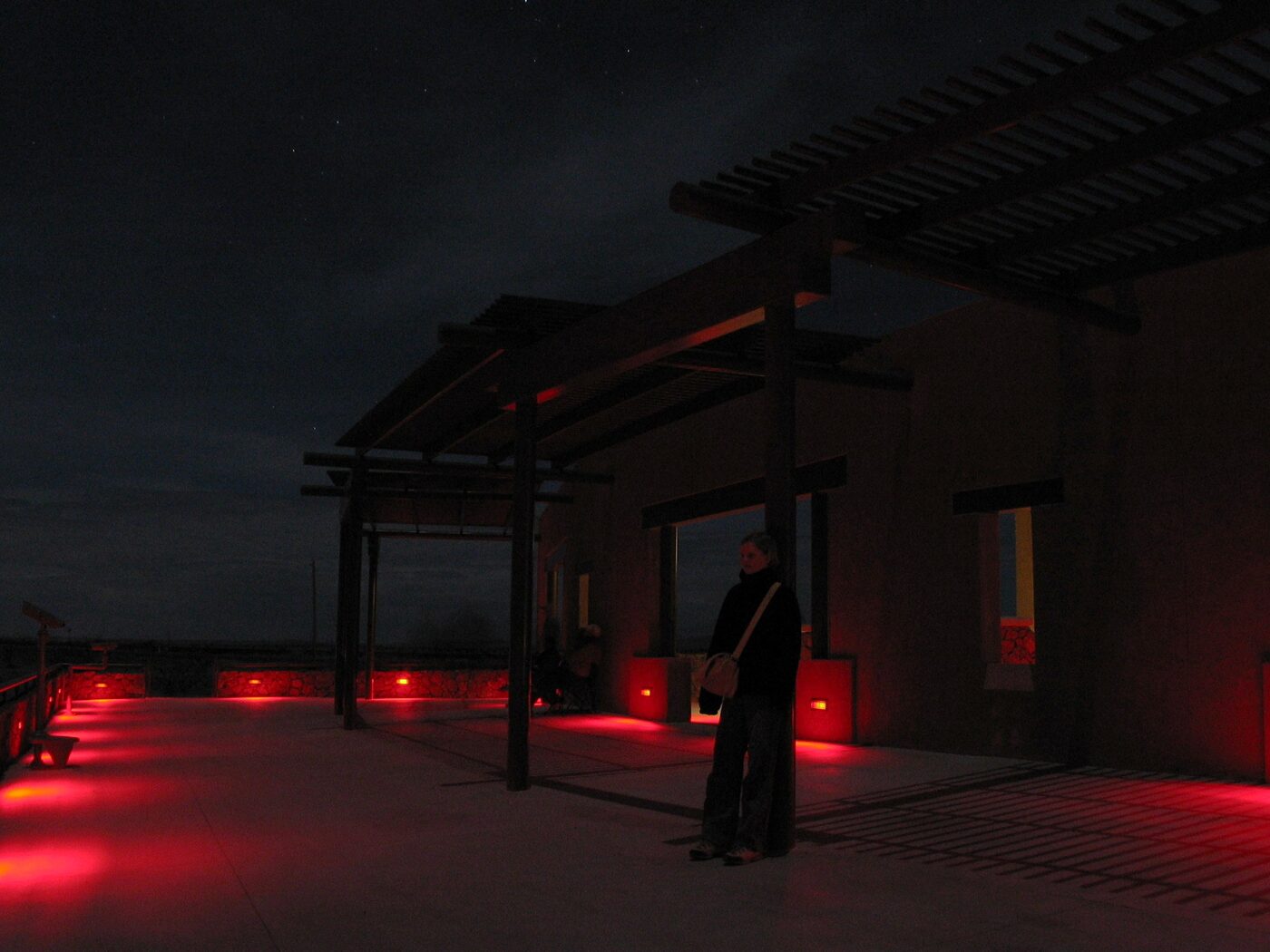
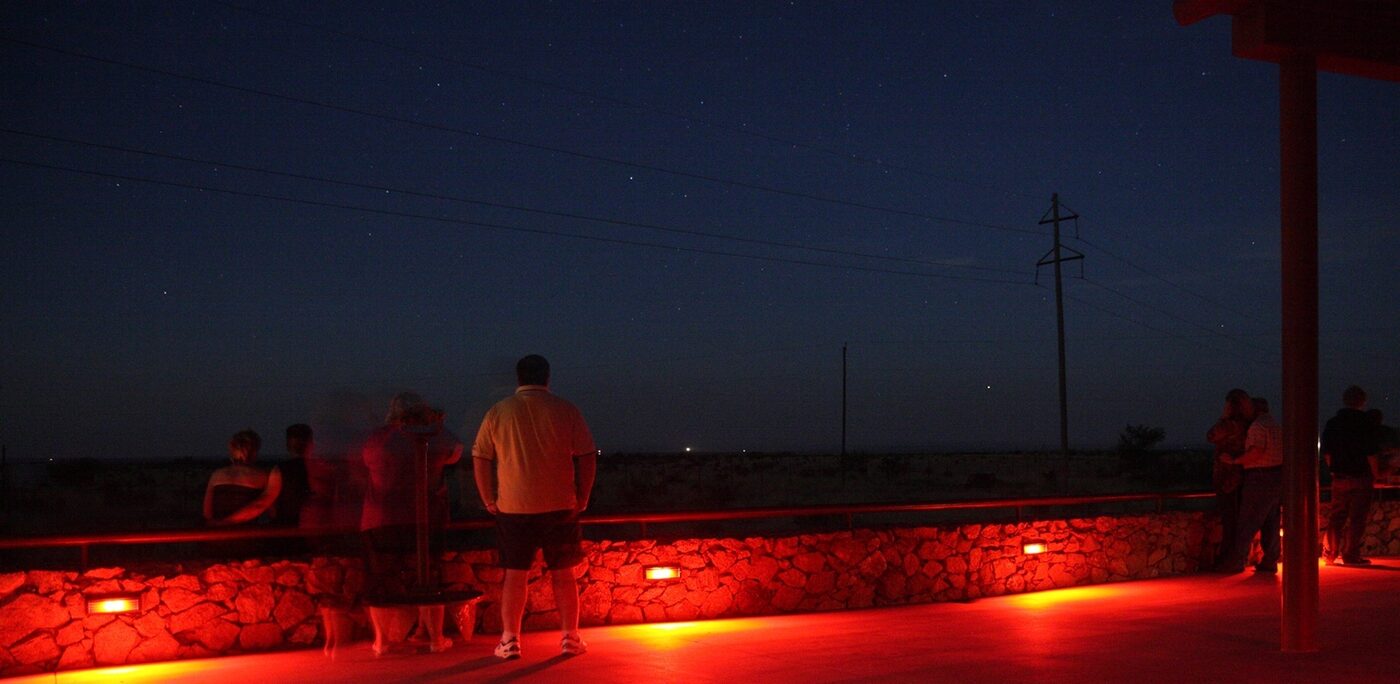
In the high desert of West Texas, the state government built a viewing platform. A nice one — parking, mounted binoculars, bronze plaques, a proper adobe building — paid for with around $700,000 of public money. It exists so that tourists can gather there at night and watch the famous, mysterious Marfa Lights. Which a team of physics students once traced, fairly conclusively, to car headlights on the highway.
This is the strange comedy of Marfa. A real phenomenon — glowing lights that genuinely appear in the desert at night, that genuinely look uncanny. A real, well-evidenced explanation for most of what people see. And, in between the two, a whole town's identity, a gift shop, and a government monument. Built, in large part, around traffic.
The Lights
The lights themselves are real and well-documented. Out on the flat desert plain southwest of town, glowing orbs appear — roughly the size of basketballs. They hover. They split apart and merge back together. They dart sideways and wink out. Yellow, white, sometimes red or blue. People have watched them for generations, and they are not imagining the lights. The lights are there. The only question is what they are.
The story usually starts in 1883. A young cowhand named Robert Ellison, driving cattle through the area, reportedly saw a flickering light and assumed it was an Apache campfire. He went looking, the story goes, and found no ashes, no fire, nothing. It is a great origin story. It is also, honestly, thinly documented — the first written account of it did not appear until the 1950s.
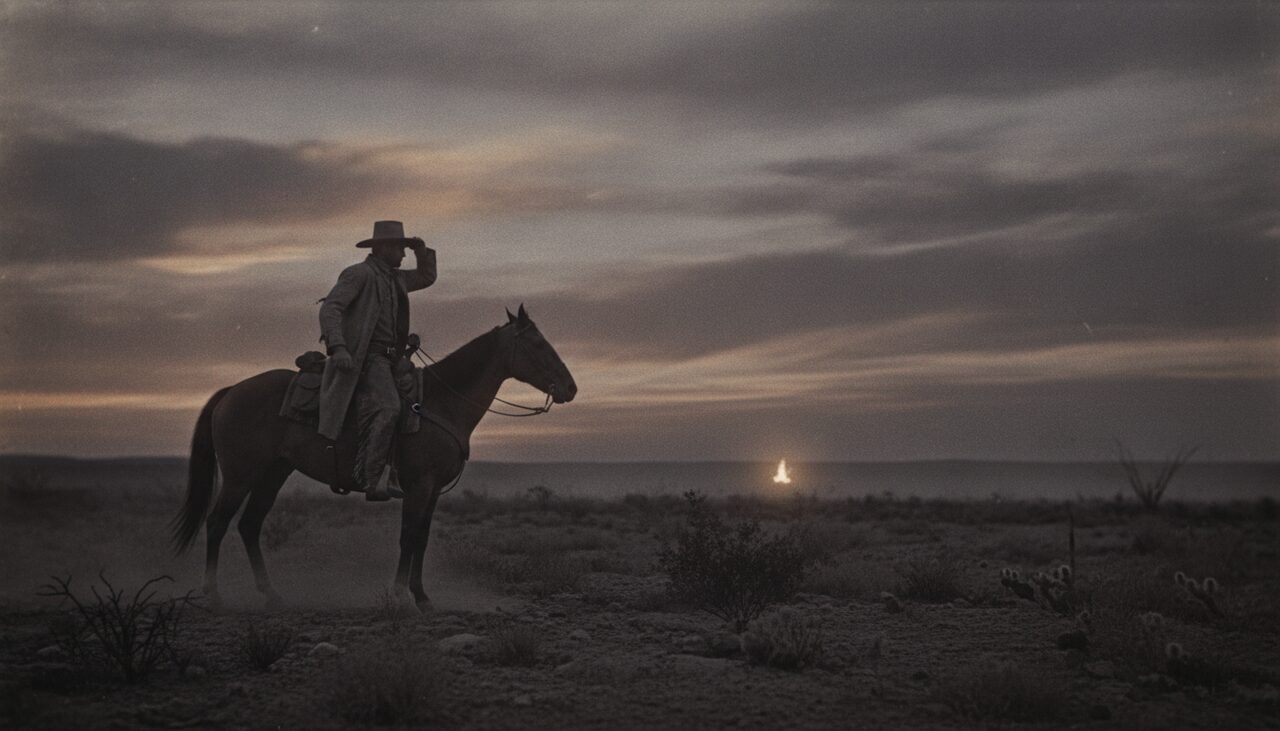
And to be clear, people who see them are not fools. The lights can be genuinely startling — bright, sudden, behaving with what looks like intent, darting and pausing as if they are aware of you. Standing in the dark desert, watching one split in two and drift toward you, "it's just a car" is a hard thing to feel. The explanation is mundane. The experience is not.
That date matters, and we will come back to it. Because the single biggest question about the Marfa Lights is whether people were really seeing them before there were cars and highways for them to be. The honest answer is: the evidence for that is a cowboy story written down seventy years late.
The Viewing Center
However it started, the legend grew, and Texas leaned into it. In 2003, the state opened the official Marfa Mystery Lights Viewing Center on the highway east of town, with federal and state money — roughly $700,000 of it. One writer described the result, accurately, as a very nice adobe restroom with binoculars bolted to the front.
It is worth knowing the town, too. Marfa is tiny — a couple of thousand people, hours from anywhere, on a high desert plain. It is also, improbably, a world-famous art destination, full of galleries and minimalist sculpture. So you have a remote Texas cattle town that is somehow known for two things: avant-garde art, and possibly-car-headlights.
And it works. The viewing center draws tourists year-round. There is an annual Marfa Lights Festival. There is, of course, a gift shop.
The Physics Students
That paper came in 2004. A group of physics students from the University of Texas at Dallas decided to study the lights properly. They spent four nights at the viewing area with cameras, traffic-monitoring gear, and chase cars. What they found was a near-perfect match between the mysterious lights and the headlights of cars on the highway to Presidio.
The clinching moment is genuinely funny. To test the idea, the students drove a car out onto that highway, parked it, and flashed the headlights. At the viewing center, miles away, the flashing car appeared as a textbook Marfa Light. When another car passed the parked one, it looked, from the platform, like one mysterious light overtaking another.
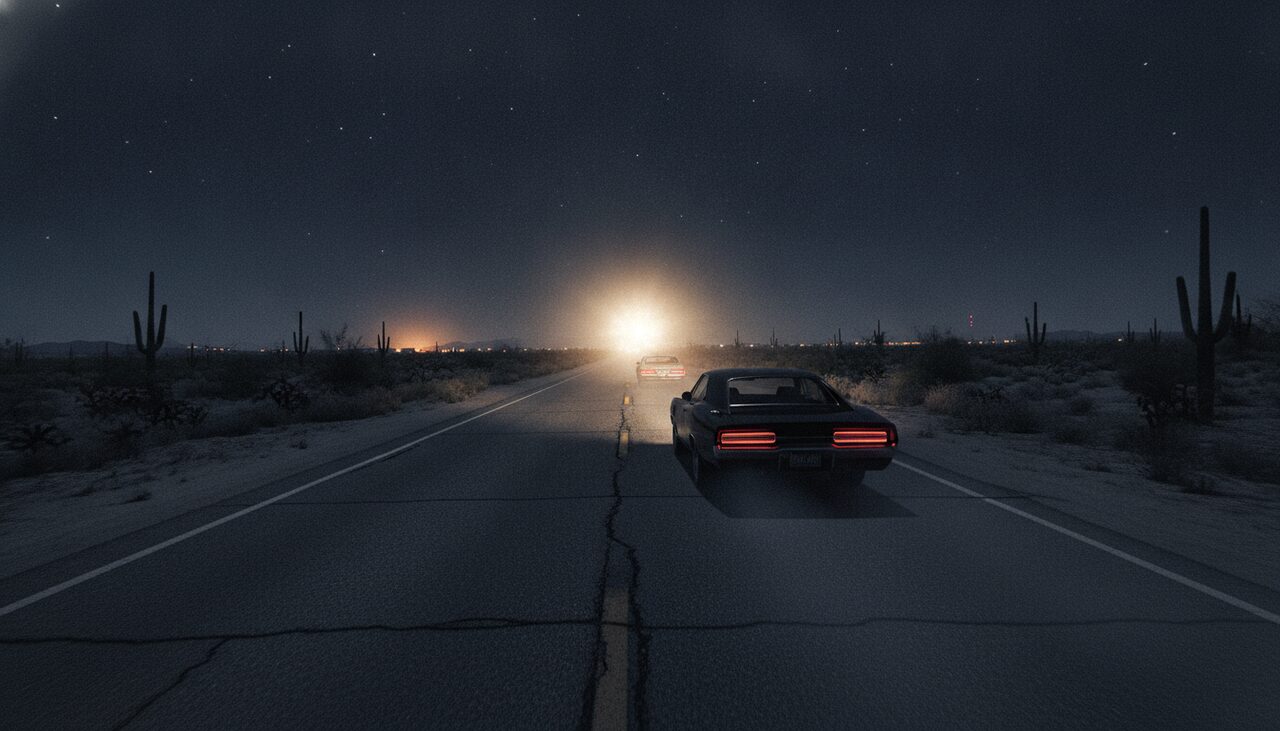
They even chased them. When a light appeared, one team would drive toward it while another stayed at the platform, radioing back. The lights, when pursued, behaved exactly like distant headlights behave when you drive toward them. They did not flee. They did not vanish into the hills. They were just a little further down the road. The most rigorous study of the Marfa Lights ever conducted reached its climax with a college student switching on his high-beams. And it worked.
Why They Float
So why do car headlights, miles away, turn into floating, splitting, color-shifting orbs? It is the desert air. Marfa swings dramatically in temperature between day and night, which stacks the air into layers of different densities. Those layers bend light, like a lens. A headlight far over the horizon gets lifted, stretched, wobbled, and tinted — until it stops looking like a car and starts looking like a ghost.
The conditions in Marfa are nearly perfect for it. The desert can swing forty or fifty degrees between afternoon and midnight, which builds sharp, layered air — cool near the ground, warm above, or the reverse. It is the same trick that has fooled sailors for centuries into seeing floating cities and phantom ships. Marfa just gets phantom Buicks.

It is the same effect behind a desert mirage, or the shimmer of a road on a hot day. Distant light, bent by warm air, arriving where it should not, looking like something it is not. The Marfa Lights are, for the most part, the ordinary world seen through a hundred miles of trembling air.
The Stubborn Tail
To be fair, and to be honest — not everyone is fully satisfied. Believers point out, correctly, that if the lights really were seen before the highway existed, headlights cannot explain those. A later study left a small door open for a few unexplained cases. So the fair verdict is not "completely solved." It is "almost entirely headlights and warm air, with a thin, contested sliver that keeps the mystery alive."
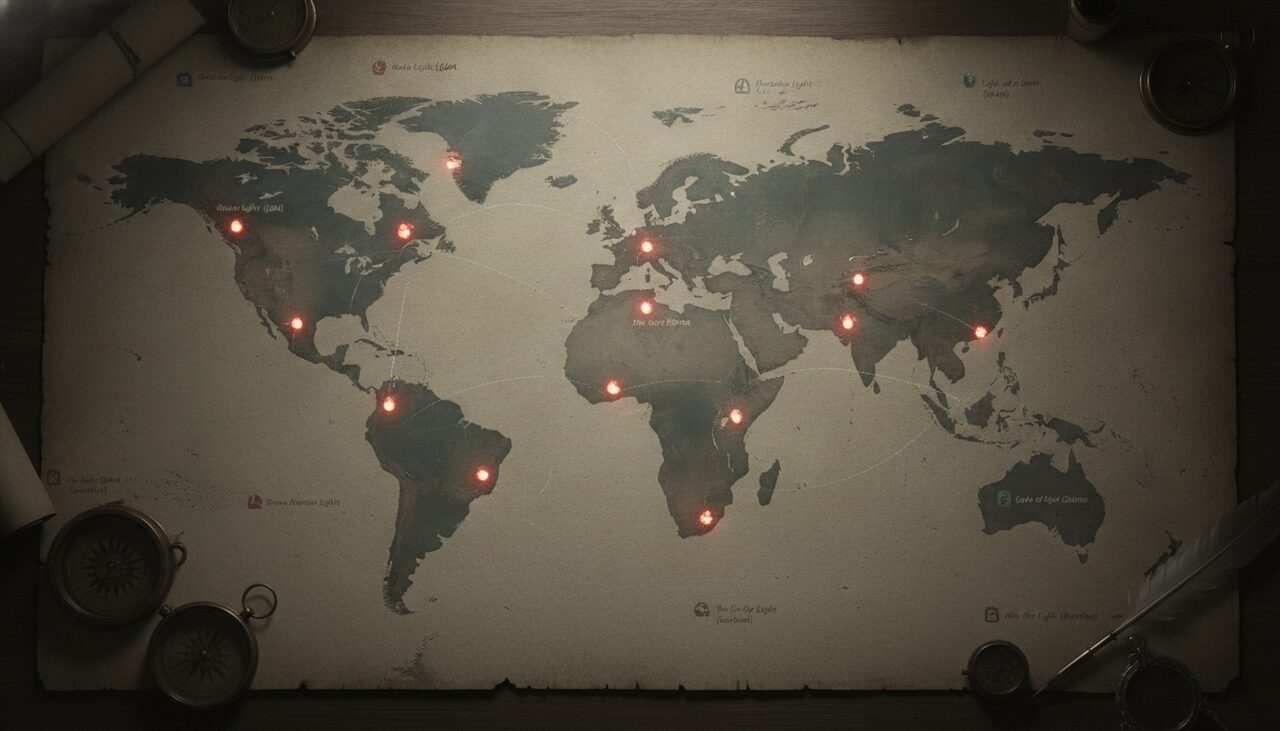
And Marfa is not alone. Ghost lights show up all over the world — Brown Mountain in North Carolina, the Min Min lights in the Australian outback, Hessdalen in Norway. Most of them, on close study, turn out to be distant lights bent by the air. Brown Mountain got that exact verdict from a government scientist back in 1922. Humanity keeps rediscovering that faraway lights look strange through warm air.
Still Watching
So that is Marfa. Real lights, a mostly-real explanation, a thin unexplained tail, and a government viewing platform aimed, with great civic pride, at a stretch of highway. The lights are genuine. The wonder is genuine. It is just that the wonder, most nights, is somebody driving to Presidio.
There is something almost perfect about the platform itself. A government, presented with a phenomenon that a four-day student project had mostly explained, responded by spending three-quarters of a million dollars on a permanent structure from which to keep looking at it. The students brought the answer. The state built the monument anyway.
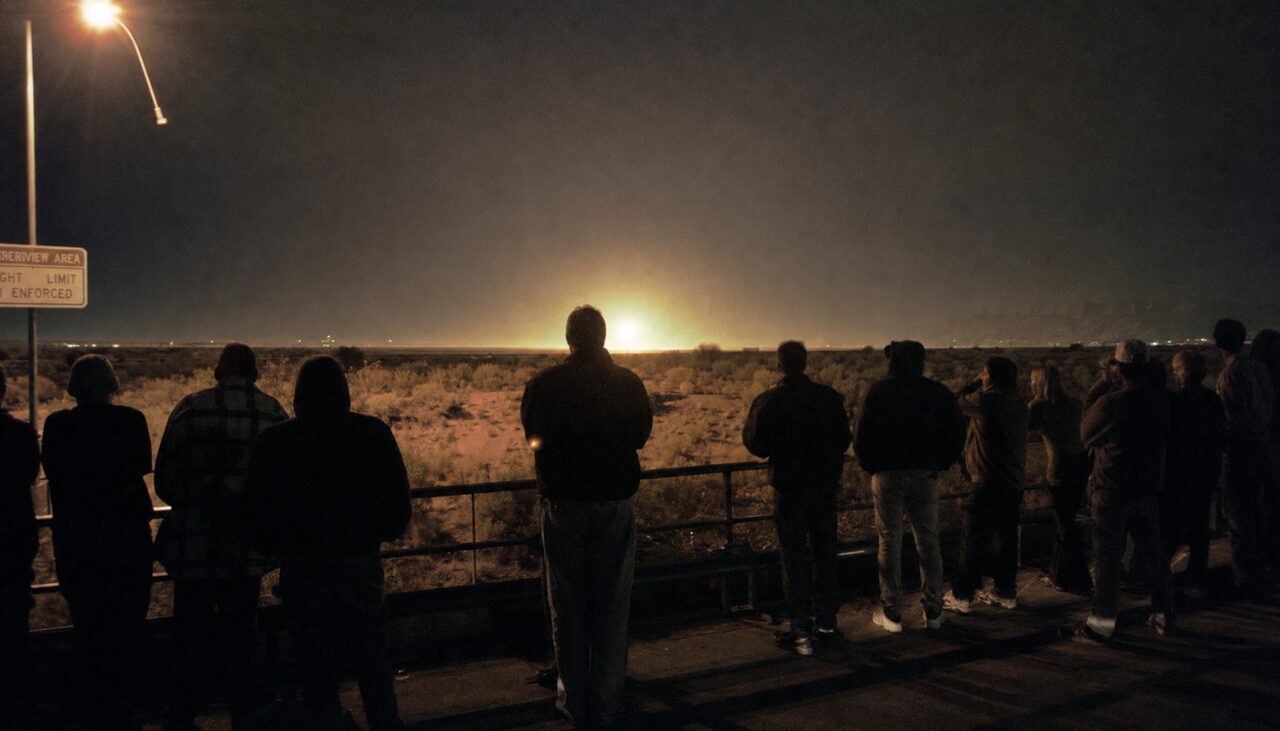
And people still come. Every night, tourists gather on the platform in the dark and wait. Sooner or later, a light appears on the flat — floating, glowing, splitting in two. Most of them know, by now, what it probably is. They watch it anyway. Because a car headlight, bent into a ghost by a hundred miles of desert air, is still, when you see it, genuinely beautiful.
Sources & Case References
- Wikipedia — "Marfa lights"
- The 2004 University of Texas at Dallas Society of Physics Students field study, which matched the lights southwest of the platform to vehicle headlights on U.S. Route 67 to Presidio.
- Image credits: the Marfa Lights and single-light photographs by Jon Hanson (CC BY 2.0)_(cropped).jpg); the Viewing Center photograph by Daniel Schwen (CC BY-SA 2.5).