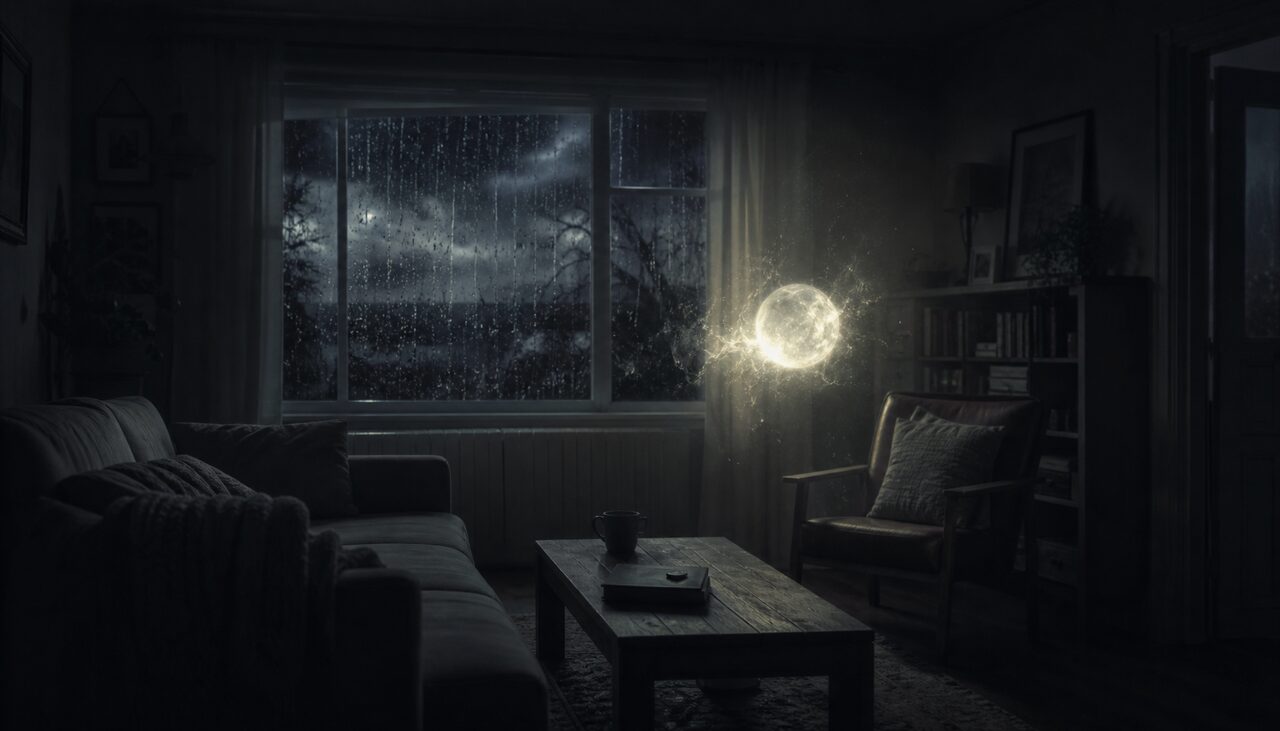
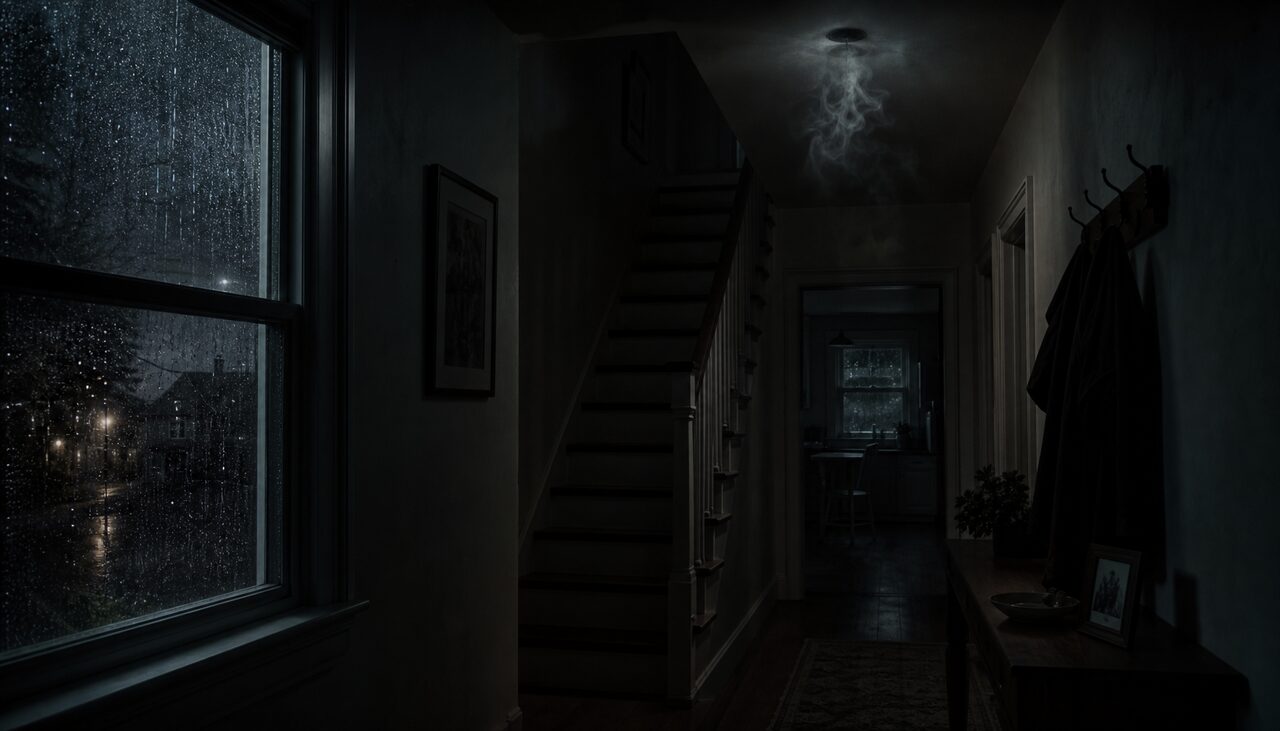
During a thunderstorm, every so often, a glowing ball of light drifts in through a window, floats across the living room at about walking pace, and leaves. It is usually about the size of a grapefruit. It hums, or it hisses, or it makes no sound at all. It lasts a few seconds. Then it is gone — sometimes with a sharp pop and a smell of sulfur.
People have reported this for centuries. Physicists spent most of that time insisting it wasn't real.
The Thing That Lets Itself In
It is called ball lightning, and the reason it stayed a punchline for so long is painfully simple. Nobody can produce one on demand. You can't order it up in a lab. You can't schedule it. You can only wait for a storm, stand in roughly the right spot, and hope a glowing sphere wanders past while you happen to have a camera running. Which, for about two hundred years, essentially nobody did.
This is not how physics likes to operate. Physics likes a specimen, a measurement, and a demonstration you can run again on a Tuesday. Ball lightning offered none of those. It offered witnesses — a great many of them, scattered across centuries and continents, all describing roughly the same thing and none of them able to call it back for a second look.
Centuries of Argument
The reports go back a very long way, and they are remarkably consistent: a bright sphere, during or just after a storm, moving on its own, largely indifferent to walls. For most of that history, the official scientific reaction was a raised eyebrow. Some of the greatest physicists who ever lived looked at the pile of accounts and concluded, grandly, that all these people were imagining things.
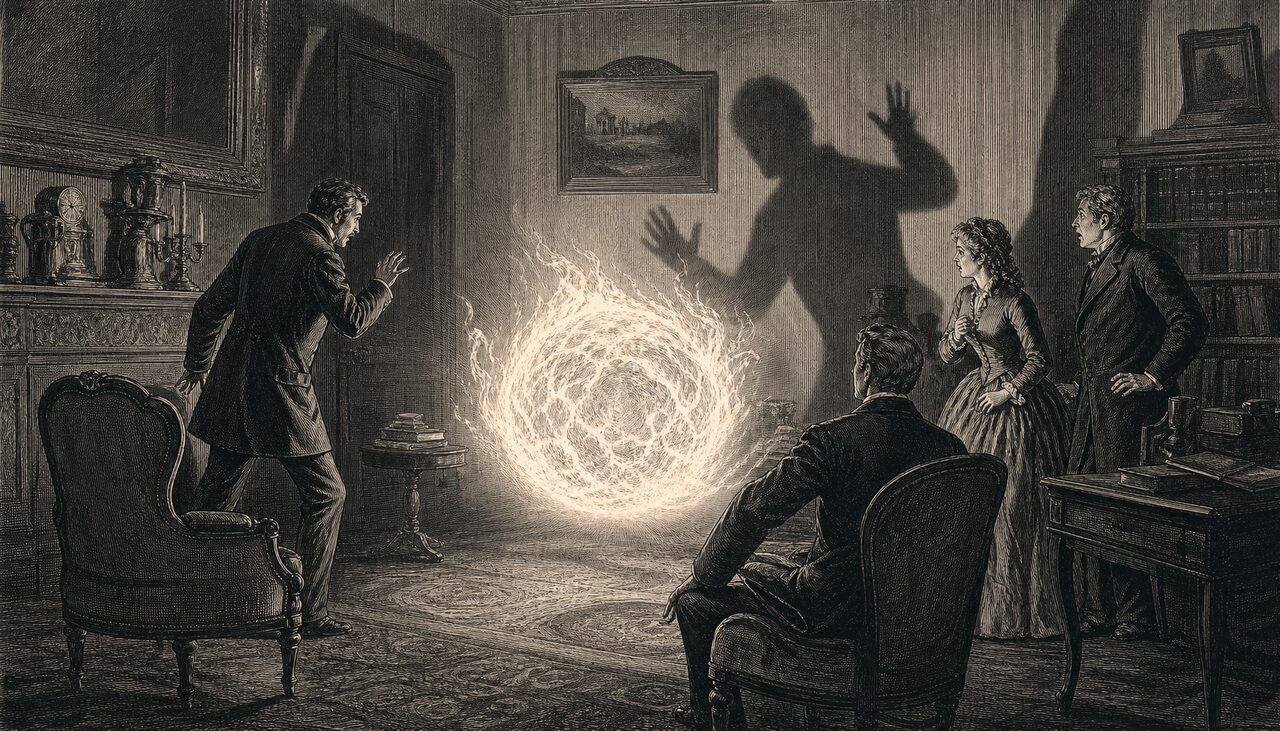
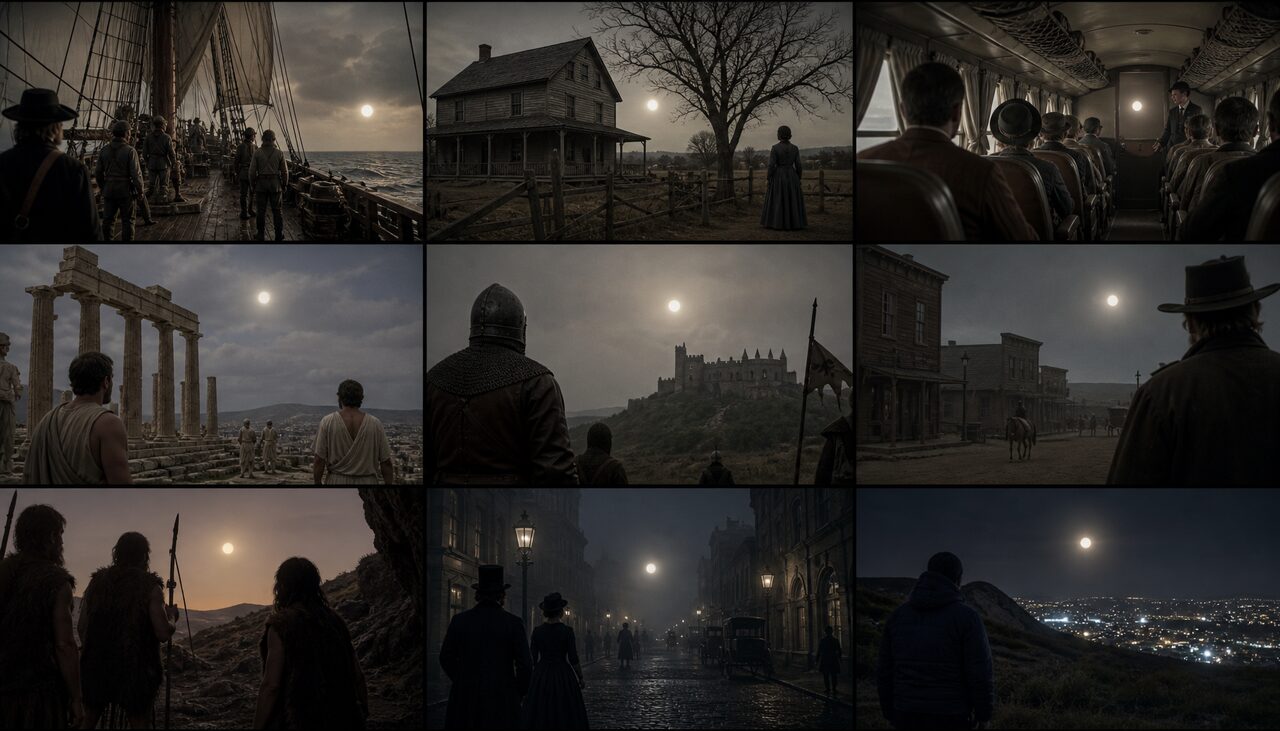
What makes the reports hard to wave away is how alike they are. Different centuries, different countries, people who never met, describing the same grapefruit of light, the same drifting motion, the same pop at the end. A shared hallucination is possible. But a shared hallucination this specific — reported by pilots and farmers and physicists alike — starts to strain the word "hallucination."
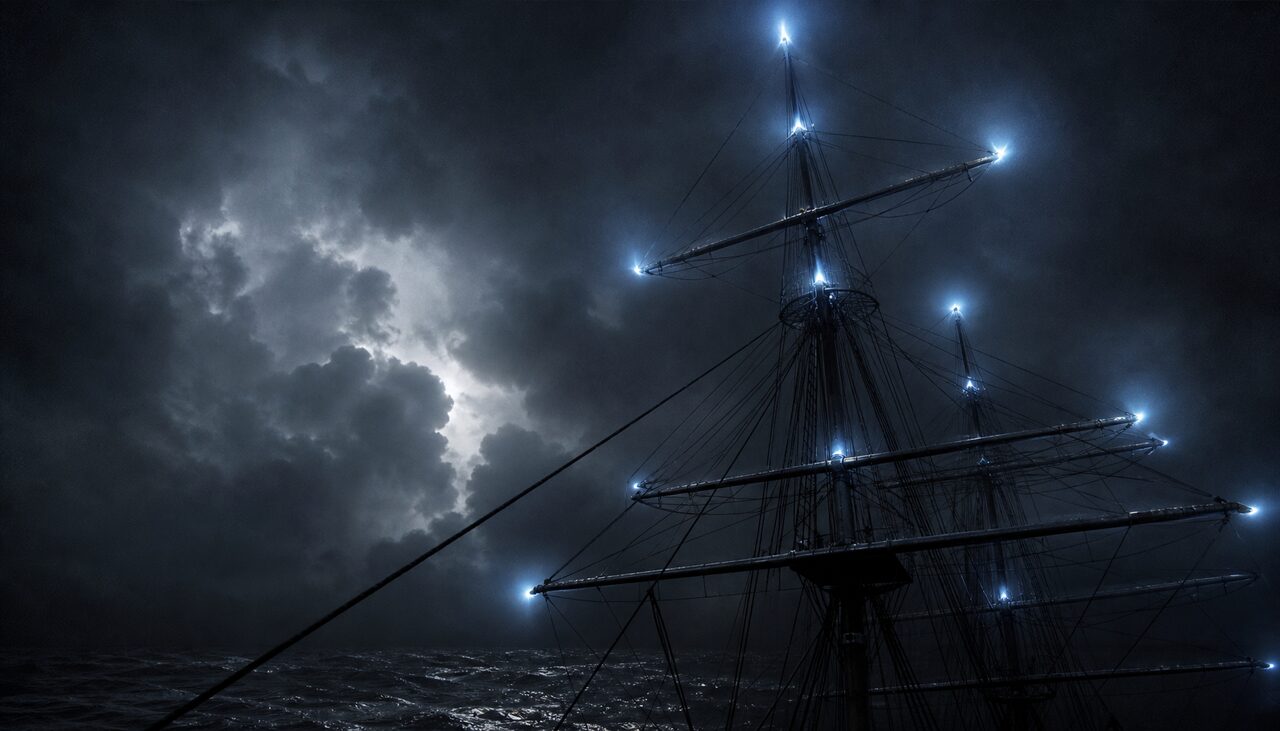
It does not help that the phenomenon has a cousin that muddies everything. Sailors for centuries described glowing light dancing on the masts and rigging of ships in storms. That is usually a different thing — a steady electrical glow called Saint Elmo's fire, which clings to pointed objects and does not go wandering off on its own. Half the old ball-lightning stories are probably that instead. Which leaves the other half with some real explaining to do.
Michael Faraday — the Faraday, the one electricity is half-named after — did not buy it. Neither did several of his contemporaries. Their reasoning wasn't unreasonable. There was no specimen, no measurement, no repeatable demonstration, just a great many witnesses describing the same impossible thing. Which is, depending on your mood, either rigorous skepticism or two centuries of telling eyewitnesses they didn't see what they saw.
The Witnesses
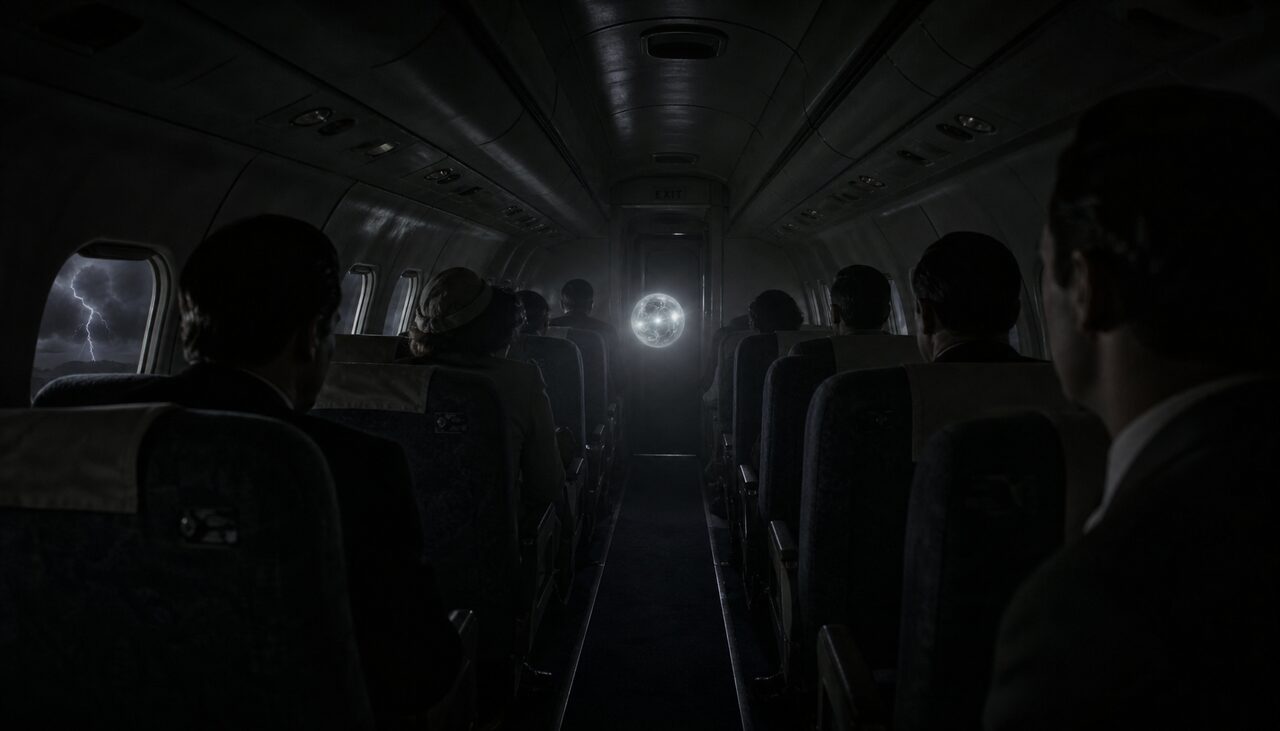
The account that finally moved minds came in 1963, on an airplane. A radio astronomer named Roger Jennison was on a flight that was struck during a storm. Moments later, he watched a glowing sphere, about 8 inches across, emerge from the front of the cabin and float straight down the aisle, past his seat, at a steady, level height. He was a trained observer. A member of the crew saw it too. He later published the sighting in Nature, which is a very formal way of saying "no, really."
The physical reports are the hardest of all to dismiss. Balls that scorched a wall. Melted a wire. Left a hole in a window the exact size of the sphere. You can argue a lone witness imagined a light. It is much harder to argue they imagined the burn mark it left on the way out. Some of these things left a receipt.

Some of the accounts are almost cozy. Nicholas II, the last Tsar of Russia, recalled as a boy sitting in church during a storm when a fiery ball flew in through a window, circled the room, and drifted back out. His grandfather, he said, simply crossed himself and carried on. Which is, frankly, the correct way to treat a houseguest you can neither explain nor ask to leave.

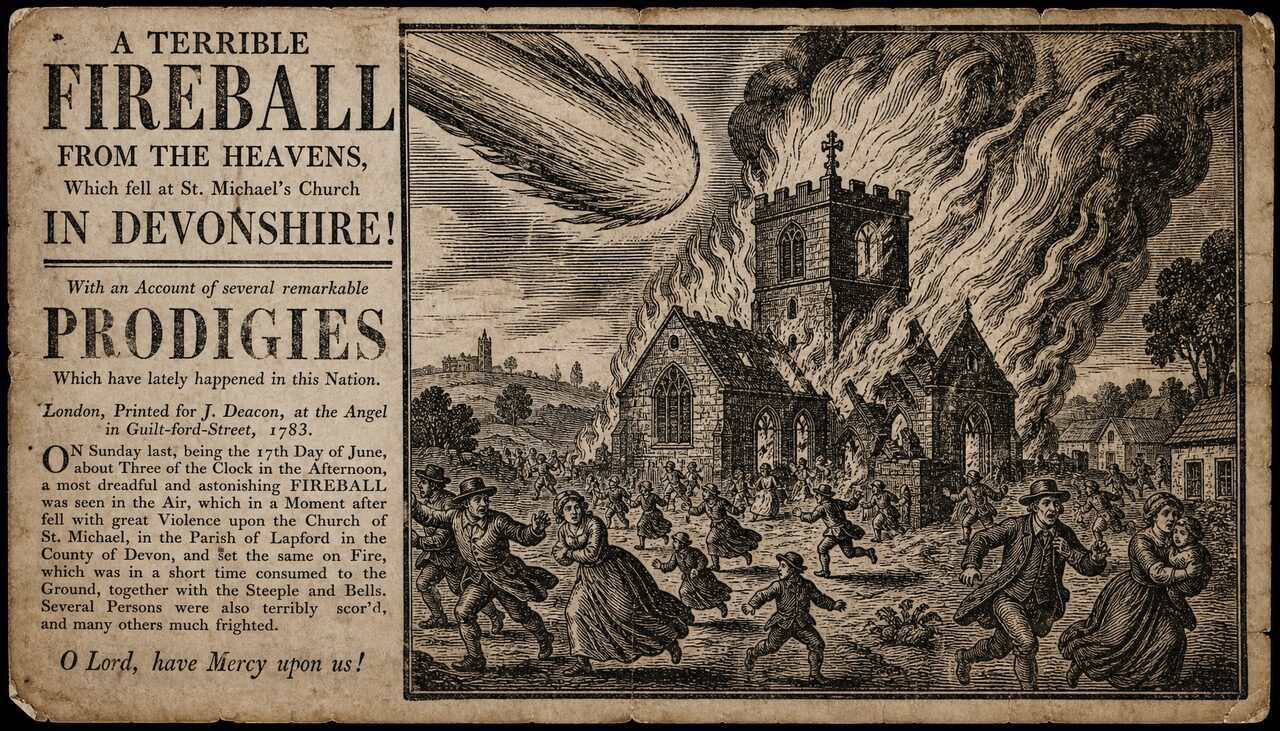
Older accounts are stranger, and darker. On October 21, 1638, during a service at the church in Widecombe-in-the-Moor, in Devon, a great ball of fire reportedly broke through the building in the middle of a violent storm. Four people died and dozens were injured. At the time, the explanation was obvious: the Devil had come to collect someone. A glowing sphere, a smell of sulfur, a sudden violent exit — it is the precise special effect you would build for a visit from Hell. Seventeenth-century Devon drew the obvious conclusion.

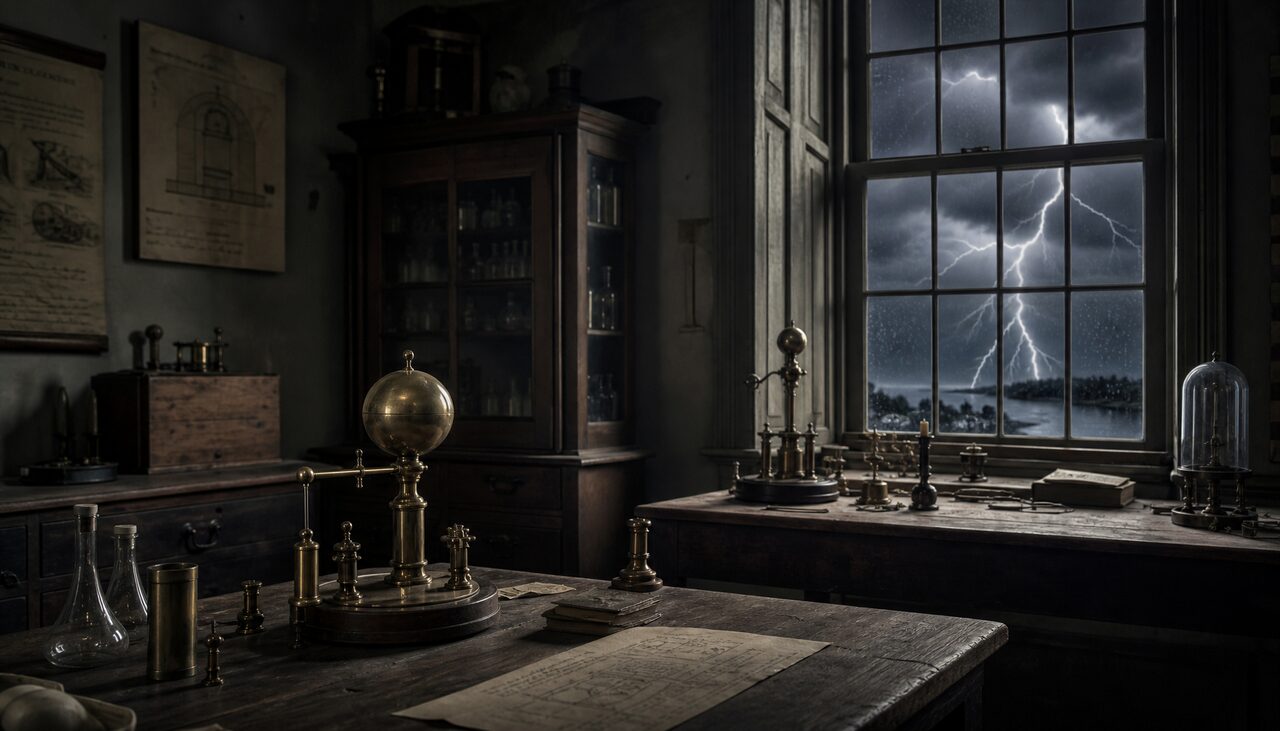
And one early scientist got closer than anyone would want. In 1753, in Saint Petersburg, the physicist Georg Wilhelm Richmann was studying atmospheric electricity during a storm when he was struck and killed by what was, very likely, ball lightning. He is remembered as the first person to die conducting an electrical experiment. It is the earliest, hardest evidence that the thing is real, and not always gentle.
The Accidental Photograph
For all those centuries, nobody had a clean measurement. Then, in July 2012, in northwestern China, a group of scientists from Northwest Normal University got astonishingly lucky. They were on the Qinghai plateau studying ordinary lightning, with cameras and spectrographs — instruments that split light into its colors. A bolt struck the ground nearby, and right where it hit, a ball of light appeared. Their gear was already running. They captured the best recording of ball lightning in history entirely by accident, because the rarest ghost in physics photobombed an experiment about something else.
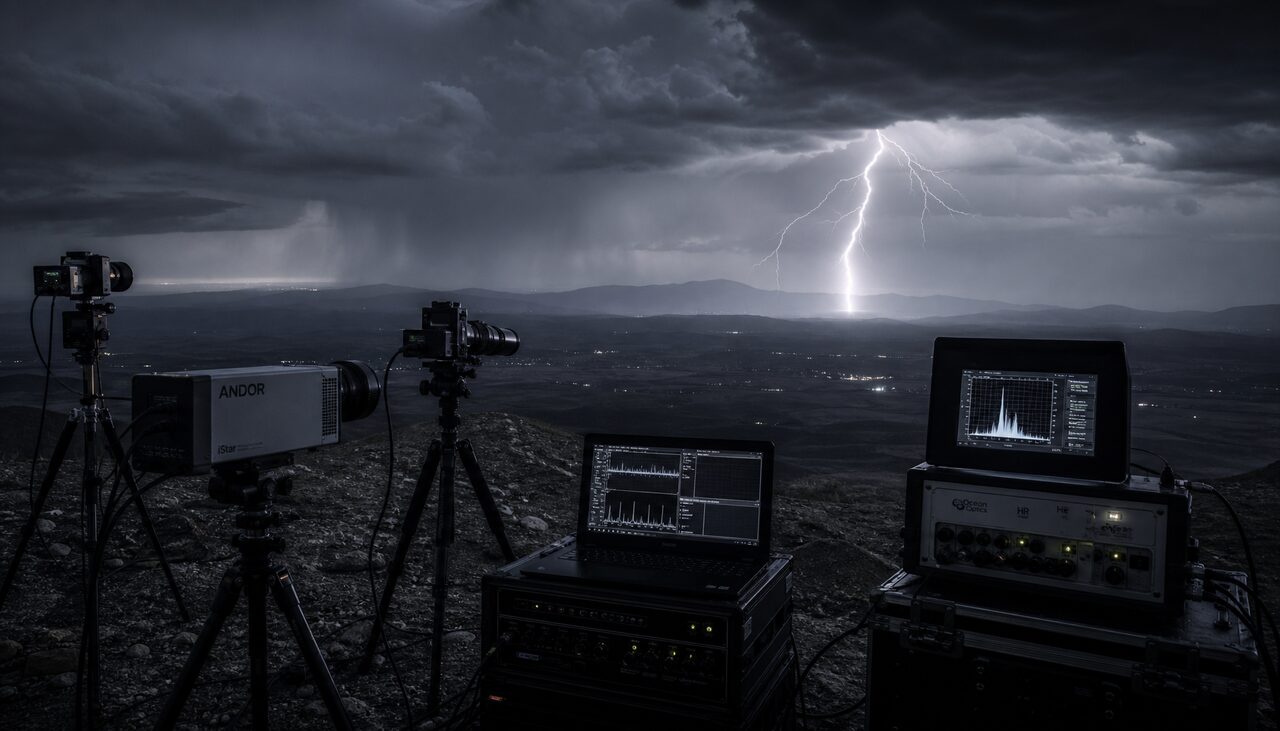
To appreciate the luck: ball lightning lasts a second or two, appears with no warning, and turns up where you happen to be looking a handful of times in a career, if ever. Catching its full spectrum meant pointing exactly the right instrument at exactly the right patch of ground at the exact right instant — for a reason that had nothing to do with ball lightning. It is the scientific equivalent of perfectly photographing one specific raindrop you weren't even aiming at.
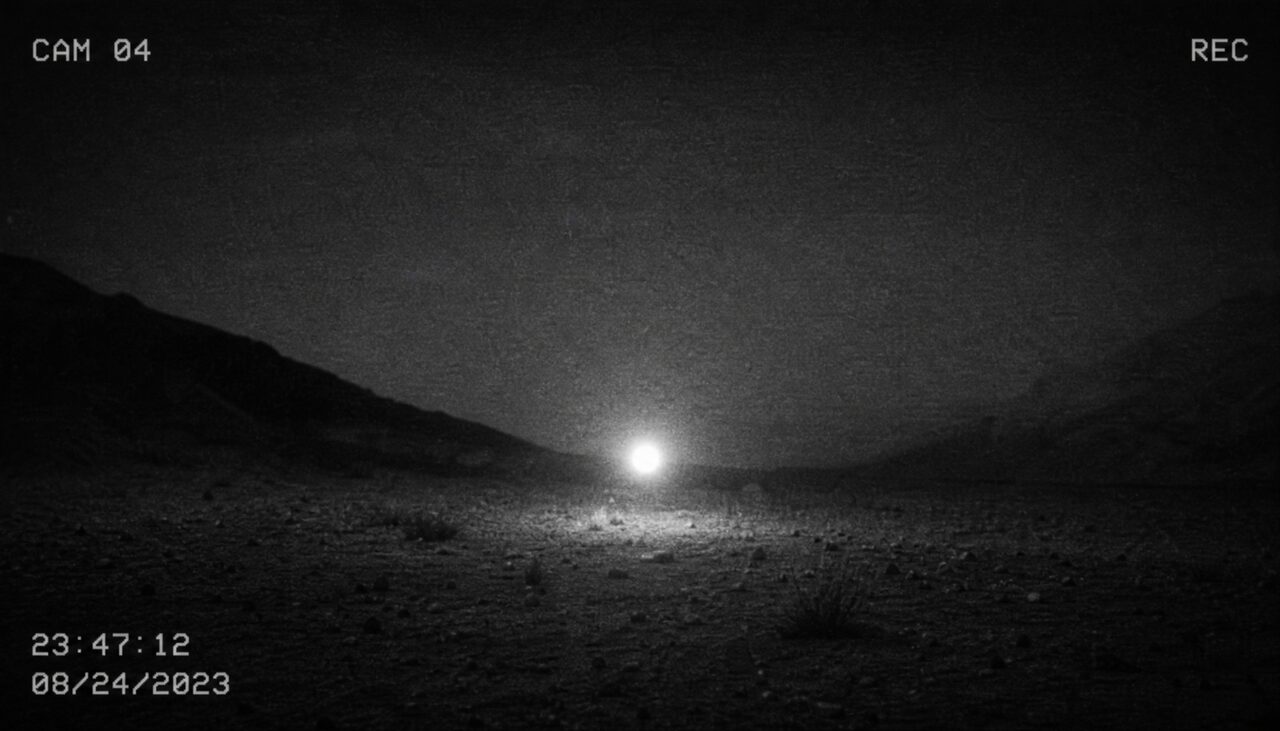
And the recording was a gift. They didn't just film it. They captured its spectrum — the chemical signature of whatever was glowing. It lit up with silicon, iron, and calcium, which are, almost precisely, the main ingredients of soil. The most mysterious light in the natural world turned out, in that one case, to be made of glowing bits of the ground.
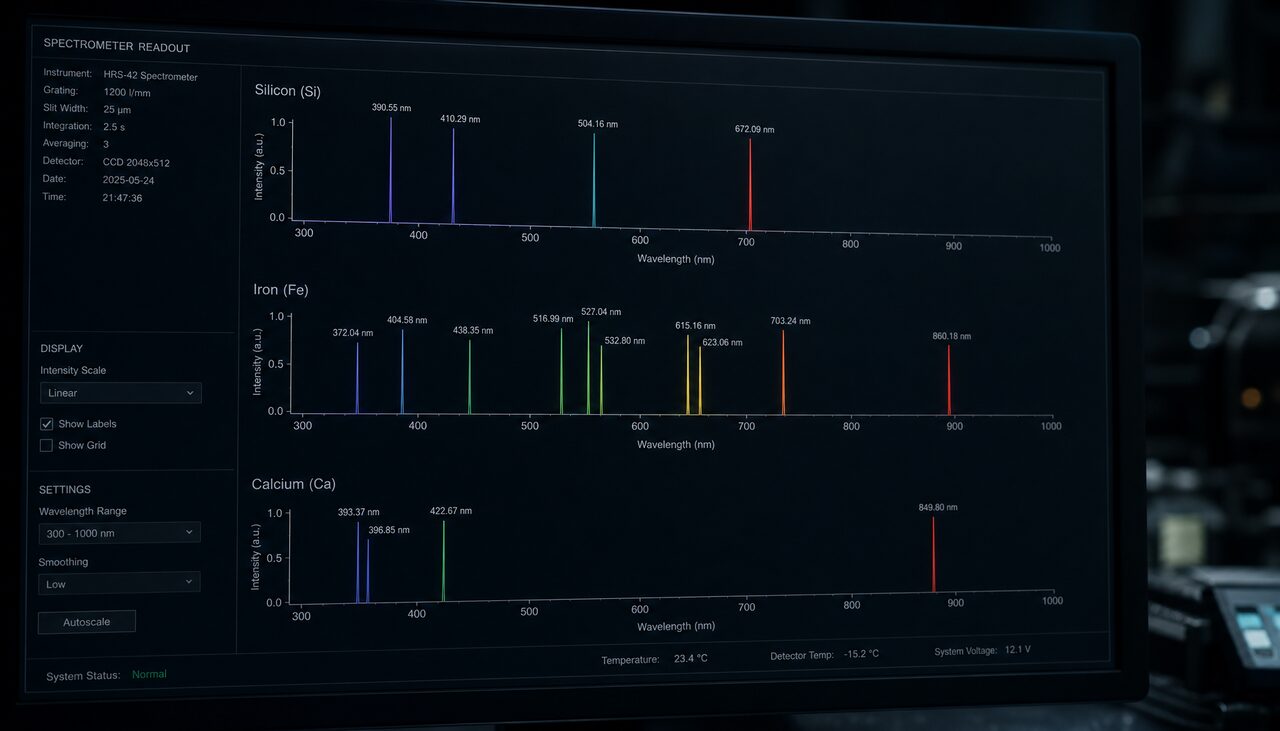
Here is a strange fact about the science. There still is not a single agreed definition of ball lightning. Because there is no specimen to point at, the whole category is defined, essentially, by what witnesses describe. It is one of the only subjects in physics defined less by measurement than by a great many people saying, "it looked like this."
Partial Theories
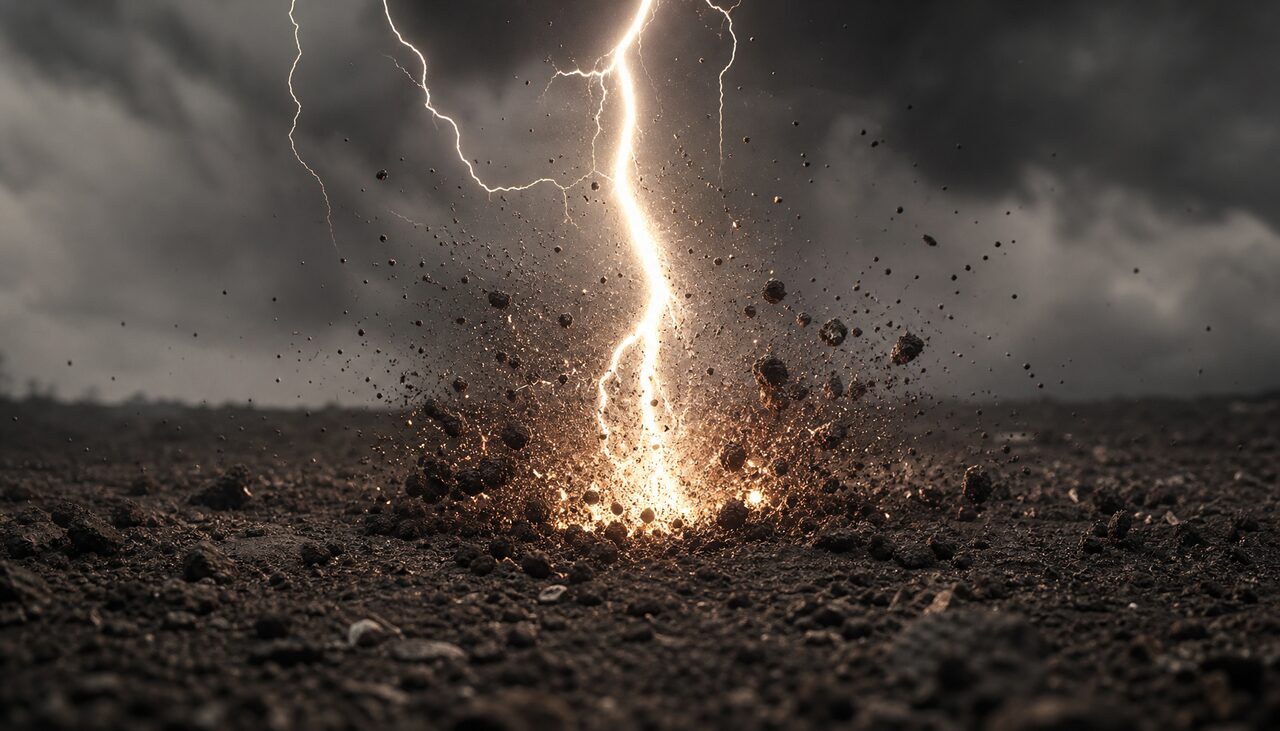
The China spectrum fits the leading theory rather well. When lightning hits soil, the idea goes, it vaporizes the silicon in the dirt into a fine, energetic web of particles, which floats up and slowly burns in the air, glowing as it goes. In other words, ball lightning might be a clod of earth, blasted into a mist by a lightning strike, politely combusting. It explains the dirt. It explains the smell. It does not explain the one that drifted down the aisle of a sealed airplane, nowhere near a clod of anything.
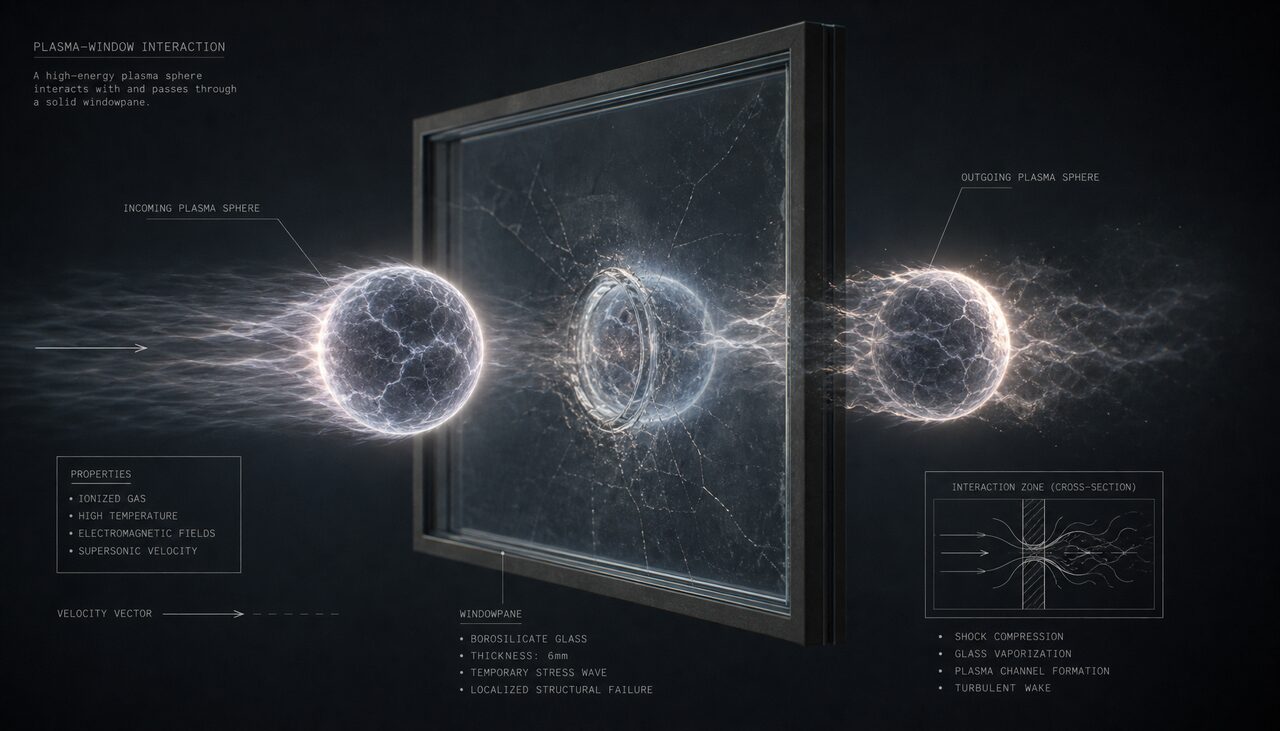
So there are other theories. One says the ball is plasma, held together by microwaves trapped in a kind of invisible bottle. That one explains how it can drift through glass without shattering it. Each theory rescues the cases the last one couldn't, and each one breaks on a different report. Which strongly implies that "ball lightning" isn't one thing at all. It is a label we have stuck on several different glowing problems.
Then there is the unsettling one. A pair of physicists calculated that the magnetic pulse from certain lightning strikes is strong enough to reach into the brain of a nearby person and switch on the visual cortex directly, producing a glowing shape that is not in the room at all. So some fraction of ball-lightning sightings might be the storm reaching in through the skull and drawing directly onto a person's vision. It is, somehow, the least comforting explanation on the list.

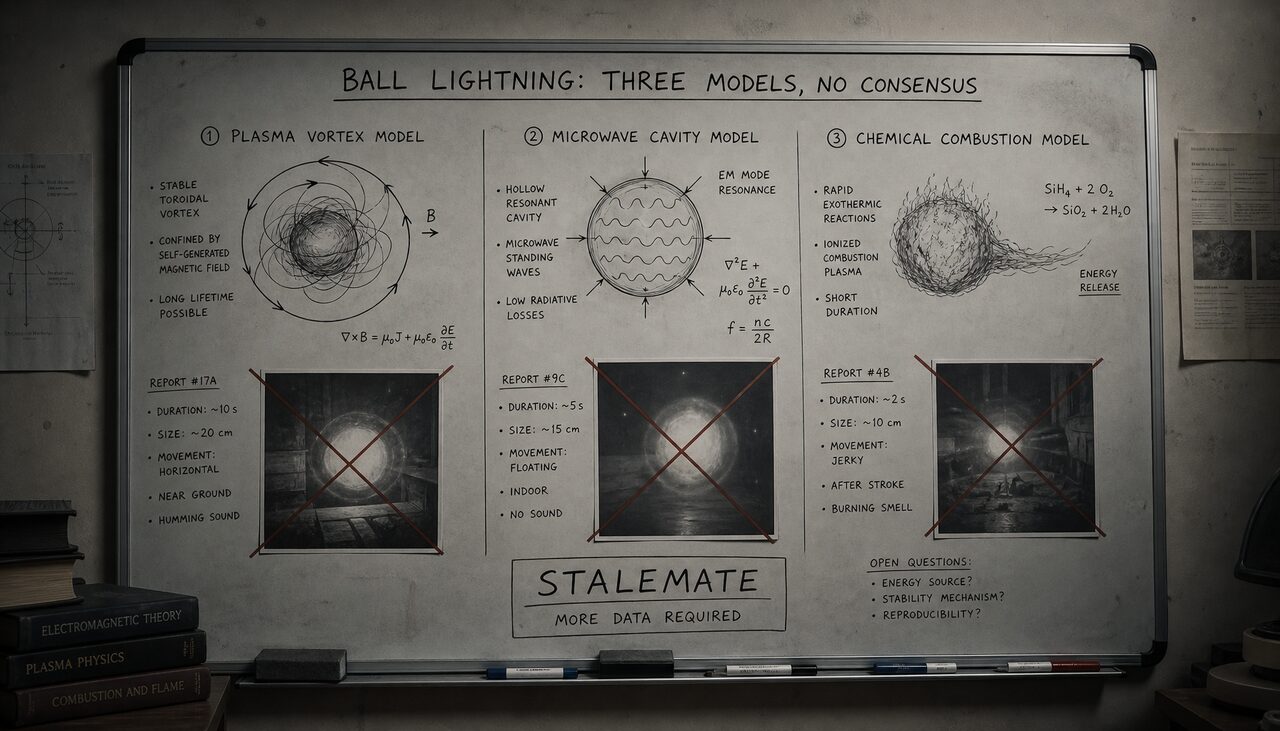
That is the deeper trouble. Every theory can be made to work on paper. The real test is whether it survives the next eyewitness, and so far none of them quite does. The vaporized-soil model can't get inside a sealed airplane. The microwave model can't find its power source. The brain model can't explain the scorch marks. Each answer is perfectly correct, for exactly the cases that don't disprove it.
The Counterfeits
Unable to catch a real one reliably, scientists have taken to building fakes. They run huge electrical discharges through silicon, or trap plasma inside microwave chambers, and they get glowing balls that float and fizz and behave a great deal like the real thing. Close. Suggestive. Not confirmed to be the same thing. So the state of the art is a room full of physicists manufacturing counterfeit ball lightning to reverse-engineer an original they have never once been able to hold.
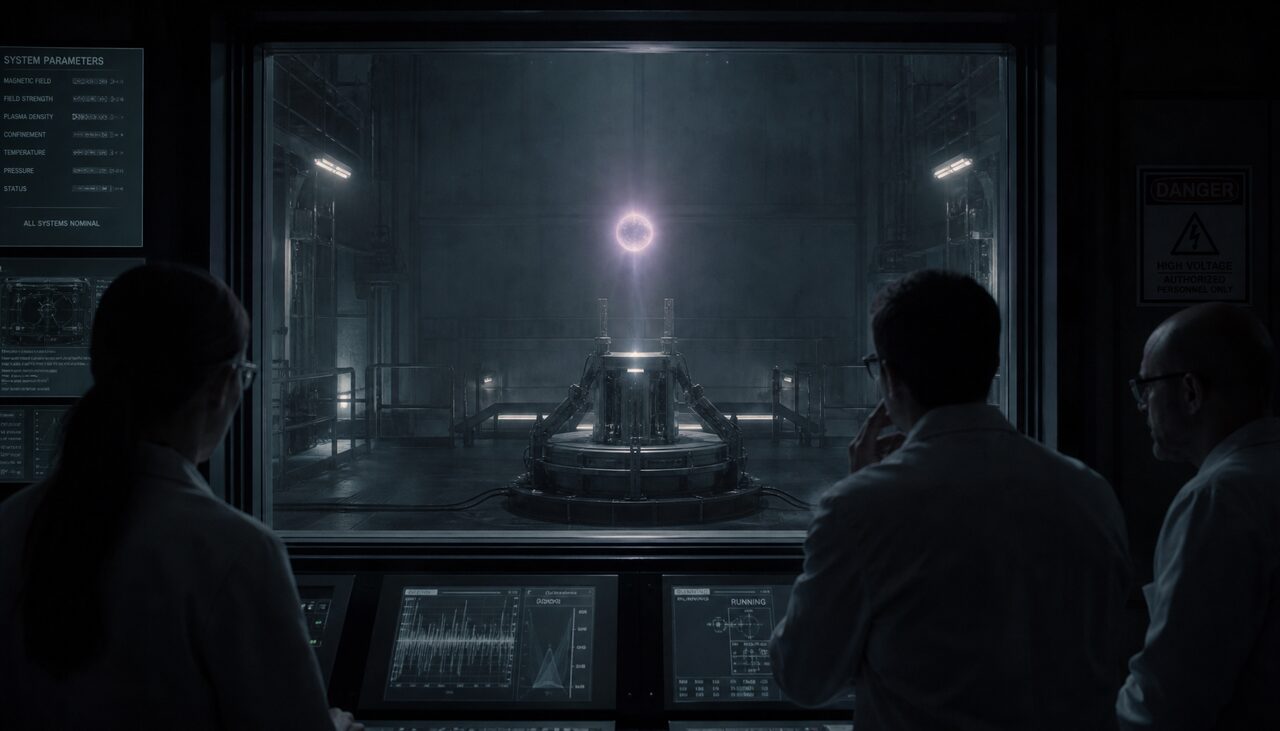
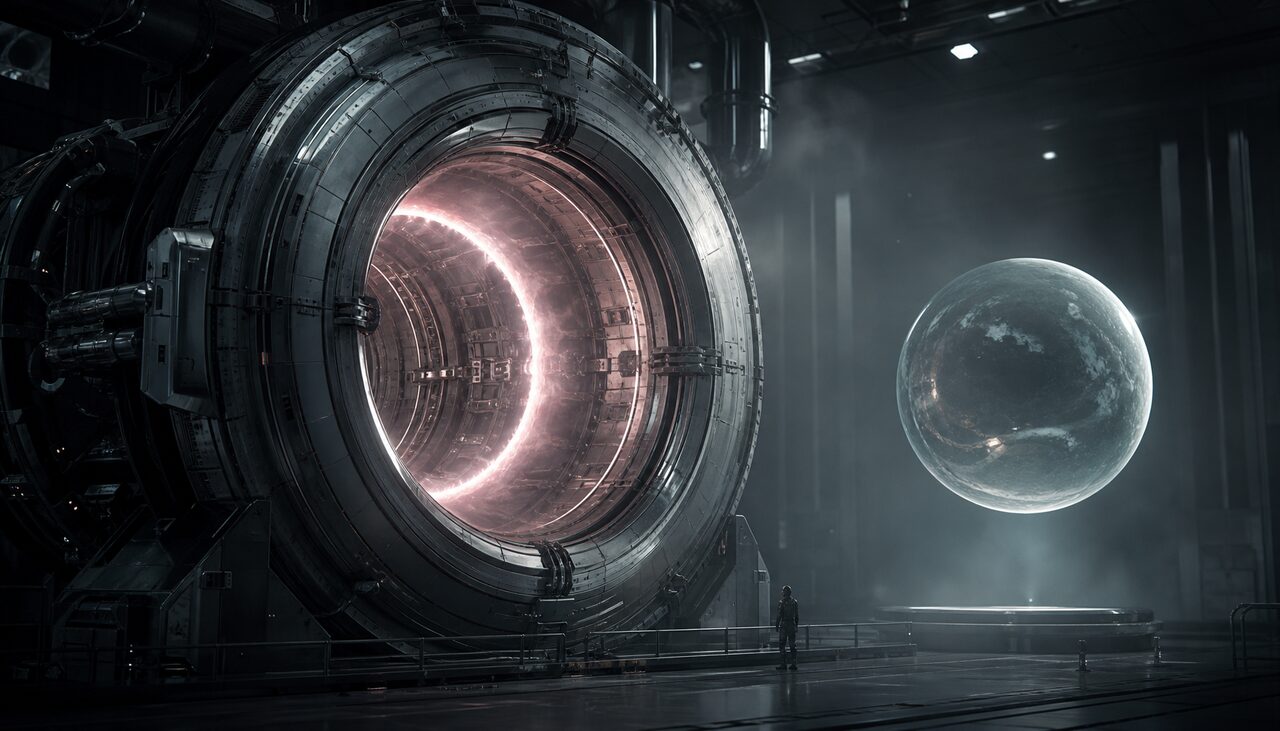
There is a practical reason to chase it. A small, stable ball of plasma that holds itself together for whole seconds is, frankly, a very useful trick to learn. The same physics that makes a drifting storm-orb brushes right up against the physics of containing a fusion reaction. So the people faking ball lightning aren't only being whimsical. They would genuinely like to know how nature keeps a ball of fire from simply falling apart.
Still Drifting
There is something almost fitting about it staying unknown. Ball lightning is the rare mystery that comes to you. It does not hide in the deep sea or the far sky. It turns up in living rooms and cockpits and churches, close enough to touch, and then it is gone. Most mysteries you have to go and find. This one occasionally lets itself in, has a look around, and declines to leave a forwarding address.
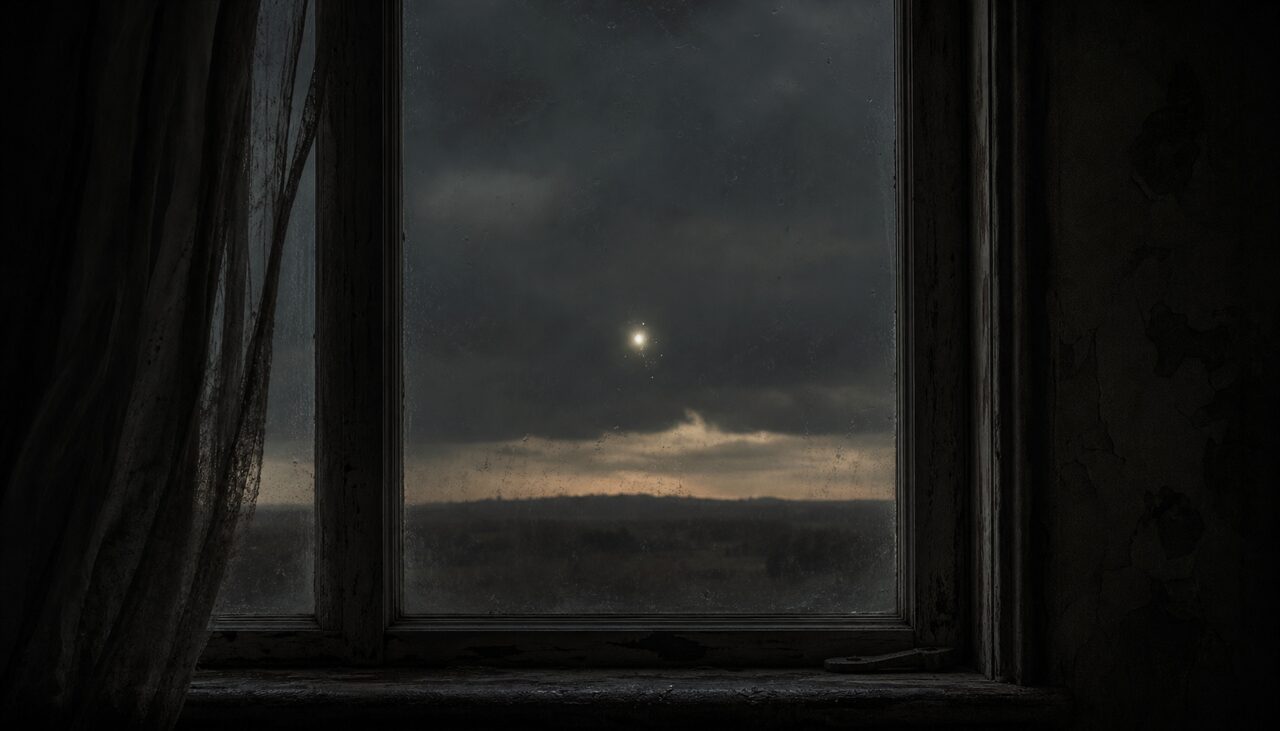
These days, ball lightning is, cautiously, real. Enough solid accounts, plus that one lucky recording on the Qinghai plateau, pushed it from folklore into "genuine phenomenon, with cause unknown." We don't fully know what it is. We can't make one on command. We can barely catch one on film. So it stays exactly what it has always been: a glowing sphere that turns up during a storm, drifts through the room, and leaves before anyone can explain it.
Sources & Case References
- Encyclopædia Britannica — "Ball lightning"
- Nature — J. Cen, P. Yuan & S. Xue, "Observation of the Optical and Spectral Characteristics of Ball Lightning" (2014)
- R. C. Jennison, "Ball Lightning," Nature 224, 895 (1969)
- APS Physics — "Ball Lightning Caught on Camera" (2014)
- Encyclopædia Britannica — "Georg Wilhelm Richmann"