On the evening of March 13, 1997, thousands of people across the state of Arizona looked up and saw something in the sky. They described it as enormous. They described it as silent. And they described it as a V-shaped formation of lights — or a single, solid, V-shaped craft — moving slowly from northwest to southeast. Some witnesses estimated it at up to a mile wide. All of them agreed on one thing: it made no sound.
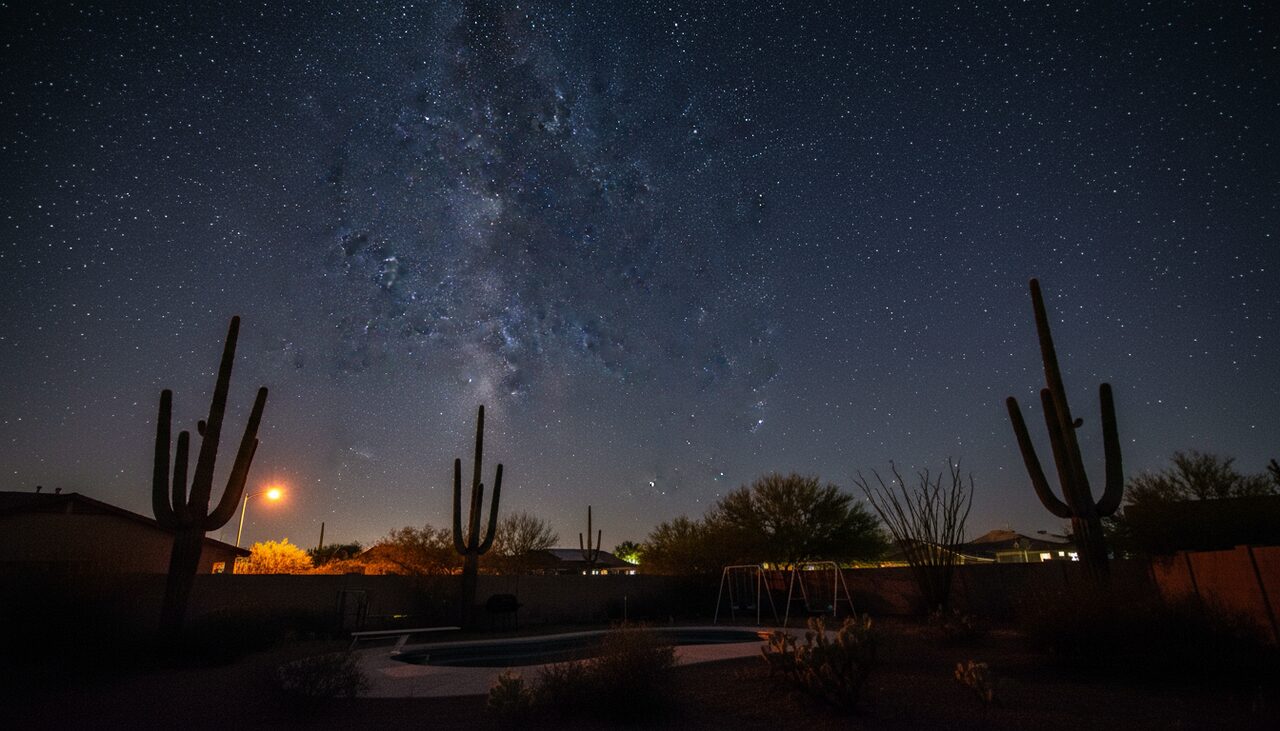
It was a Thursday. In the Phoenix metro area the high had been around 75 degrees, the skies were clear, and the humidity sat in the low teens. By every measurable standard it was a perfect night for seeing things in the sky, which is the kind of detail that matters when you have multiple witnesses. Nobody was expecting anything. People were coming home from work, picking up dinner, walking dogs. The Suns were playing the Wizards. Hale-Bopp was the comet everyone was already watching, bright and unremarkable in its predictability. There were no clouds, no haze, and no moon bright enough to wash out the stars. Visibility was essentially unlimited. Whatever people saw, they saw it clearly.
Two Events, One Evening
The first thing to understand about the Phoenix Lights is that it is not a single sighting. It is at least two distinct phenomena that occurred on the same evening, in overlapping airspace, and have been conflated in public discussion ever since. Separating them is the entire job. Most of the confusion in the case comes from the fact that almost nobody does.
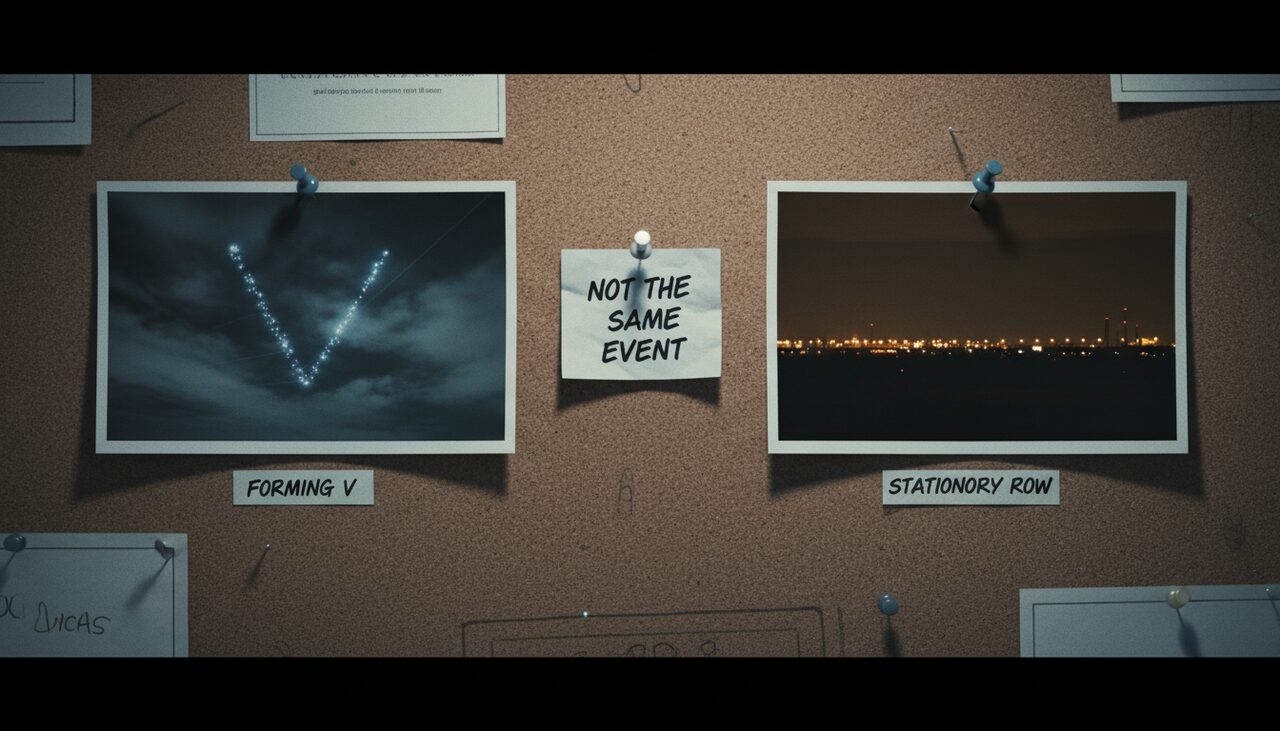
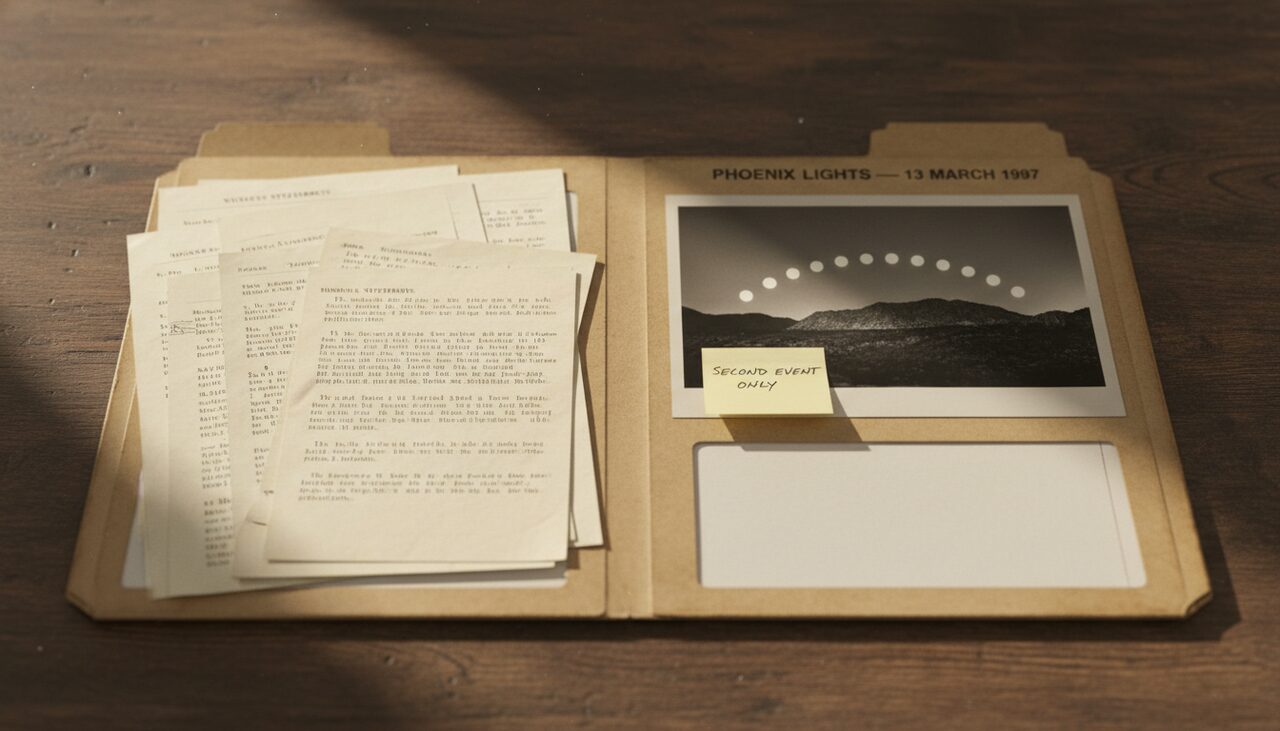
The first event — the one that has never been explained — occurred between roughly 7:30 and 8:30 PM. Witnesses along the flight path, from Prescott through Dewey and across the Phoenix basin, described a formation of five to seven lights in rigid arrangement, moving slowly from the northwest to the southeast. The lights didn't flicker, pulse, or deviate. The object moved at a speed witnesses estimated between 30 and 100 miles an hour, which is to say not fast.
Many of those witnesses described not just the lights but a solid structure between them: a dark mass that blocked the stars as it passed overhead. These people did not describe lights in formation. They described a craft. A single, enormous, triangular or V-shaped craft, with lights at its leading edges, larger than anything they had ever seen fly. The silence united every account. Something that big, flying that low, should have produced noise. Conventional aircraft, even large ones, are audible. This was not.

The 7:30 Event
The sightings began in Henderson, Nevada, at roughly 6:55 PM Pacific time — 7:55 PM in Arizona, which does not observe daylight saving time and is therefore an hour ahead of its neighbor for half the year, a fact that has confused more than one timeline. A man reported a V-shaped formation of lights moving southeast. Within the hour the sightings cascaded south through Prescott, Dewey, the Phoenix metro area, Chandler, and on toward Tucson.
In Prescott, a town in the mountains north of Phoenix, witnesses reported the V-formation passing at low altitude, below the ridgeline of nearby peaks. This matters because it sets a ceiling. The object was not at airliner altitude. It was low enough to pass between mountains, which puts it within a few thousand feet of the ground. At that altitude, a mile-wide craft should have been deafening.
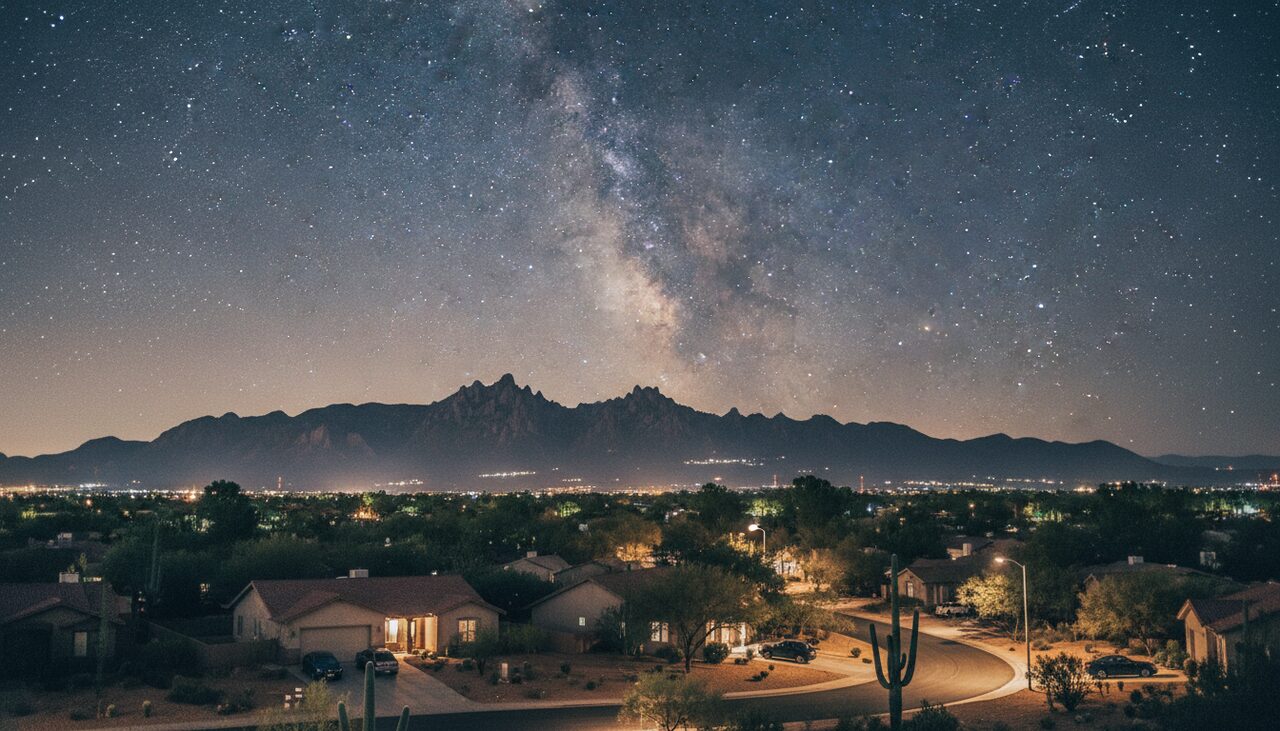
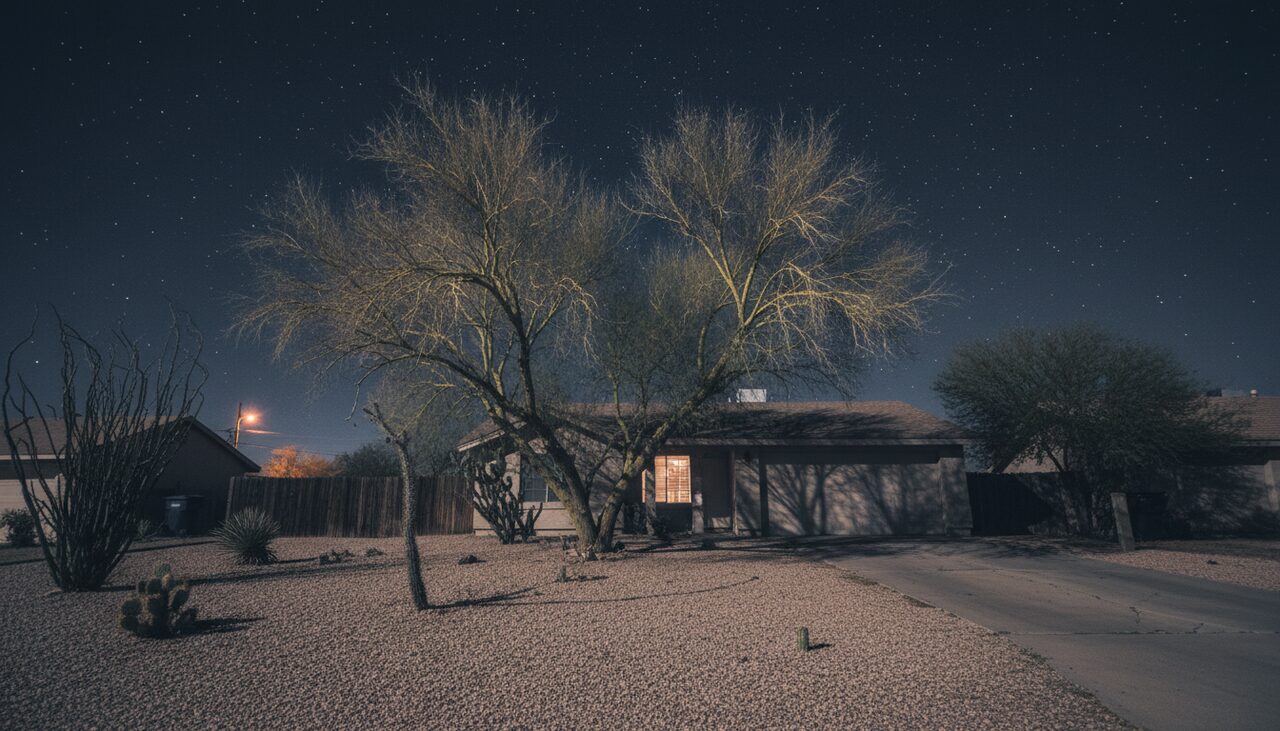
Tim Ley, a Phoenix resident, watched the formation from his front yard with his family as it passed directly overhead. He estimated its altitude at roughly 100 to 150 feet — close enough, in his words, to throw a stone at it. His wife and son corroborated the account. Three witnesses, one front yard, the same description. A truck driver heading south on Interstate 17 pulled over and watched it for several minutes; he reported no engine noise. Amateur astronomers, who are trained sky-watchers and not generally given to alarm, described a structured formation inconsistent with conventional aircraft. An off-duty commercial pilot said it was unlike any formation he had encountered.
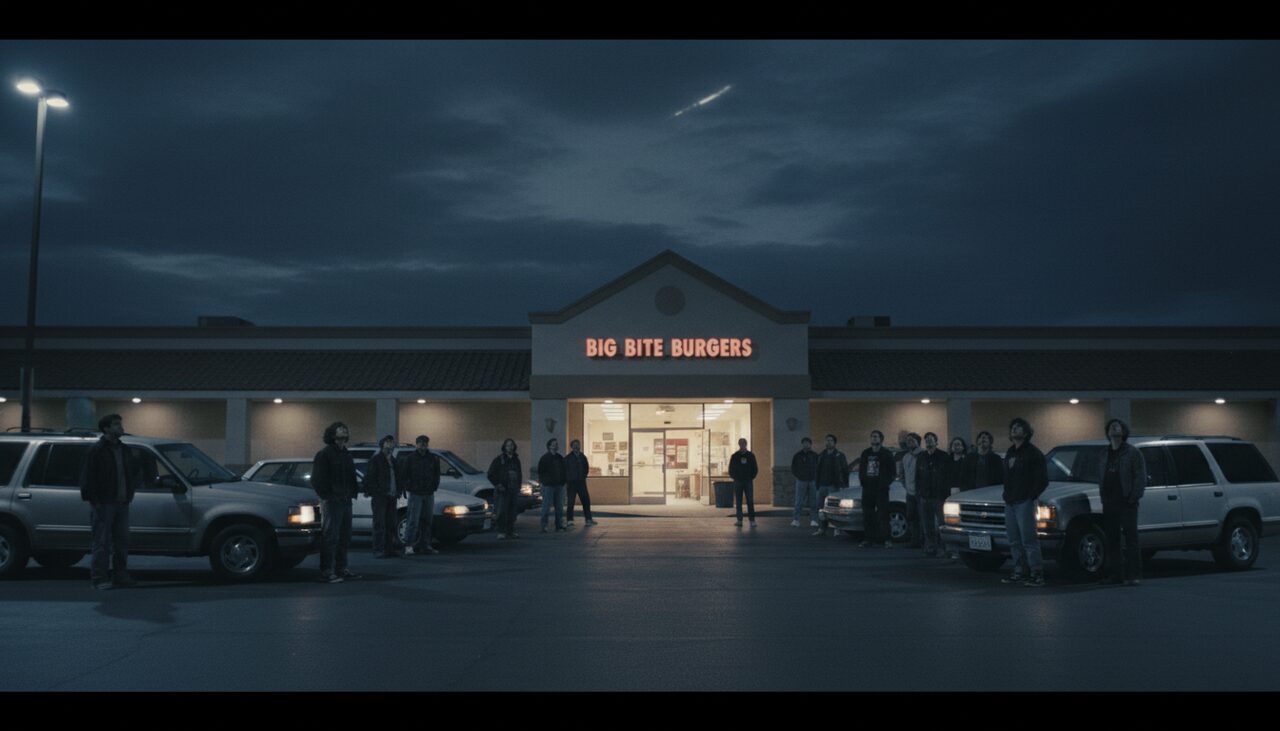
What distinguished the 7:30 event from a typical UFO sighting was not the object. It was the audience. This was not a lone driver on a back road. People came out of restaurants in Prescott Valley and stood in parking lots. Families stepped into their backyards in Glendale. Entire neighborhoods in north Phoenix were outside, pointing up. Strangers who had never spoken to each other stood shoulder to shoulder on sidewalks watching the same thing cross overhead. A woman in Tempe reportedly called her sister in Chandler and told her to go outside; they watched it together, 20 miles apart, on the phone. The sighting moved through the metro area like a slow wave, and by the time it reached the southern suburbs, people in the north had already started calling the news.
The flight path traced a remarkably consistent line: northwest to southeast, roughly following Interstate 17 through the center of the state before drifting east over the Phoenix basin. Reports placed the object over Prescott at about 8:12 PM, over north Phoenix by 8:20, and clearing the south valley by 8:30. That is roughly 80 miles in under 20 minutes, which works out to a far higher speed than the witnesses beneath it described. The discrepancy suggests either the object changed speed, or that human perception of a very large, very silent thing passing overhead does not map cleanly onto a stopwatch. The second is more likely.
The 10 O'Clock Event
The second event happened at roughly 10 PM. A row of lights appeared over the Estrella mountain range southwest of Phoenix, hung nearly stationary for several minutes, and then dropped behind the mountains one by one. This event was widely videotaped. The footage — amber-orange lights in a line, winking out in sequence — became the iconic image of the Phoenix Lights and is what most people picture when they hear the name.
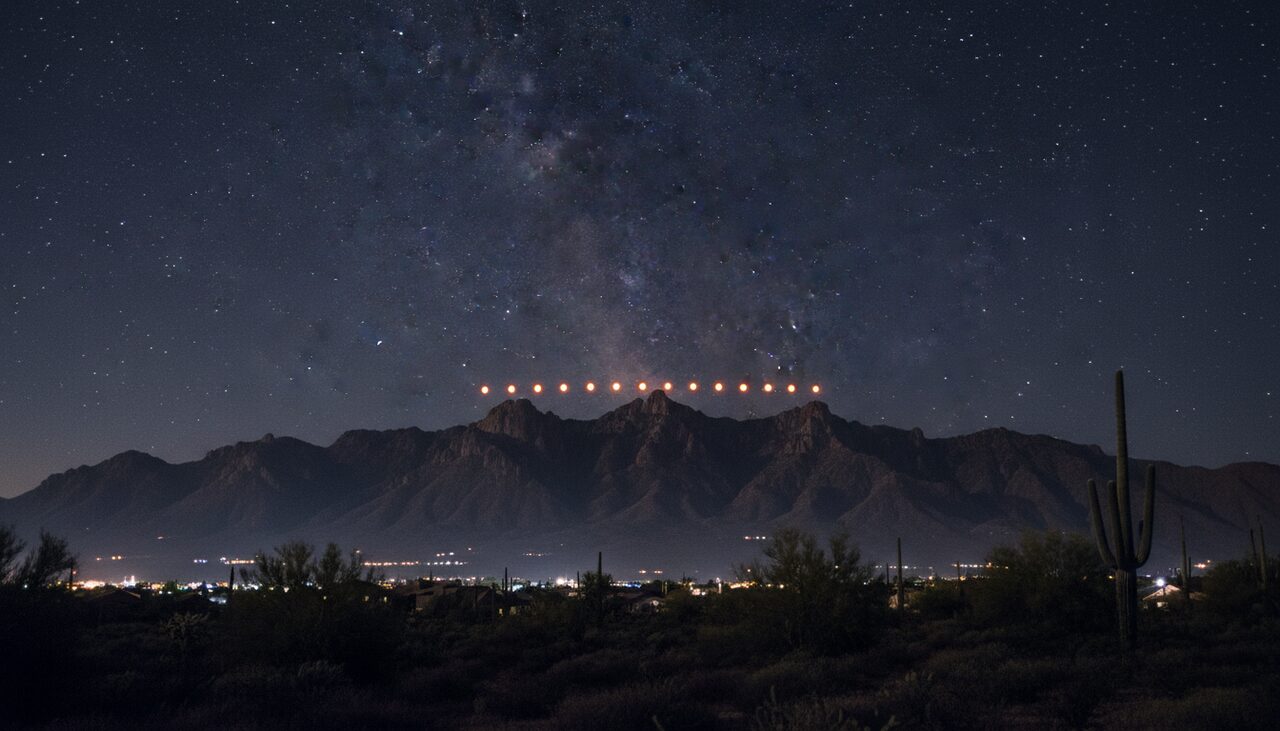
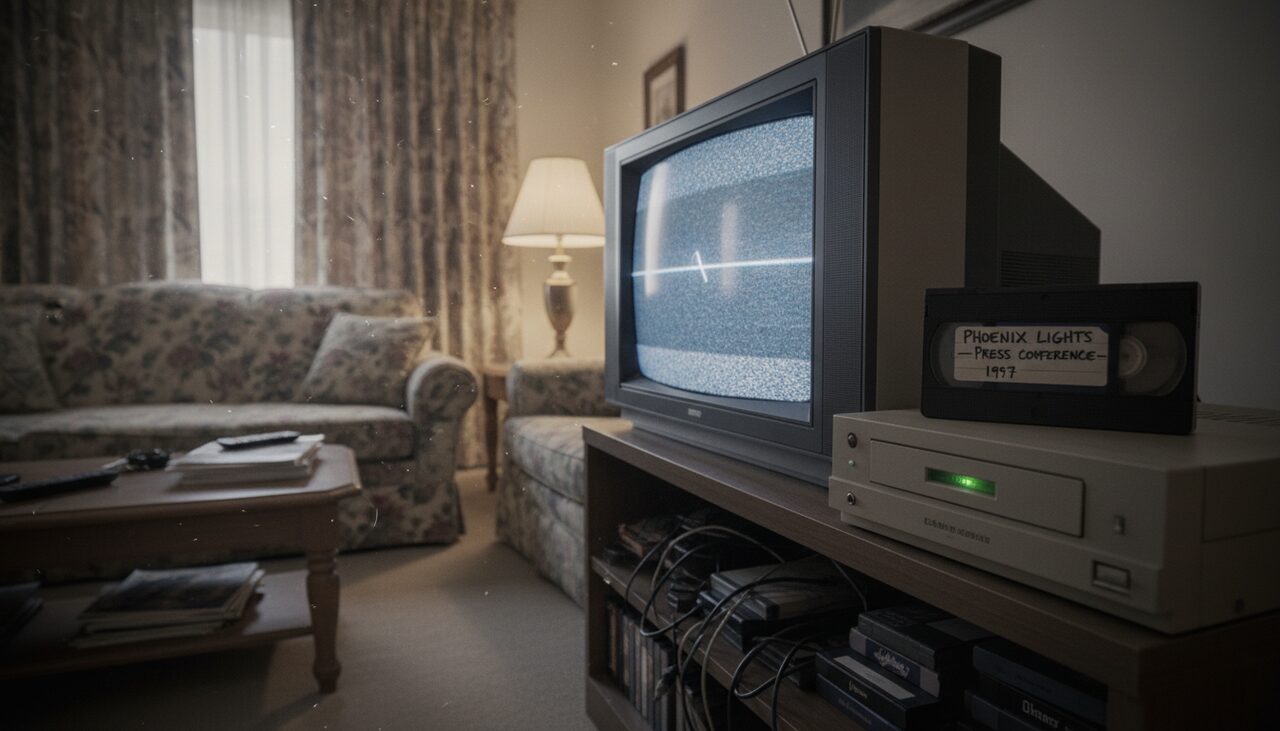
The most widely circulated footage was shot by Mike Krzyston from his backyard in north Phoenix. His video shows a row of amber lights hovering above the ridgeline, steady and evenly spaced, before they drop out of frame one at a time from left to right. It is clean footage, steady enough, and it ran on every local newscast within 48 hours and every national outlet within the week. It became the Phoenix Lights. The problem is that it shows the 10 PM event, not the 7:30 event that generated the mass sighting reports. The footage that came to define the case is footage of the explainable half.
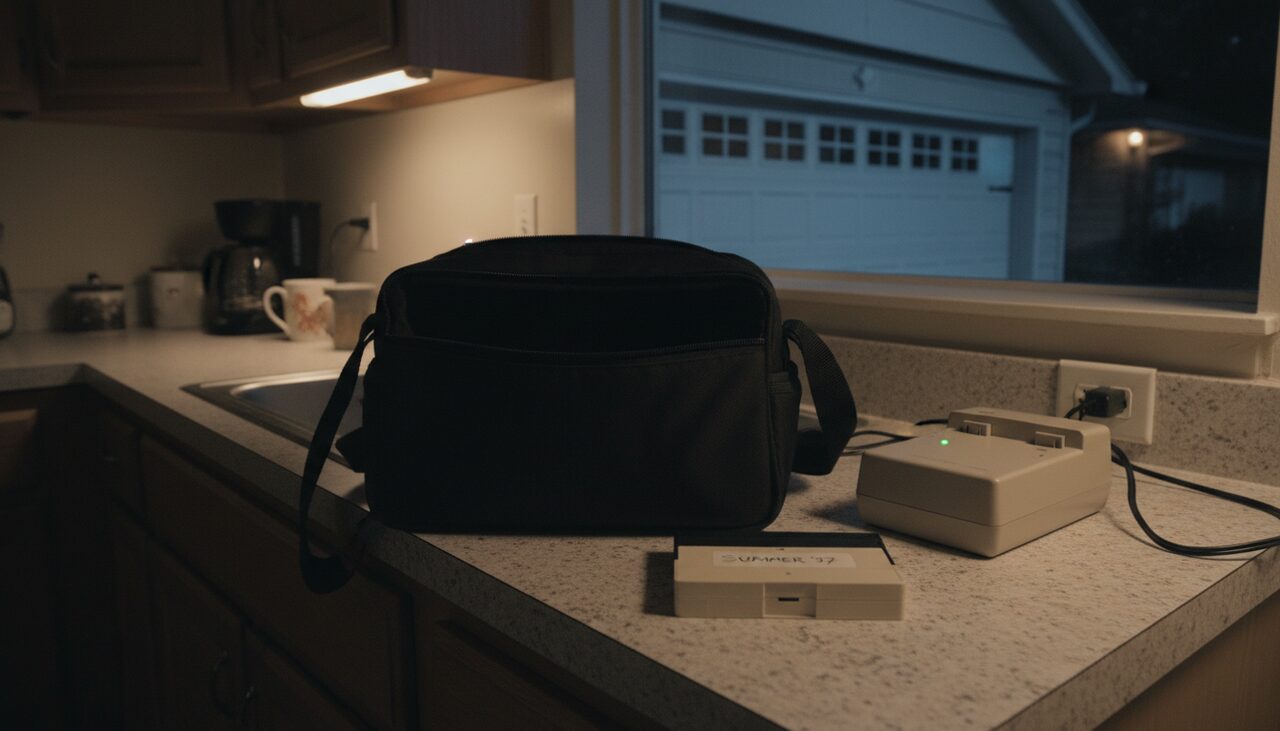
This happened for a mundane reason. The 7:30 event caught people off guard. In 1997, grabbing a camcorder meant finding the camcorder, finding the tape, and finding the battery, and by then the thing had passed. By 10 PM, Phoenix was on alert. People had heard from neighbors, news desks were already fielding calls, and when the second set of lights appeared, cameras were ready. The result was that the explainable event was well-documented and the unexplainable event was documented mostly by memory.
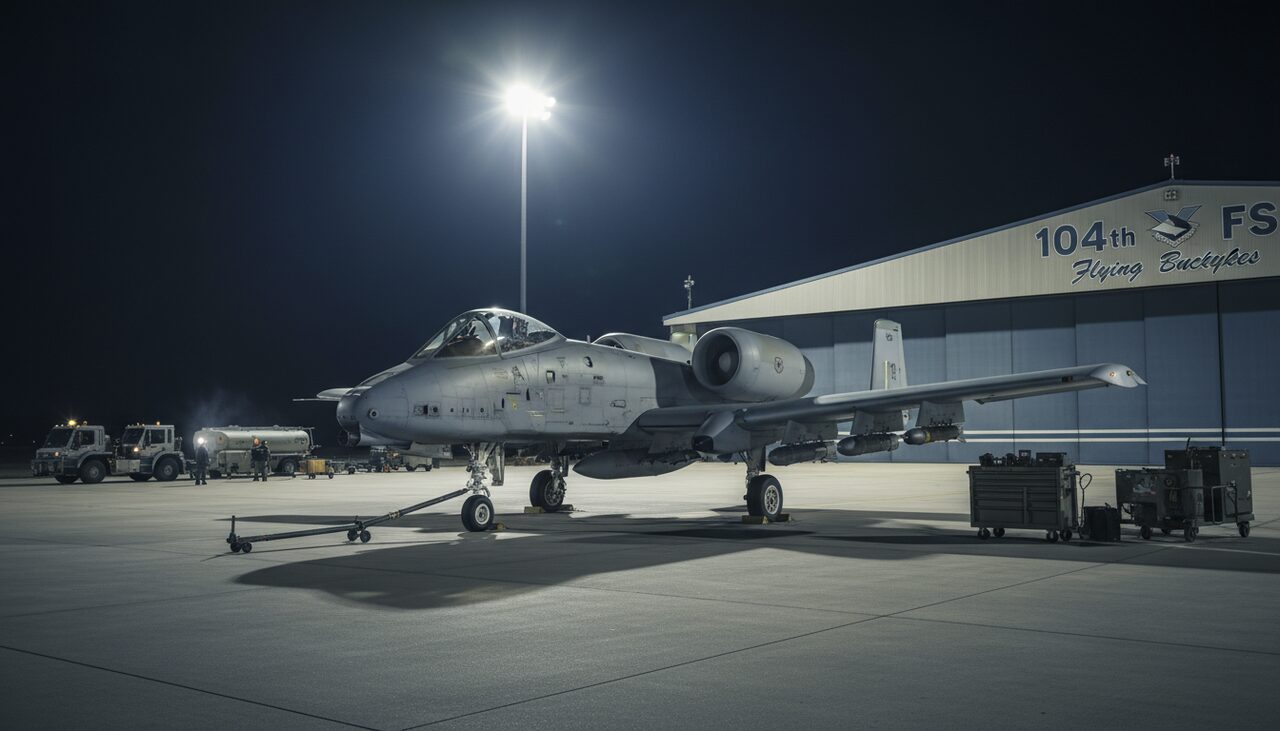
The Air Force explained the second event. The Maryland Air National Guard's 104th Fighter Squadron, deployed to Davis-Monthan Air Force Base for an exercise called Operation Snowbird, had been training at the Barry M. Goldwater Range south of Phoenix. They had dropped illumination flares at roughly 10 PM. Flares dropped at altitude descend slowly, burn bright, and wink out when spent, which matches the observed behavior of the 10 PM lights. The Air Force stated the second event was flares. This explanation is widely accepted, even by many UFO researchers.
The trouble is that the flare explanation addresses the wrong event. The 10 PM lights — the ones videotaped, broadcast, and made the public face of the case — are the explainable event. The 7:30 event, the V-formation and the silent passage over a major American city, is the unexplained one. The Air Force has never addressed it. When media outlets report that the Phoenix Lights were explained as military flares, they are correct, about the half of the evening that nobody was asking about.
The Governor
Governor Fife Symington managed to be both the story's debunker and its primary witness, which is a particular kind of alibi.
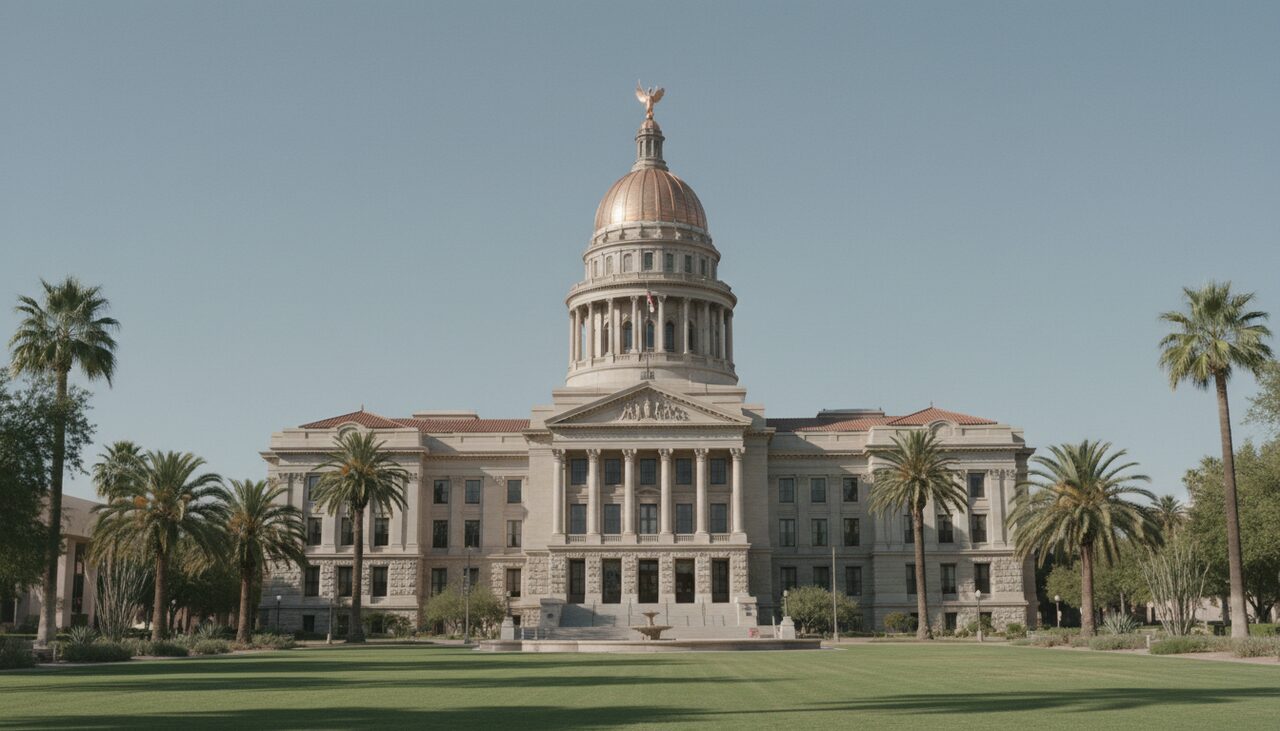
Symington was not a casual observer. He had been an Air Force captain and pilot. He knew what aircraft looked like and he knew what flares looked like. On the evening of March 13 he went outside, like thousands of other Arizonans, and he saw the V-formation. He later called it enormous, and unlike anything he had encountered in his military or civilian career.
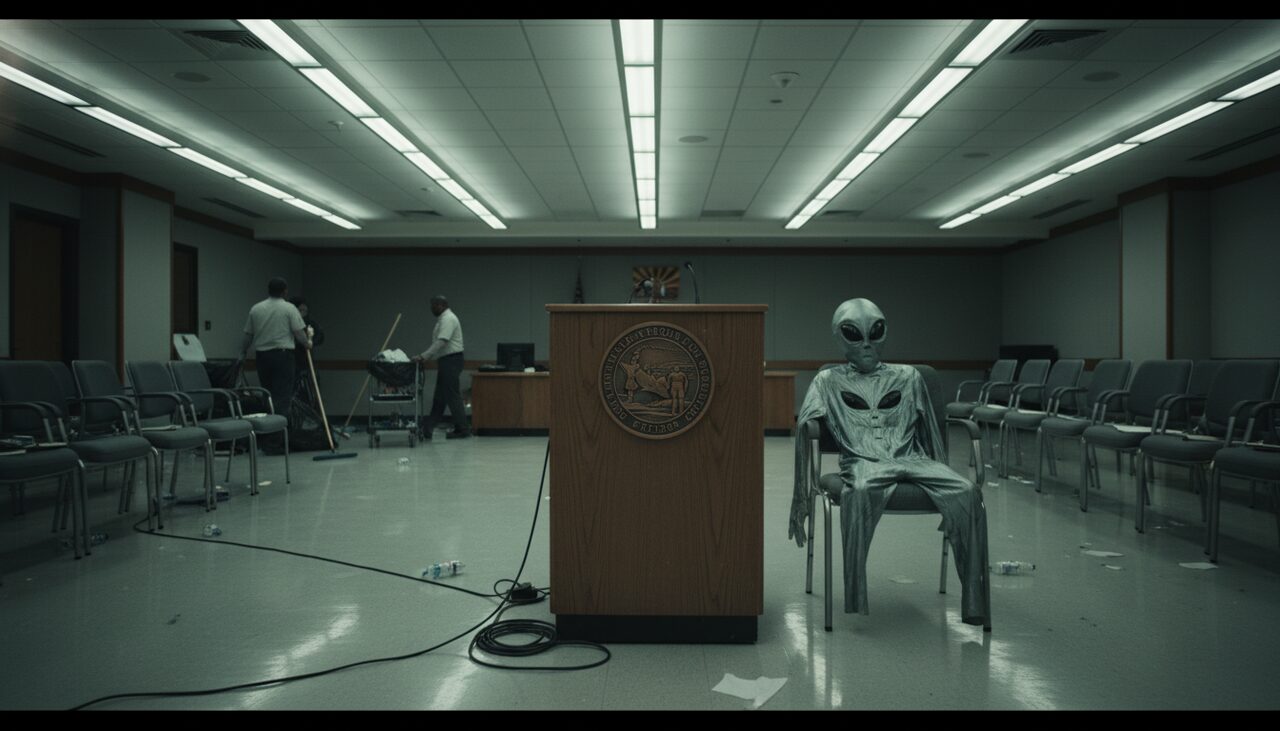
His response, as governor, was to hold a press conference. His chief of staff walked out in an alien costume. The audience — which included people who had seen the same thing Symington had seen — was not amused. Symington deflected, joked, and moved on. He did not mention that he himself was one of the people he was ostensibly trying to calm.
Context helps. By March 1997, Symington was already under federal investigation for bank fraud and extortion tied to real estate deals in the 1980s. He would be indicted, convicted on seven counts, and sentenced to probation, then pardoned by President Clinton on Clinton's last day in office — which is a separate case file. The point is that at the time of the Phoenix Lights, Symington was a governor whose credibility was already under pressure from federal prosecutors. Holding a serious press conference to say he had personally witnessed an unidentified object over his state was not a cost-free option. The alien costume was not just a joke. It was a governor choosing the kind of ridicule he could control over the kind he couldn't.
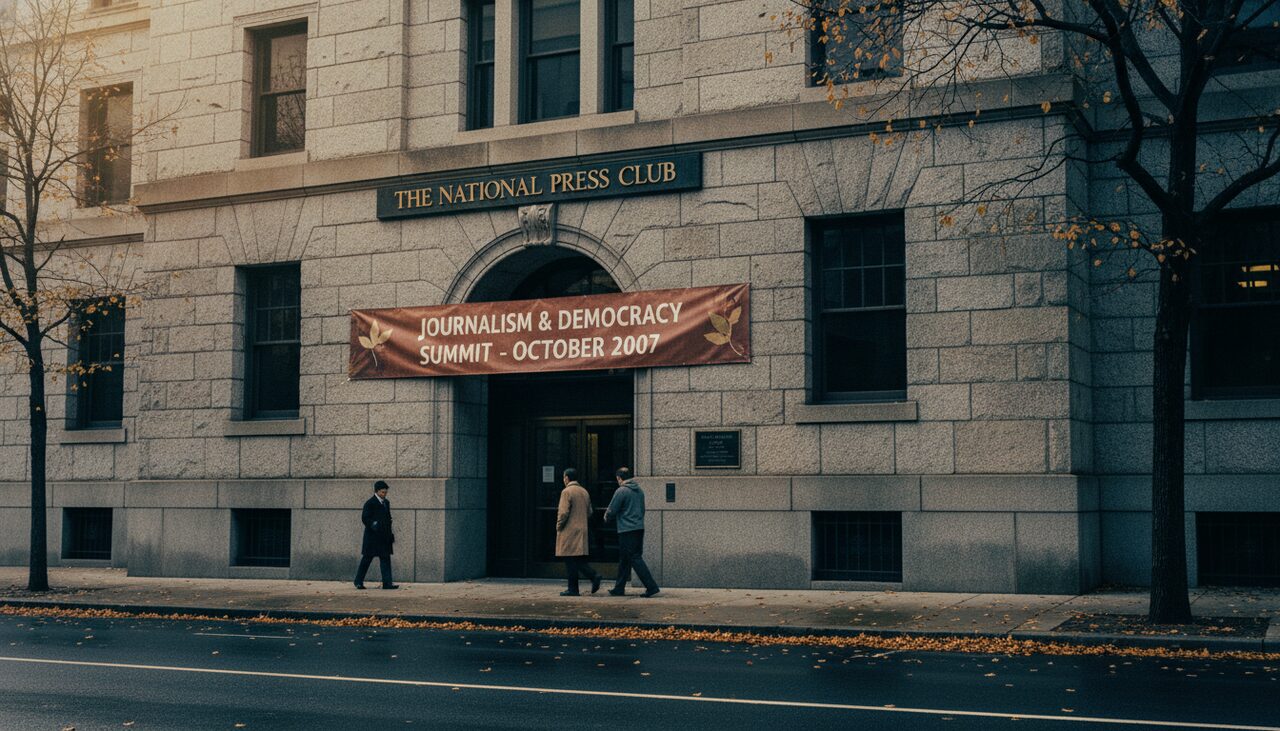
He maintained that silence for ten years. In 2007, in an interview and at a National Press Club event on UFOs, Symington stated that he had personally witnessed the V-formation, that it was not any aircraft he could identify, and that the press conference had been — his words — an attempt to calm a frightened public.
Half an Answer
The Phoenix Lights case is unusual in UFO literature because of its scale. This was not a sighting by one person in a remote field. It was observed across a metropolitan area of nearly three million people, and the witnesses included a sitting governor who was also a former military pilot. There is nothing fringe about the witness pool, which is precisely what makes the case difficult to file and easy to remember.
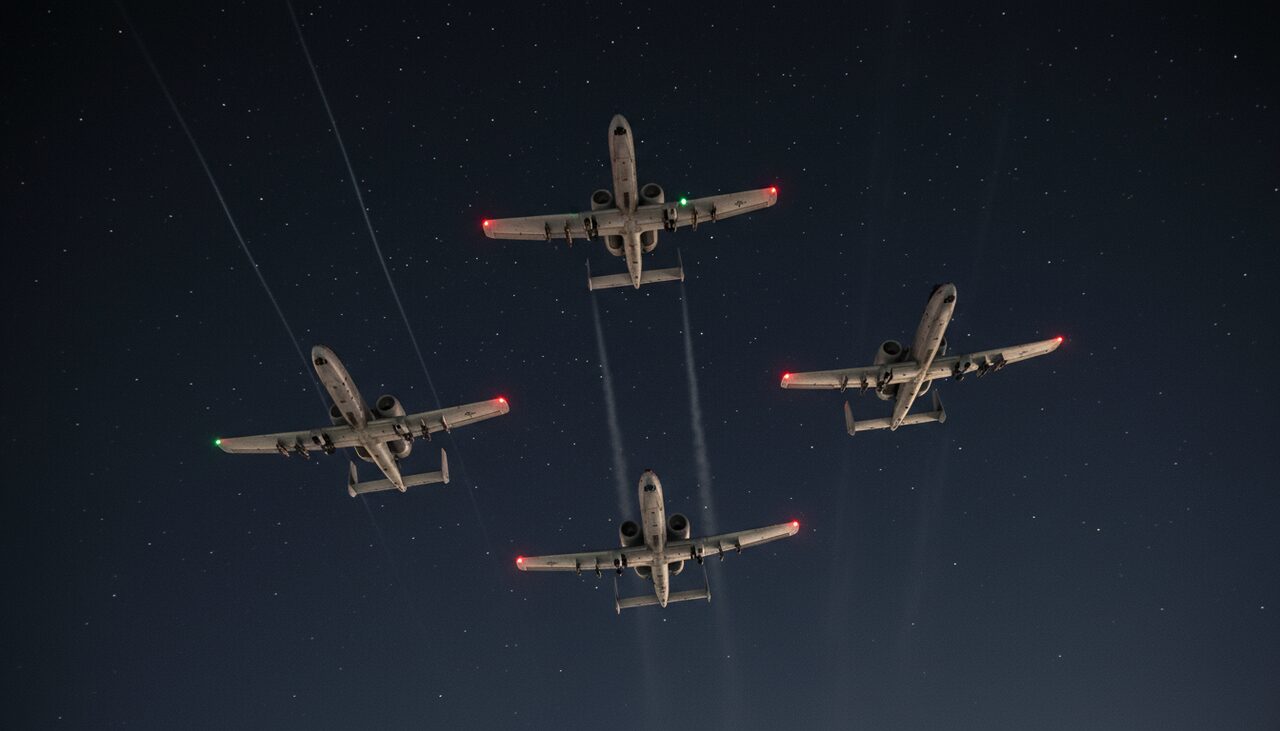
No official military or governmental body has offered a formal explanation for the V-formation, though skeptical researchers have proposed several. The conventional candidates for the 7:30 sighting include a formation of aircraft — possibly A-10 Thunderbolts — from the same Operation Snowbird exercise, returning to Davis-Monthan in formation with non-standard lighting. One amateur astronomer in Scottsdale reported viewing the lights through a telescope and identifying them as planes. Other witnesses insist no conventional aircraft matches what they observed.
The other conventional explanation is mass misperception: witnesses seeing something ordinary and, primed by the expectation of something extraordinary, reading it as a single enormous craft. This is psychologically possible. It also requires independent observers spread across roughly 300 miles to misperceive the same thing in the same way at the same time, which is less an explanation than a second mystery wearing the first one's coat.
Peter Davenport, director of the National UFO Reporting Center in Seattle, fielded hundreds of calls about the Phoenix Lights beginning the night of March 13. His intake logs became one of the most comprehensive civilian records of the event — names, times, locations, descriptions — compiled by a man whose full-time job was answering a phone that only rang when people had seen something they couldn't explain. Davenport pushed for an official investigation and did not get one. But the data he collected gave the case something most mass sightings don't have: a paper trail not controlled by the institutions being asked to explain it.

That paper trail aged well. Decades later, when the Pentagon's UAP disclosure efforts brought historical cases back into the conversation, it was Davenport's records and witnesses like Tim Ley that advocates pointed to. The federal posture, for the record, has not moved: the Defense Department's 2024 historical review of UAP reporting concluded that no U.S. government investigation has found verified evidence of extraterrestrial origin anywhere in the historical archive. That is a statement about the whole record, not about the 7:30 event specifically, which remains exactly where it was — addressed by no one.
Lights Out
The Phoenix Lights did not produce a landing, a contact, or a specimen. They produced something more common and, in its way, more instructive: an event witnessed by a city, explained away by half, and left unresolved by the institutions responsible for resolving it.
On the evening of March 13, 1997, something crossed the sky over Phoenix. Thousands of people saw it. The Air Force explained the wrong half of the evening, and the governor took ten years to admit what he saw. The sky over Phoenix has been quiet since.
The event is half-solved. Which is not the same as half-explained.
Sources & Case References
- Department of Defense — "DOD Report Discounts Sightings of Extraterrestrial Technology" (Mar. 8, 2024)
- Department of Defense — Statement on the Historical Record Report on UAP, Volume 1 (Mar. 8, 2024)
- AARO Historical Record Report, Volume 1 (2024)
- ABC15 Arizona — "Mystery continues on 25th anniversary of Phoenix Lights" (2022)
- AARO UAP Records page