On the night of November 15, 1966, two young couples drove into an abandoned munitions plant outside Point Pleasant, West Virginia. They came out describing something with red eyes and folded wings. They drove straight to the courthouse. And that is when the town started keeping a record.
The first report should have been the end of it. Four frightened witnesses, one abandoned weapons plant, no physical evidence. Instead, more people came forward. The creature kept making paperwork for the town.
The Town
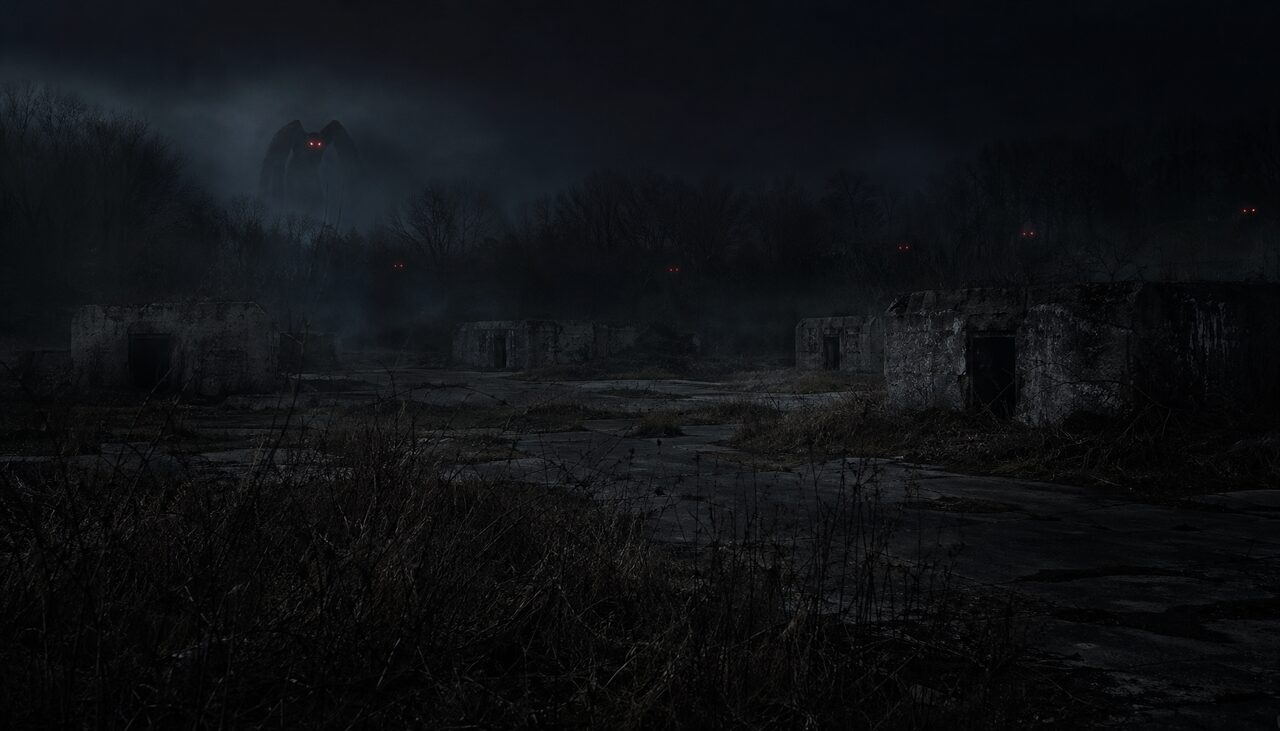
Point Pleasant sits where the Ohio and Kanawha Rivers meet, directly across from Gallipolis, Ohio. In 1966 it had about 6,000 people — small enough for rumors to make decent time. It had one direct route across the river: the Silver Bridge, an eyebar-chain suspension bridge built in 1928. Remember the bridge. The bridge matters later.
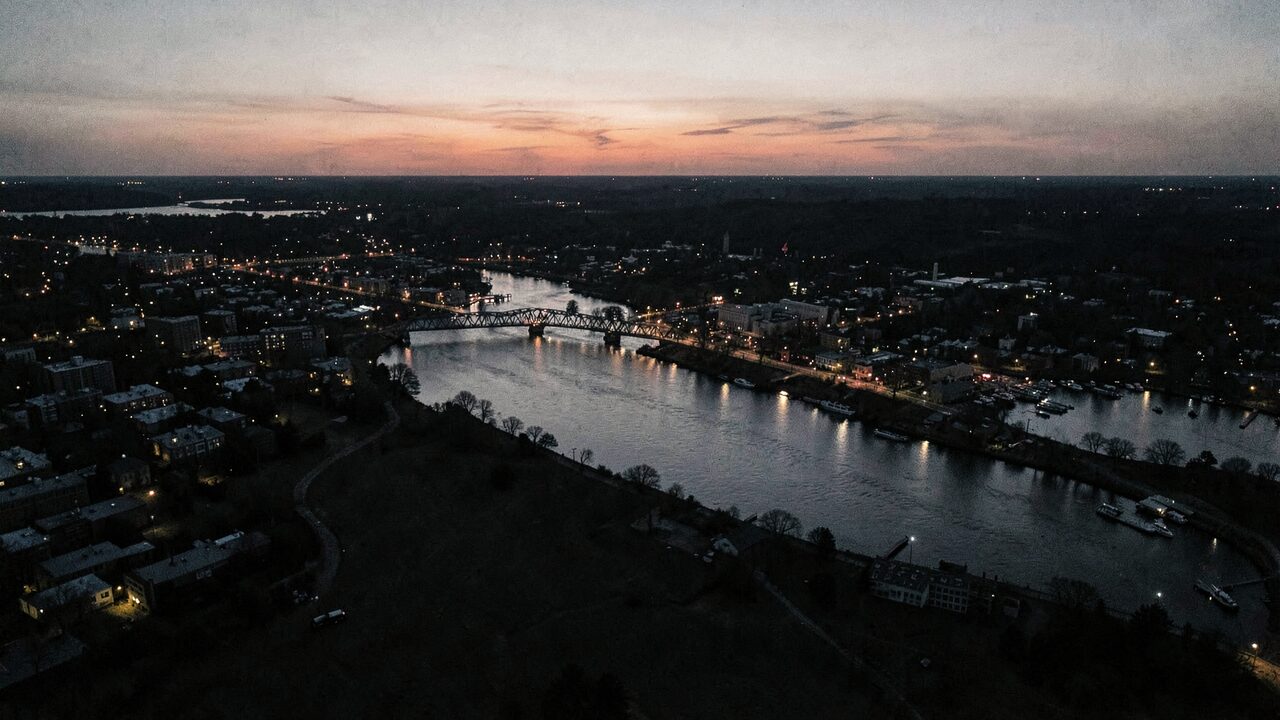
The TNT area — formally the West Virginia Ordnance Works — sat about five miles north of town. During the war it produced explosives. By the mid-1960s it was officially the McClintic Wildlife Management Area, which is a tidy name for a place still full of concrete bunkers, an old power plant, and a lingering contamination legacy. It was dark, isolated, and popular with teenagers for the reasons dark, isolated places are always popular with teenagers.
The local paper, the Point Pleasant Register, ran the first story on November 16. A journalist named Mary Hyre, who ran the Point Pleasant bureau for the Athens Messenger, became the story's unofficial intake desk. Her files would later become a significant source for researchers. The creature needed a name. A copy editor coined "Mothman," after the Batman villain. A fifty-year mystery, named on deadline.
A Hundred Miles an Hour
The first witnesses to file a formal report were Roger and Linda Scarberry and Steve and Mary Mallette — two married couples in their early twenties. Linda described the creature as a large, muscular man, six to seven feet tall, with wings folded against its back. When the headlights struck it, its eyes glowed deep red. The group fled. The creature followed. Not running. Flying. Roger Scarberry, driving, estimated his speed at over 100 miles an hour.
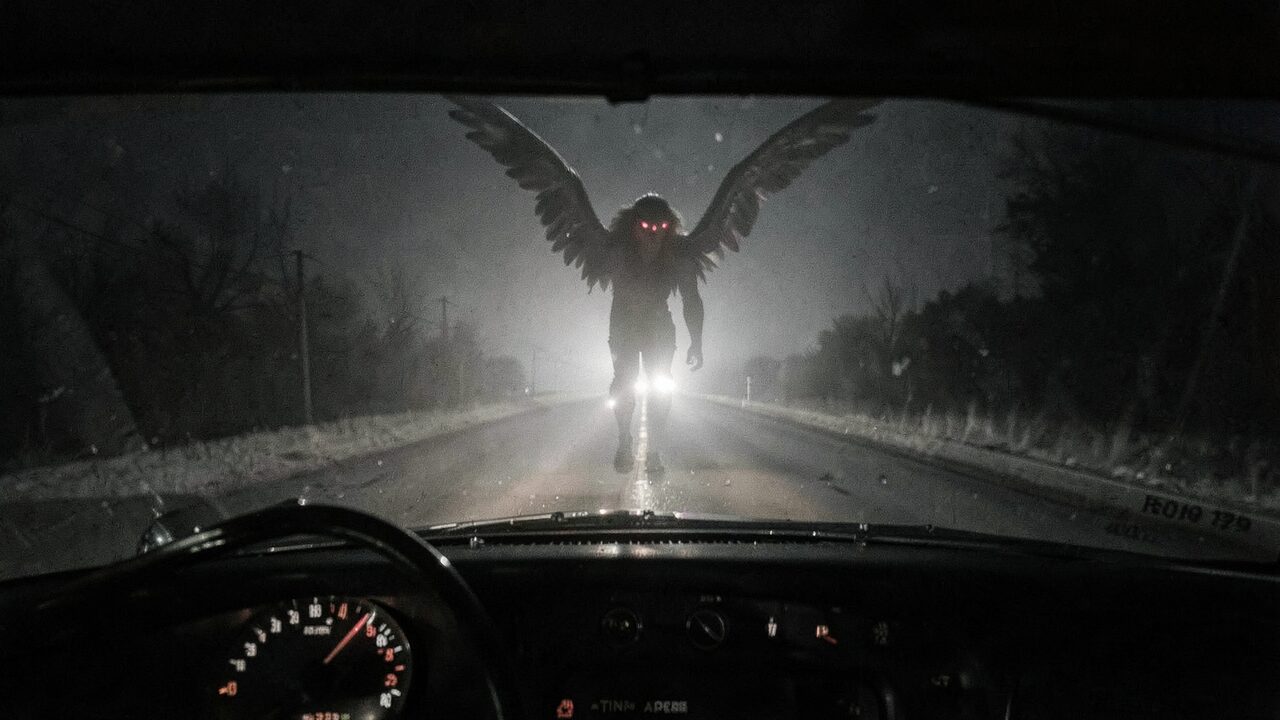
They drove directly to the Mason County courthouse and reported what they had seen to Deputy Millard Halstead. Halstead returned to the TNT area with them but found nothing, which is the traditional result of official searches for unofficial creatures. He described the four witnesses as frightened, coherent, and consistent. None had been drinking. He knew the Scarberrys and considered them reliable. A clerk would recognize the form. Credible people. Empty field. No evidence found.
By late November the story had gone national. Reporters arrived from across the country. So did investigators. Among them was John Keel, a journalist who specialized in unexplained phenomena. Keel spent the better part of 1967 conducting interviews and documenting reports — and recording what he described as a broader constellation of strangeness. UFO sightings. Alleged electromagnetic disturbances. Bizarre phone calls. And visits from men who said they were government agents but did not quite seem right. The "did not quite seem right" is doing a considerable amount of work in that sentence.
These men asked detailed questions, took no notes, and left. Witnesses described odd mannerisms, oversized features, voices that did not quite match their faces. The accounts later fed what popular culture would call the Men in Black. In 1966, in Mason County, they were men who knocked on a door, asked questions, took no notes, and left with no follow-up. Their connection to the Mothman is worth examination, and a record of its own.
Keel's account, published as The Mothman Prophecies in 1975, became the best-known treatment of the case. It is also, by most standards of journalism, deeply unconventional — less scientific investigation, more cosmic surveillance report. He believed the events were connected. He did not claim to know how. That is the more honest position. Later retellings have not always extended him the same courtesy.
The Bridge
The sightings continued through 1967. They concentrated in Mason County but were not confined to it: over the TNT area, along the Ohio River, near residential streets, and — in several accounts — on the Silver Bridge itself.
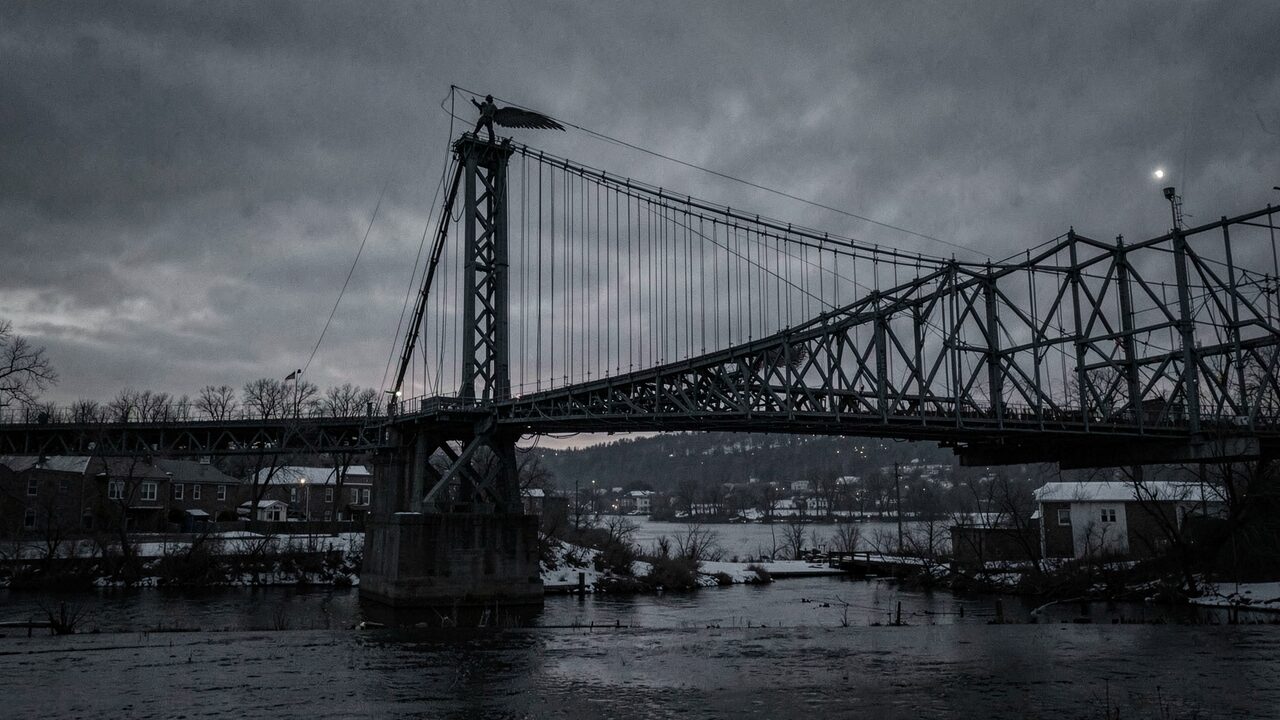
On December 15, 1967, just before five in the evening, the Silver Bridge collapsed.
It was a Friday — rush hour, ten days before Christmas, with shopping traffic between Point Pleasant and Gallipolis heavier than usual. Thirty-seven vehicles were on the bridge. Thirty-one fell. The failure began with one link in the suspension chain: eyebar 330 on the north side. A defect one-tenth of an inch deep had been growing inside it for 39 years through stress corrosion cracking. When it finally failed, the chain severed and the bridge went into the river. There were no safety redundancies — a concerning trait in a bridge. Forty-six people died. Two bodies were never recovered.
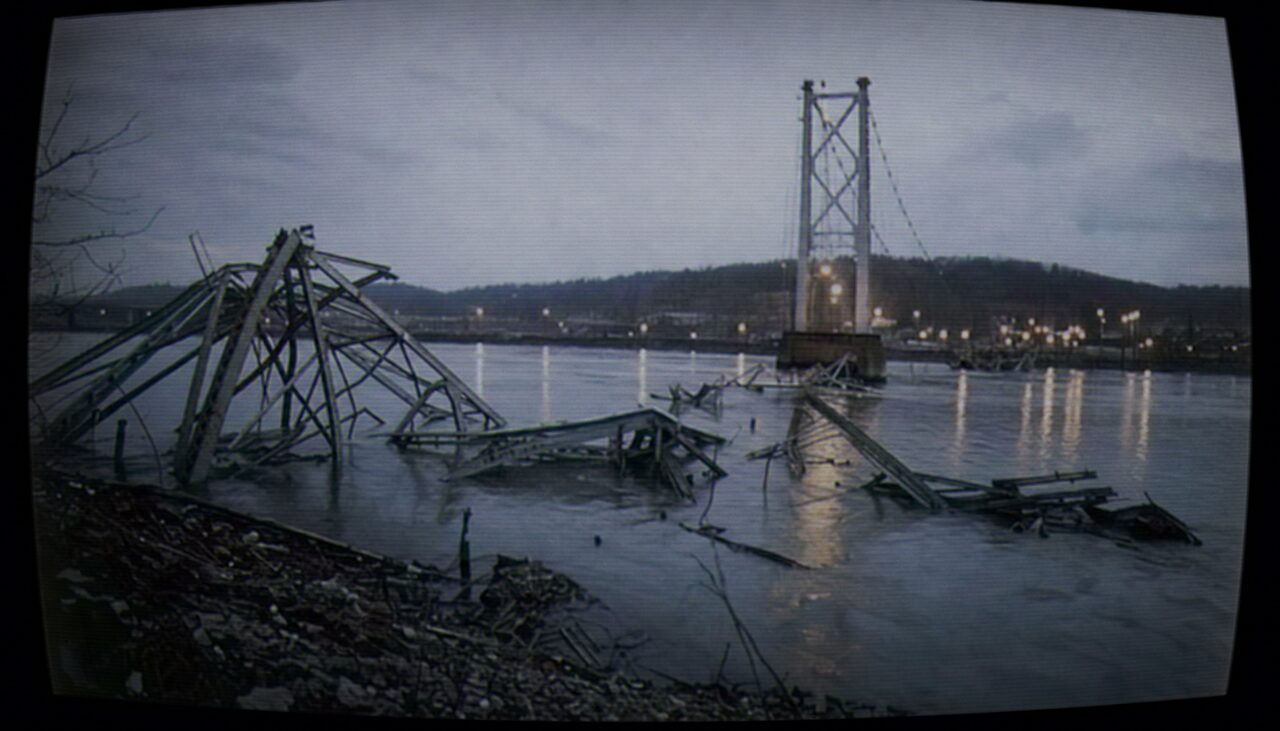
After December 15, 1967, the widely reported Point Pleasant sightings largely stopped. Not with a formal ending. A bridge fell, and the sightings stopped.
The Owl
The skeptical explanation is simple: it was a bird. The main candidates are the sandhill crane — seven-foot wingspan, red coloring around the eyes — and the barred owl, which inhabits the TNT area in significant numbers. Joe Nickell of the Committee for Skeptical Inquiry landed on barred owls, with the red eyeshine produced by headlights reflecting off the birds' large, dark pupils.
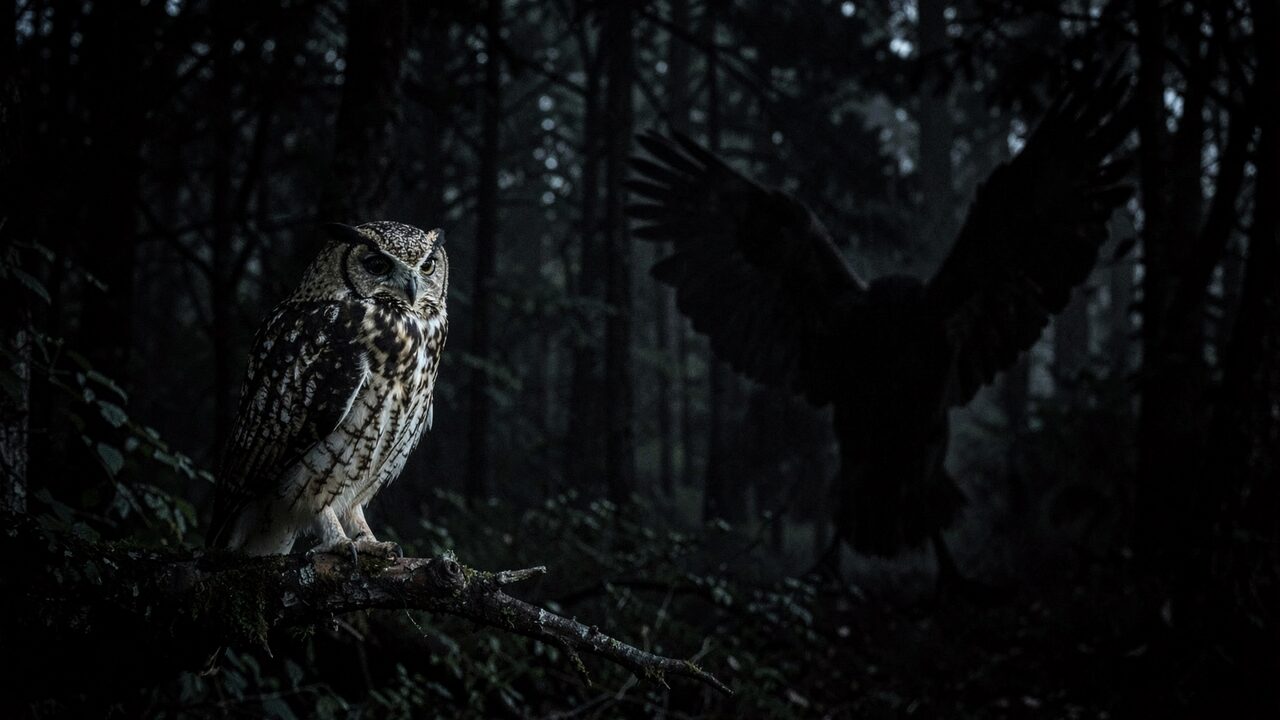
The owl theory is solid as far as it goes. Barred owls are large, nocturnal, and unsettling when met in the dark, and a startled witness will not always accurately describe what they saw. Where it gets less comfortable is consistency. Many accounts across thirteen months clustered around the same details: not a bird shape, a humanoid one. Seven feet tall. Muscular. Wings that folded. A barred owl does not normally chase a car at highway speed for several miles.
Then there is the bridge. The connection between the Mothman and the collapse is, strictly speaking, a coincidence — the bridge failed from a structural defect present since 1928, and no winged creature causes metal fatigue in a suspension chain. But the pattern (thirteen months of sightings, escalating, centered on a specific location, falling away after a catastrophe) has a narrative shape people are built to notice. Keel saw a harbinger. That is not science. The timeline is also emotionally difficult to ignore, which is not the same thing as evidence.
What Remains
The Silver Bridge was replaced by the Silver Memorial Bridge in 1969, using a different structural design. The TNT area is still there. The bunkers remain. So do the owls. They have declined to comment.
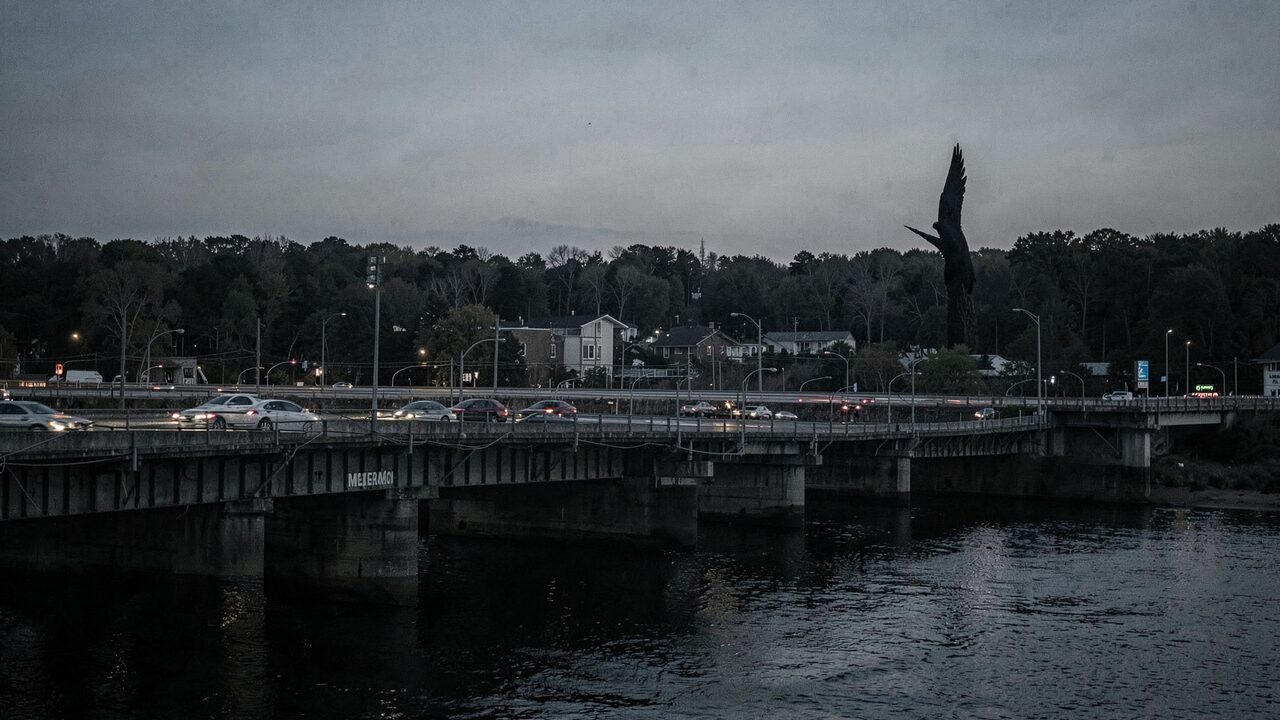
The collapse helped produce the Federal-Aid Highway Act of 1968 and, from it, the National Bridge Inspection Standards. Before December 15, 1967, the United States had no federal bridge inspection program. After it, every bridge on a public road in every state was placed on a two-year inspection cycle. That program is still running. Roughly 600,000 bridges are inspected on rotation under standards written, in part, because of one defective eyebar, on a Friday afternoon, in West Virginia.
Point Pleasant made its peace with the ambiguity. The town erected a twelve-foot stainless steel statue of the Mothman in 2003. It is polished. It has abs. There has been an annual festival since 2002 — the official site lists September 20–21, 2025, and already advertises September 19–20, 2026 — plus a museum and a gift shop that sells plush. A town that lost forty-six people to a bridge collapse turned the thing that, in the legend, might have been warning them into a tourist attraction. Resilience and irony are both defensible readings of the record.
Mary Hyre died in February 1970. She was 54. John Keel dedicated The Mothman Prophecies to her. By any reasonable measure she kept the most complete record of what happened in that town during those thirteen months, and the files she left behind are still cited. Most of what we know, we know because she wrote it down.
No Mothman sighting has been confirmed in Point Pleasant since December 15, 1967. Whatever it was — owl, crane, harbinger, misidentification, or folklore with a very specific address — it arrived, watched, and left on the worst day in the town's history. The Mothman has a statue. The bridge only has a plaque.
Sources & Case References
- e-WV: The West Virginia Encyclopedia — "Mothman"
- Smithsonian Magazine — "West Virginia's Mothman Leads Cryptid Renaissance" (2021)
- West Virginia Public Broadcasting — "Thousands Gather For Mothman Festival" (2019)
- Mothman Festival — official site (2025–2026 dates)
- John Keel, The Mothman Prophecies (1975)