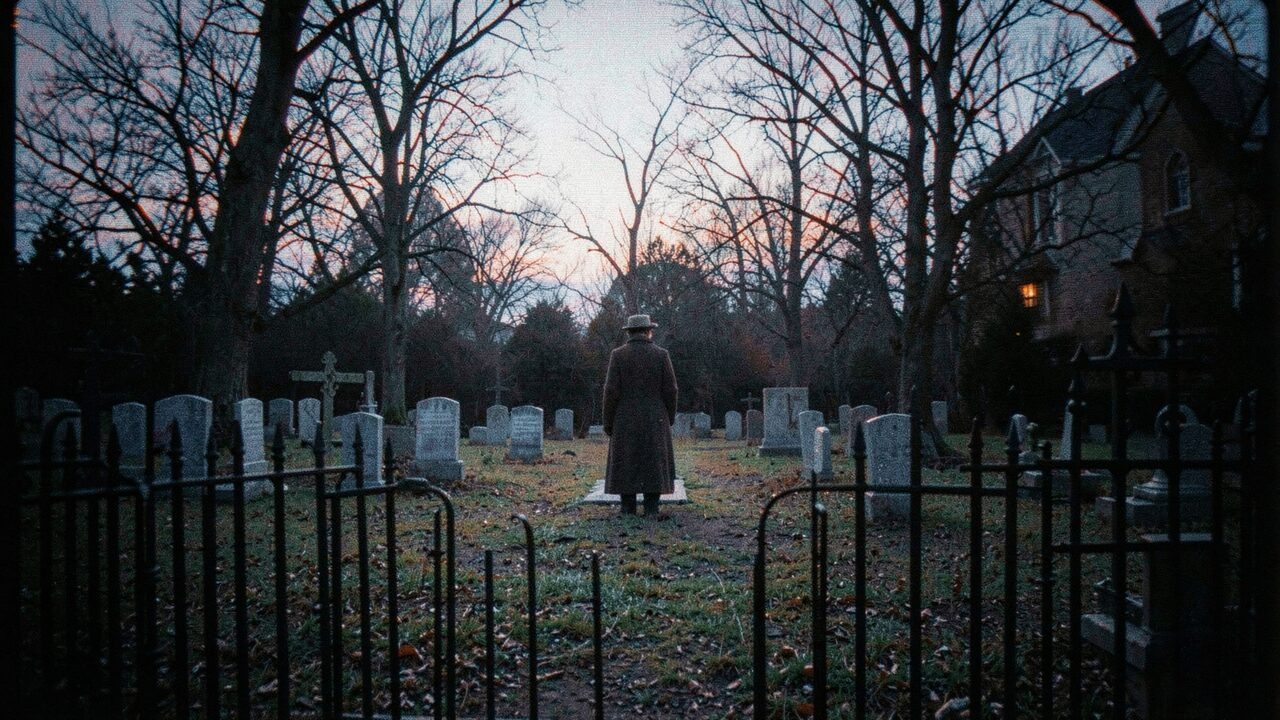
There is a figure that thousands of people have reported seeing. He is shrouded in shadow — dark in the way a shadow is dark, an absence of light in the shape of a man. He stands in doorways. He stands at the foot of beds. He stands in hallways, in corners, at the edge of peripheral vision. He doesn't speak. He doesn't move, or if he moves, he does it only when observed indirectly, sliding away the moment anyone looks at him straight on.
He wears a hat. A wide-brimmed hat — a fedora, or something older. It is the only distinguishing feature on an otherwise featureless silhouette. He is known, with a specificity that borders on affectionate, as the Hat Man.
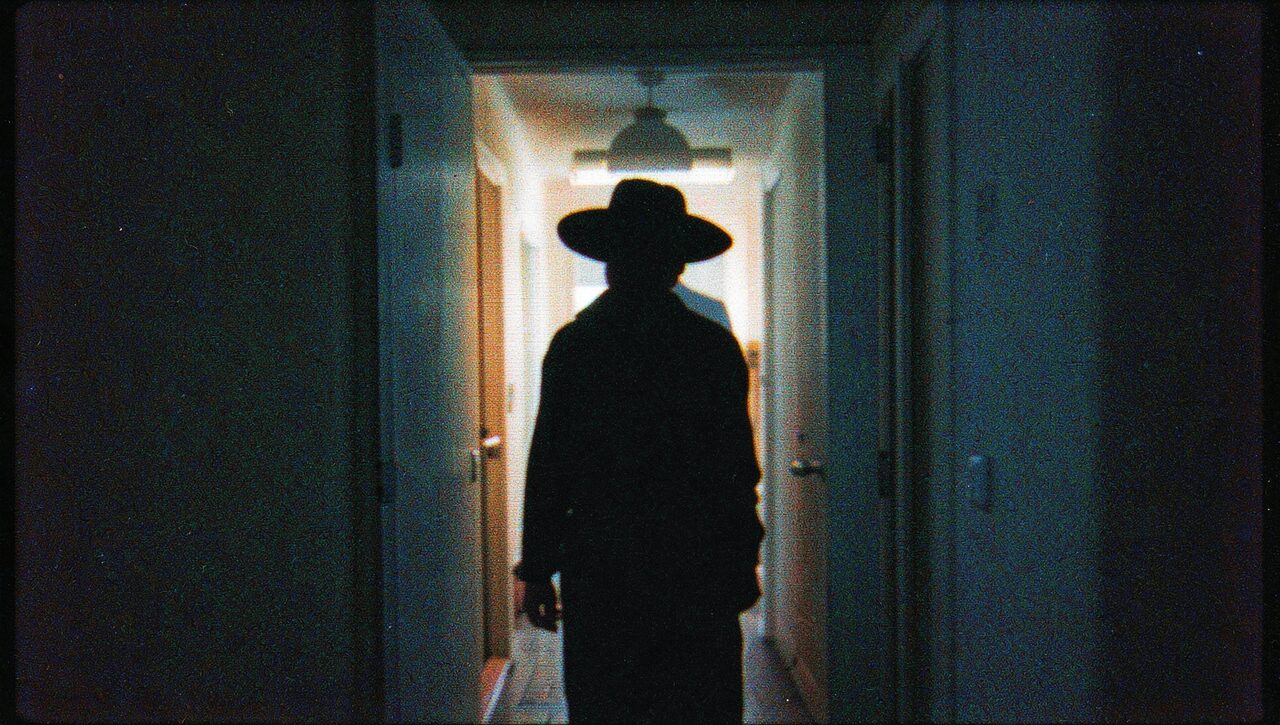
He has been reported across continents and, since the early 2000s, across internet forums in overwhelming numbers. He has no known agenda. He has no known origin. He has a hat. He has been seen more times than most elected officials, and has done roughly the same amount with the attention. Despite this — or because of it — he is everywhere.
The Term and the Clearinghouse
The phrase "Shadow People" entered common usage in the late 1990s, though the phenomenon it describes — dark, humanoid figures at the edge of vision or in low light — has been reported for considerably longer. The modern label is generally credited to Heidi Hollis, a paranormal researcher who popularized it through her books and her regular appearances on Coast to Coast AM. That program has served as the unofficial intake desk for American paranormal claims since the 1990s, which means it is also where a good deal of folklore gets its first reading.
The figure itself is consistent in its inconsistency. It is dark — not gray, not translucent. A silhouette with depth, as if cut from the space it occupies. Humanoid in shape: head, shoulders, torso. No facial features. No detail of any kind. In the visual sense, witnesses describe a hole in the shape of a person.
The Subset
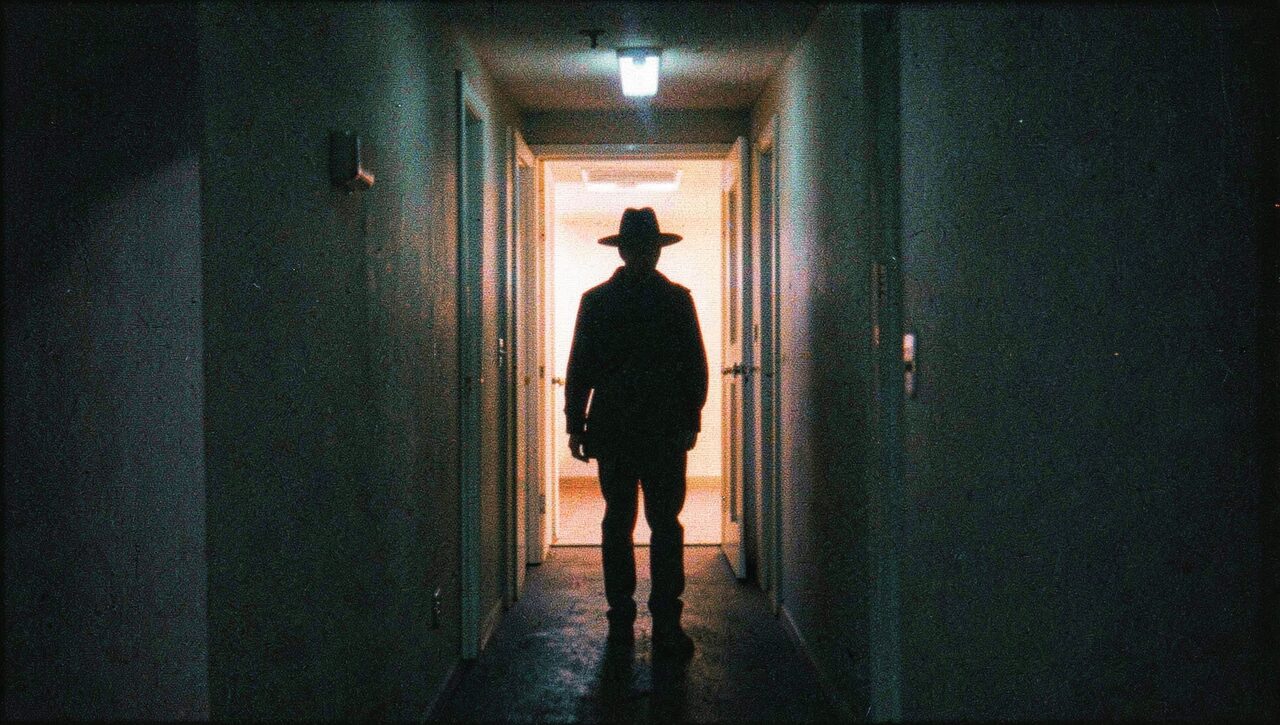
Generic shadow people vary — in size, in posture, in how long they linger. The Hat Man is the exception. He is reported as the same figure nearly every time: tall, male-presenting, sometimes in a long coat, sometimes in what might be a cloak. The hat is the constant. He is the most frequently described shadow person and the most internally consistent, which is a strange thing to be able to say about a hallucination.
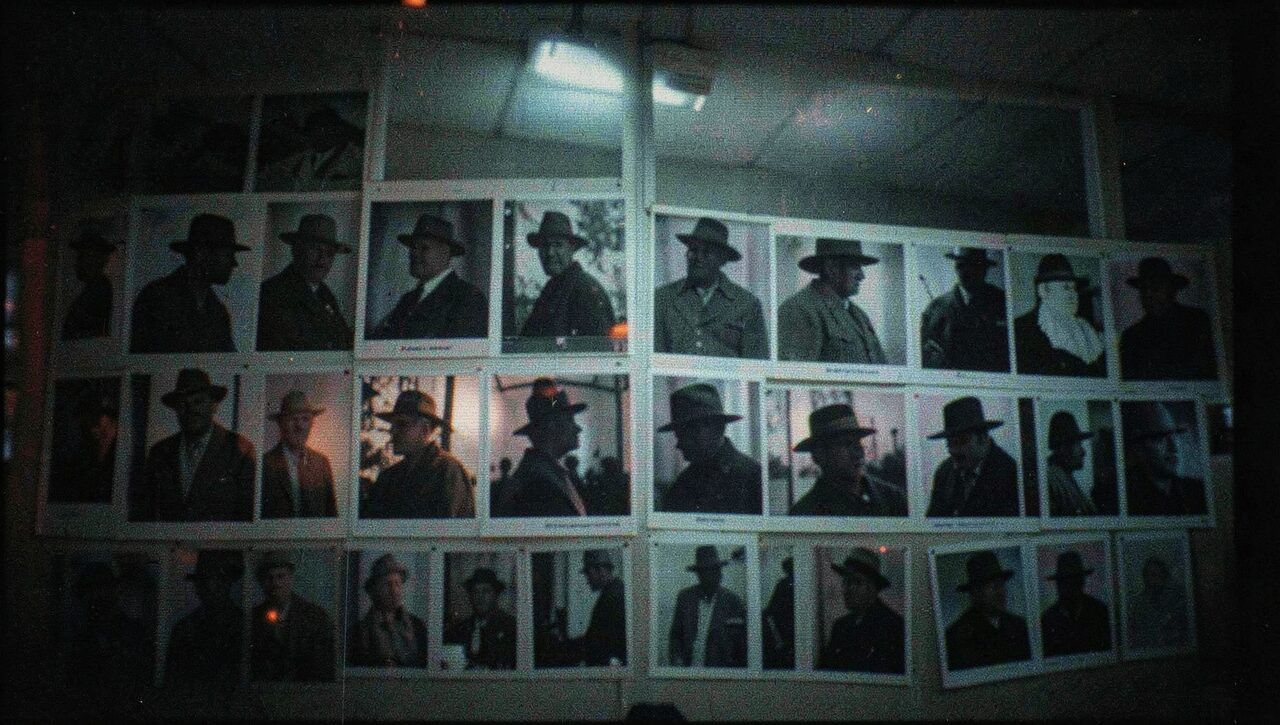
The reports come from people of different ages, cultures, and psychological profiles. From people who have never heard of the Hat Man and from people who have. From people with diagnosed sleep disorders and from people with no medical history of any kind. They come, in overwhelming numbers, from people who were frightened by what they saw and could not explain it.
The fear is its own data point. Witnesses describe it as not normal fear. Normal fear has an object and a logic — a dog bares its teeth, the body responds. The dread associated with shadow people is described as older than that, originating not in the mind but in the chest, as if the body had understood something the brain hadn't processed yet. Witnesses consistently report the conviction that the figure is aware of them — that it has no eyes and is looking directly at them anyway. That is an unpleasant combination to wake up to.

The Clinical Explanation
For the majority of sightings, the explanation is well-established and does not require the Hat Man to be real. It requires only that the human brain do what it reliably does under certain conditions: generate a figure in the dark and then become frightened by it.
The main mechanism is sleep paralysis — a state in which the body remains in the muscular atonia of REM sleep while consciousness partially or fully returns. It affects an estimated 8 percent of the general population at least once. During these episodes, hypnagogic and hypnopompic hallucinations are common, and they very often take the form of a sensed presence in the room: a dark figure, standing near the bed, watching.
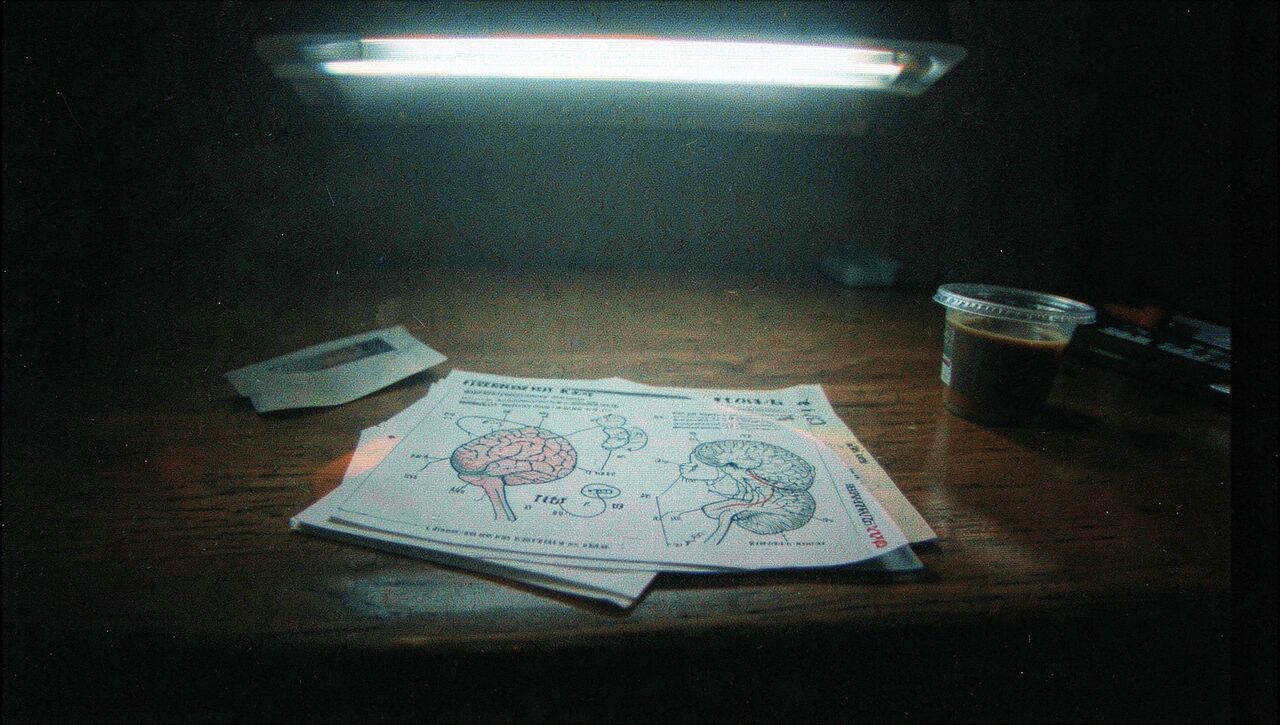
The mechanics are, from the brain's perspective, straightforward. During REM sleep, the brainstem paralyzes voluntary muscles to keep the body from acting out dreams. When awareness returns before the paralysis lifts, the result is a person who is awake, aware, and unable to move. The amygdala — the brain's threat-detection center — activates under these conditions with particular enthusiasm. It receives a clear signal: you are immobilized, and something is in the room. That the "something" was generated by the brain itself does not reduce the amygdala's commitment to the situation. The system designed to keep you alive becomes, in that moment, the system making the experience unbearable.
Peer-reviewed research supports the pattern in detail. Work by J. Allan Cheyne and others has long categorized a threatening "intruder" presence as one of the common features of sleep paralysis. More recent research by Baland Jalal, published in 2021 under the title "Men Fear Most What They Cannot See," examines specifically why these intruder figures are so often dark, faceless, and shadow-like. The shadow person, in other words, is not a fringe claim. It is in the clinical literature, described in roughly the terms witnesses use.
The Folklore Predates the Forums
The accounts also predate the modern label by centuries. David J. Hufford — a folklorist and medical humanities professor at Penn State — documented the phenomenon at length, beginning with his 1982 book The Terror That Comes in the Night. Hufford found that the experience of a dark, threatening presence during sleep paralysis was reported with remarkable consistency across cultures that had no contact with one another: the Newfoundland "Old Hag" tradition, the Japanese concept of kanashibari, the Islamic concept of jinn visitation during sleep. All describe the same core event — paralysis, presence, dread.
Medieval European sources describe the "night-hag" or "mare," a dark figure said to sit on the sleeper's chest and press down. Henry Fuseli's 1781 painting The Nightmare depicts exactly that: a woman supine, a dark creature crouched on her torso, a horse with blank eyes emerging from behind the curtain. The painting was a sensation, largely because people recognized what it showed. The word nightmare itself derives from mare — not the horse, the crushing night-visitor. The experience was common enough to become the word for a bad dream. The horse, for its part, has clearly seen some things.
Hufford's conclusion was the consequential part. He argued that the consistency of these reports was not the product of cultural transmission — people were not copying one another's stories — but of a shared neurological experience producing similar perceptual outputs across the human species. The dark figure, in this framework, is a feature of the human brain. We all carry it. Some of us see it.

The Cases That Don't Fit
This explains a great deal. It does not explain everything.
The accounts that resist the sleep paralysis framework come from people who were fully awake, fully mobile, and in some cases in broad daylight. They are fewer in number, but persistent. A person walking down a hallway. A person driving. A person sitting at a desk in an office at two in the afternoon. And they see it — the dark figure, the silhouette, the shape that should not be there.
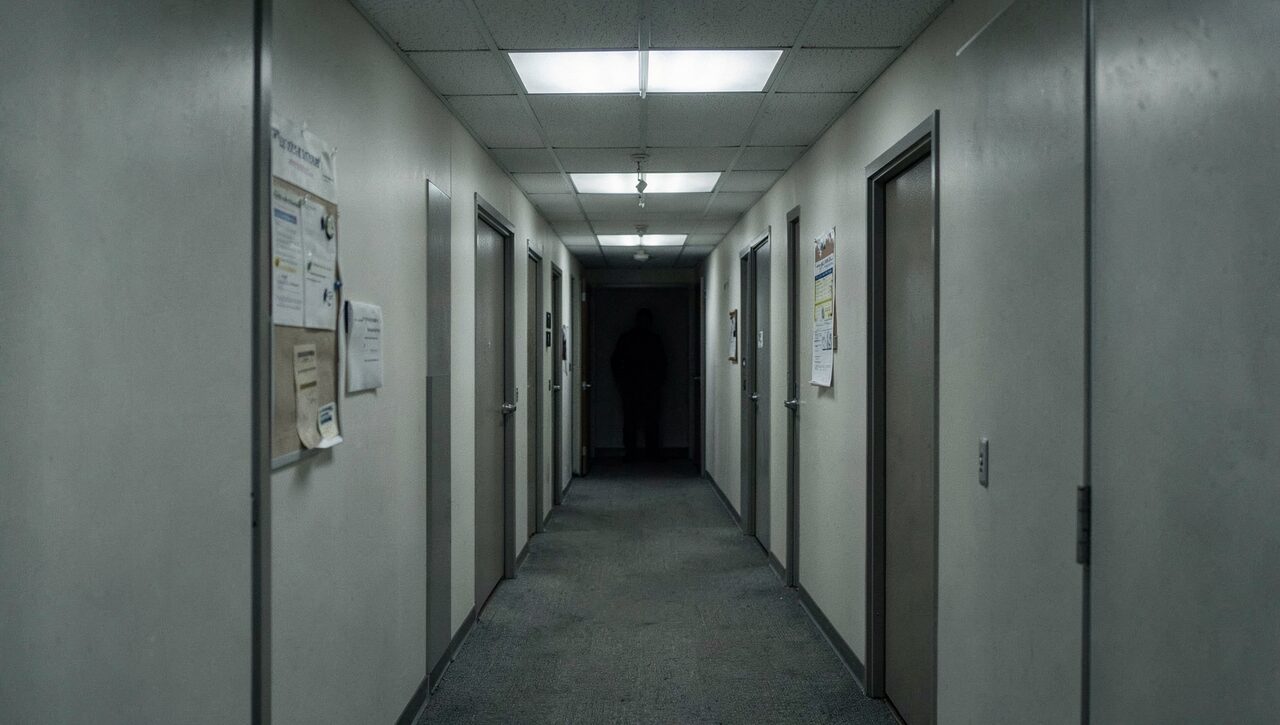
These reports have no consensus explanation. Sleep paralysis does not apply to someone standing up in daylight with full use of their limbs. There are partial accounts. Peripheral vision hallucinations are a known neurological event — the brain constantly fills in information at the edges of the visual field, and the fill-in process occasionally produces artifacts. Pareidolia, the tendency to see human forms in random stimuli, is well documented and essentially universal.
But pareidolia typically produces a momentary impression, not a sustained observation. And the specificity of the Hat Man is hard to attribute to random perceptual noise. Random noise should produce random outputs. This output is not random. It is a tall man in a hat, standing in a doorway, and he has been standing in doorways on multiple continents.

The phenomenon intensified with the internet. Forum posts on paranormal discussion boards in the early 2000s produced a cascade of recognition — people reading a description and realizing they had seen the same figure. This is consistent with cultural contamination: once the template exists, the brain will fit ambiguous experiences to it. It is also consistent with a pre-existing phenomenon finding, for the first time, a channel through which scattered reports could be aggregated and compared. Both readings fit the same data, which is the recurring difficulty here.
There is one additional data point that is both clinically useful and faintly uncomfortable. Diphenhydramine — the active ingredient in Benadryl, available without prescription at every pharmacy in the country — is known at high doses to produce hallucinations. The hallucinations are not abstract or colorful. They are, with a consistency researchers have noted, dark humanoid figures, standing at the periphery. Online communities documenting these experiences describe the same shapes reported by sleep paralysis sufferers and paranormal witnesses. From a skeptical perspective, that is significant evidence that the figures are generated by the brain under specific chemical conditions. From any perspective, it is unsettling that an over-the-counter allergy medication can reportedly unlock them.
Why the Hat
The conventional explanations cover most of the terrain. What none of them quite address is why the template exists in the first place — why, before the internet, before the forums, before Heidi Hollis named it, people in different countries were describing the same figure. The same hat.
The answer may be neurological. The brain generates humanoid shapes under stress because it is optimized for detecting humans: it is safer to hallucinate a predator that isn't there than to miss one that is. The hat may be an artifact of how the visual cortex renders an ambiguous shape at the top of a dark silhouette — a brim, a crown, the suggestion of clothing. In that model, the brain is simply accessorizing its own hallucination.

But the hat deserves its own consideration. A featureless silhouette is frightening. A featureless silhouette wearing a hat is something else. The hat implies a choice. It implies a self — something that decided, at some point, to put on a hat before standing in a doorway at three in the morning. It humanizes the figure just enough to make it worse. And the specific accessory carries its own freight: plague doctors wore wide-brimmed hats, Quaker elders wore them, the stranger at the edge of town in every western wore one. These are not hats associated with good news. It is the hat of someone who has arrived from somewhere else and is not here to be friendly.
There is also the Jungian reading, attractive to the theoretically inclined and untestable by the scientifically rigorous. Carl Jung proposed that certain images recur across cultures because they are wired into the structure of the psyche itself. The "shadow," in his framework, is a specific term — the repressed, unknown aspects of the self, projected outward. A shadow person, in that reading, is your own unconscious standing in the doorway, wearing a hat for reasons that remain unclear.
Hats Off
Shadow people continue to be reported worldwide. The Hat Man continues to be described with a consistency neuroscience can explain — mostly. He has no name beyond his accessory. He has no purpose beyond his presence. He has been seen by more people than can be easily counted and has done precisely nothing to any of them.
What the reports share, beyond the figure, is a quality of reluctant certainty. These are not people who wanted to see something; most of them didn't believe in anything like this before they did. They file their accounts with the tone of someone reporting a plumbing issue — not excited, not evangelical, just describing a thing that happened in their house. There are thousands of these reports. They cannot all be right. But the sheer weight of them — the volume, the consistency, the flat bewilderment of the reporters — is its own kind of evidence, even if no one can agree what it's evidence of.

If he is a neurological artifact, he is the most consistent one the human brain produces. If he is something else, he is the most patient.
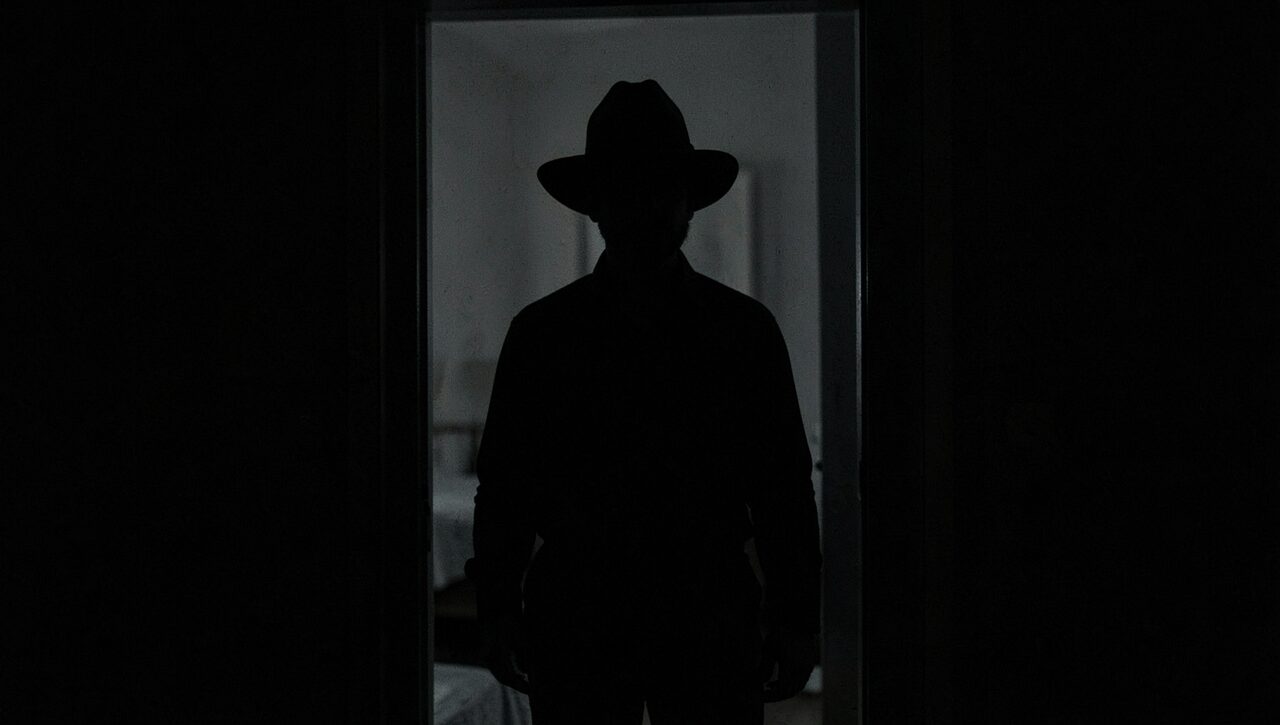
He is standing in the doorway. He has a hat. He has been there the whole time, and has yet to explain himself.
Sources & Case References
- Cheyne & Girard, "Spatial characteristics of hallucinations associated with sleep paralysis" (2004)
- Cheyne, "Sleep paralysis episode frequency and the types and structure of associated hallucinations" (2005)
- Jalal, "'Men Fear Most What They Cannot See': Sleep Paralysis 'Ghost Intruders' and Faceless 'Shadow-People'" (2021)
- StatPearls, "Sleep Paralysis" (2025 edition)
- David J. Hufford, The Terror That Comes in the Night (1982)